


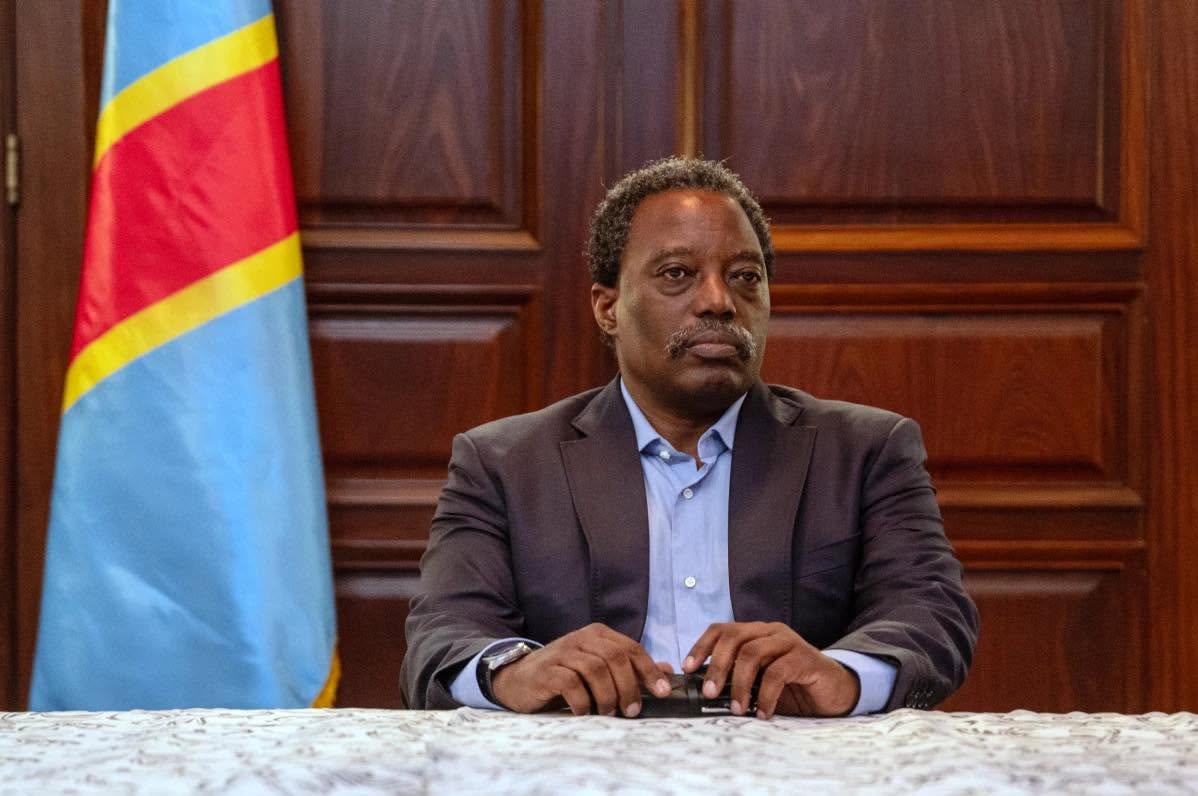
GOMA, Democratic Republic of Congo, 13 October 2026 Former Democratic Republic of Congo president Joseph Kabila has been named leader of a new politico military movement seeking to overhaul the country’s political system, with its founders citing persistent insecurity, economic hardship, alleged corruption and a deterioration in democratic governance.
The Front pour la refondation de la nation (FRN), translated as the Front for the Refoundation of the Nation, was launched in Goma on Monday, 12 October, by Kabila and other signatories who say the country’s political, security, economic and social crises require fundamental changes to how the state is governed.
The movement has accused President Félix Tshisekedi’s administration of weakening state institutions, failing to restore security, promoting ethnic discrimination and presiding over worsening living conditions. It also questions the legitimacy of the current leadership following the 2023 elections.
In its founding declaration, the group argues that the crisis is primarily rooted in decisions taken by the authorities in Kinshasa and calls for a broad coalition of resistance forces to challenge the existing political order.
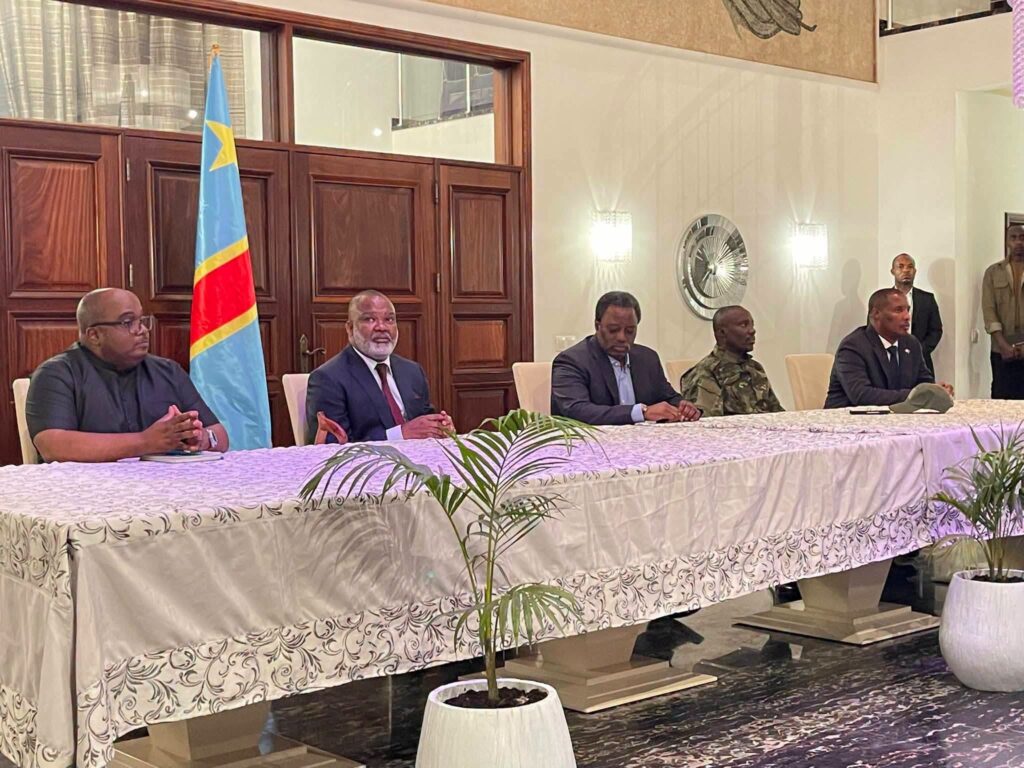
Kabila takes leadership role
Kabila, who governed the DRC from 2001 to 2019, has been appointed president of the FRN. His appointment brings him together with several former leaders of the Alliance Fleuve Congo (AFC) and the M23 movement, which have been fighting government forces in eastern Congo.
The formation of the FRN formally dissolves the AFC, with the signatories declaring that the new organisation succeeds it by operation of law.
Corneille Nangaa, the former head of the DRC’s electoral commission, has been appointed vice president alongside Bertrand Bisimwa, a former M23 political leader, and Major General Emmanuel Sultani Makenga, chief of general staff of the Congolese Revolutionary Army (ARC). Makenga retains his military position.
Freddy Rukema Kaniki has been appointed secretary general and coordinator of the Executive Committee, while Benjamin Mbonimpa becomes deputy secretary general and deputy coordinator. Désiré Rukomera Rwigema has been named permanent secretary of the College of Founders.
The movement will operate through five bodies: the College of Founders, the Council of the Revolution, the president and vice presidents, and the Executive Committee.
The signatories say the FRN is not seeking positions within the existing political system but intends to transform the state and coordinate resistance forces against what they describe as tyranny.
They have pledged to dismantle the current system “by all means, including the use of force.”
To justify their position, the founders cite Article 64 of the Congolese Constitution, which places a duty on citizens to oppose anyone who seizes power by force or exercises it in violation of the Constitution.
Tshisekedi administration faces allegations
The FRN’s founding declaration presents what it describes as a breakdown of democratic institutions and constitutional governance as central to the DRC’s crisis.
The signatories argue that repeated violations of the Constitution and other laws have weakened the rule of law and undermined public institutions.
“The intolerant regime in power in Kinshasa is characterized by a regression of democracy, the establishment of tyranny, and the imposition of a single line of thought,” the declaration states.
The movement also accuses the judiciary of being used to suppress political opposition. It cites the detention and prosecution of military officers, opposition figures, journalists, human rights activists and other citizens as examples of what it considers political repression.
According to the declaration, people who refuse to comply with the authorities risk imprisonment, forced exile or death.
The FRN says restoring constitutional governance and ensuring the independence of state institutions would be central to its proposed reforms.
The allegations form part of the movement’s stated justification for its creation and have not been independently established in the founding declaration.
Eastern Congo security crisis
Continuing violence in eastern Congo is another major reason cited by the movement’s founders, who accuse Tshisekedi’s government of failing to bring lasting peace.
They argue that the administration’s military strategy has prolonged civilian suffering rather than resolved the conflict.
“Mr. Tshisekedi has chosen war over peace, a war he knows neither how to wage nor how to win,” they stated.
The declaration accuses government forces of carrying out indiscriminate attacks against civilians and destroying essential infrastructure, including schools, hospitals, bridges, churches and public markets.
It also alleges that the national defence system has been weakened by ethnically motivated recruitment, appointments and promotions, the empowerment of armed militias, and dependence on foreign troops and mercenaries.
The signatories further allege that the government has supported or integrated members of the Democratic Forces for the Liberation of Rwanda (FDLR) and the Allied Democratic Forces (ADF) into the Congolese army.
The movement says these practices have compromised the state’s ability to protect civilians and restore security in Ituri, Beni, Lubero and other territories under government control.
It proposes security sector reform and the restoration of state authority as essential measures for addressing the crisis.
Poverty and economic management
The FRN has also criticised the government’s handling of the economy, describing the prevailing system as predatory and accusing officials of corruption, embezzlement of public funds, the sale of mineral assets and financial mismanagement.
Its declaration claims that wealth has become concentrated among a small ruling elite while the wider population continues to face severe economic hardship.
The signatories put the country’s public debt at more than US$18 billion and estimate that over 80 per cent of the population lives below the poverty line.
They also point to chronic hunger, unemployment, limited access to essential services and persistent shortages of clean water and electricity. Poor access to education and primary healthcare, alongside high infant mortality, are listed among the country’s pressing social challenges.
The movement argues that the DRC’s mineral wealth and other national resources should be managed more transparently and distributed more equitably to improve living conditions.
It says public resources should serve the broader population rather than sustain the interests of political and economic elites.
Ethnic discrimination and national unity
Questions of citizenship, ethnic discrimination and national cohesion also feature prominently in the FRN’s founding document.
The signatories accuse political actors of exploiting ethnic and linguistic differences to consolidate power, warning that such divisions threaten national unity and deepen social tensions.
They cite alleged discrimination against Tutsi communities and speakers of Kinyarwanda and Swahili, as well as disputes over nationality and the marginalisation of certain communities.
“The exploitation of identities for political ends and the denial of nationality have resurfaced,” the declaration states.
The movement also criticises tribalism, nepotism and cronyism, arguing that these practices contribute to divisions, displacement and difficulties surrounding the return of refugees.
It proposes equal citizenship and national reconciliation as essential steps towards rebuilding trust among communities and addressing the factors driving displacement.
Doha peace talks under criticism
The stalled peace process between the Congolese government and the AFC/M23 in Doha, Qatar, is another point of contention in the declaration.
The FRN’s founders accuse Kinshasa of lacking the political will required to advance negotiations, claiming that commitments concerning a ceasefire and the release of prisoners have not been honoured.
They describe the government’s response to peace initiatives as a “contemptuous refusal” and call for an inclusive national dialogue.
The movement argues that the conflict cannot be resolved through military operations or negotiations limited to opposing political and armed factions.
Instead, it portrays the situation as a broader political, institutional, economic, social and humanitarian emergency requiring participation from across Congolese society.
A proposed new direction for the DRC
The FRN says its proposed transformation extends beyond replacing one political leadership with another. Its stated objective is to establish a state capable of protecting citizens, administering justice independently, guaranteeing citizenship rights and distributing national wealth more fairly.
The movement also wants provincial communities to have a greater role in decisions affecting their future, alongside national reconciliation and the dignified return of refugees and political exiles.
Its founders have appealed to Congolese citizens across ethnic and linguistic communities to support their proposed political project, warning that continued instability threatens the country’s future.
“There is grave danger; to fail to act is to betray,” the declaration states.









Leave a comment