


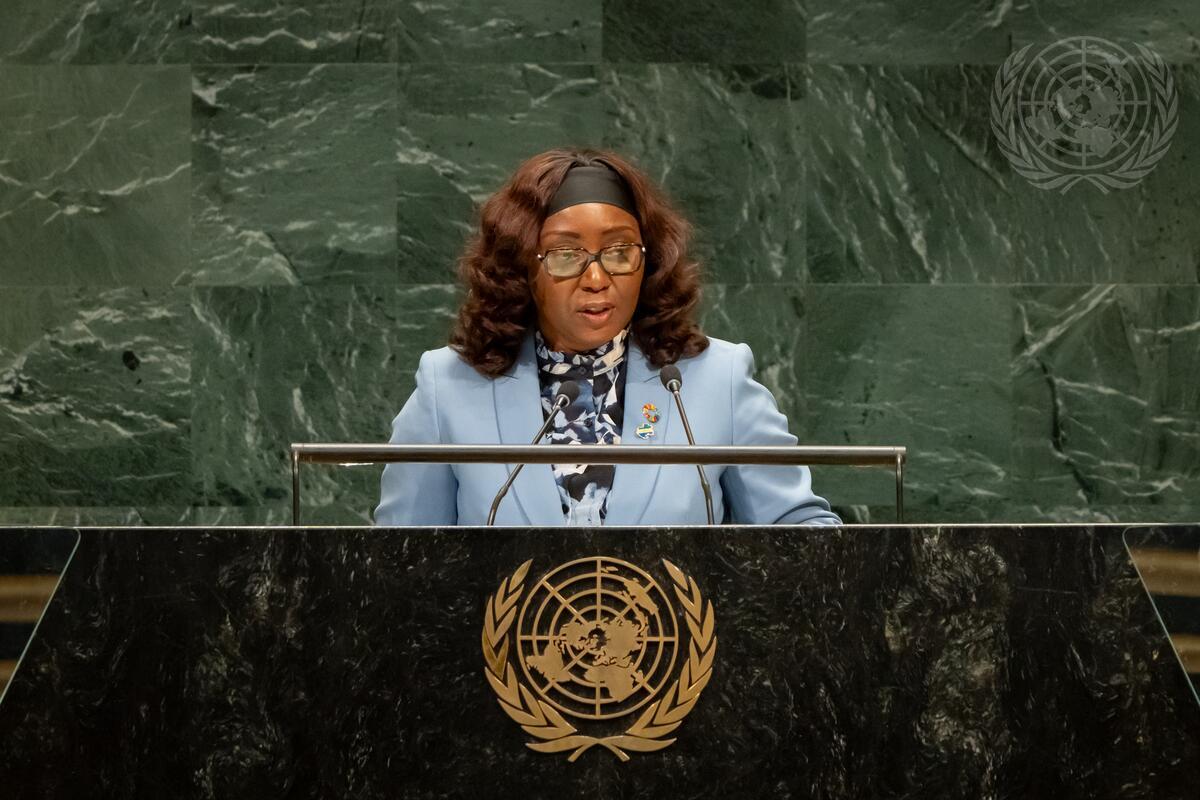
NEW YORK, 26 September 2026 — Gabon has called for stronger security cooperation in the Gulf of Guinea, wider reform of global institutions and a more equitable international financial system as the country warned that mounting global crises are placing increasing pressure on international cooperation.
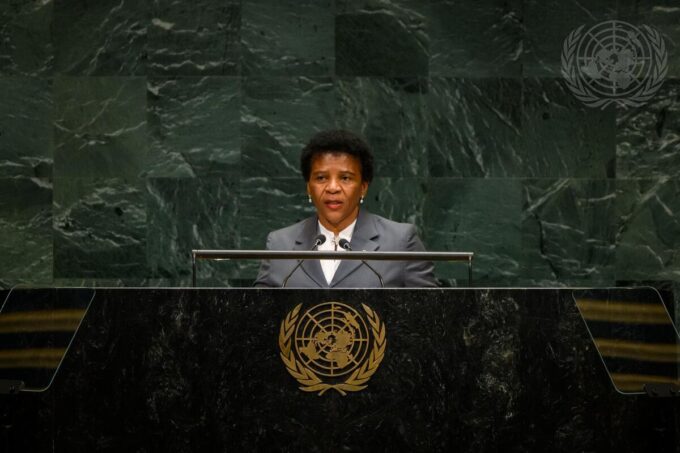
Gabon’s Minister of Foreign Affairs and Cooperation, in charge of Integration and the Diaspora, Marie-Édith Tassyla-Ye-Doumbeneny, made the call while addressing the 81st session of the United Nations General Assembly.
Tassyla-Ye-Doumbeneny said armed conflicts, geopolitical tensions, persistent inequalities, climate change, humanitarian emergencies, forced displacement, food insecurity, cybercrime and emerging technologies were creating a difficult international environment.
“These realities are severely testing the international community’s ability to act together in this uncertain environment,” she said.
She said restoring trust between nations required a return to the principles of international law and the United Nations Charter, alongside practical cooperation on global challenges.
“There is one value that can still guide us trust,” she said.
Gabon also reiterated its commitment to non-interference in the domestic affairs of states, as well as respect for sovereignty and territorial integrity.
The minister said Gabon welcomed the adoption of UN Security Council Resolution 2797 of 2025, which she said had provided fresh impetus to efforts to settle the regional dispute over the Moroccan Sahara based on the autonomy plan under Moroccan sovereignty.
Gulf of Guinea security
The Gulf of Guinea featured prominently in Gabon’s appeal for stronger regional cooperation.
Tassyla-Ye-Doumbeneny described the Gulf of Guinea as a maritime area whose importance to international trade is increasing and called for “substantial strengthening of security in this strategic area”, which she described as a foundation for shared prosperity.
“Collective engagement is essential,” she said, linking stronger regional cooperation to efforts to address conflicts, climate change, sustainable development and pandemics.
Gabon, which serves as a member of the African Union Peace and Security Council, also called for the implementation of UN Security Council Resolution 2719 on financing peacekeeping operations in Africa.
The minister said fulfilling the commitment would help consolidate peace on the continent and strengthen cooperation between the UN Security Council and the AU Peace and Security Council.
She said restoring trust also depended on countries honouring commitments made at regional level.
Development and economic transformation
Tassyla-Ye-Doumbeneny said Gabon was pursuing social, environmental and economic transformation through its National Growth and Development Plan for 2026 to 2030.
The plan includes measures aimed at improving living conditions, including investment in administrative, hospital and educational infrastructure.
Gabon also called for a renewed international partnership built around mutual respect, shared responsibility and concrete commitments.
According to the minister, such cooperation should support local processing of natural resources, economic diversification, technology transfer and stronger national capacities.
She also called for reform of the international financial architecture to make it more equitable, inclusive and responsive to current global challenges.
“Restoring trust also involves reforming the international financial architecture, making it more equitable and inclusive,” she said.
The minister warned that without reform, mobilising development financing, particularly green finance, was becoming increasingly difficult.
Gabon, which has extensive forest cover and a low deforestation rate, said its contribution to global climate regulation and the ecosystem services provided by its forests should receive greater international recognition.
“These must be properly valued and give rise to fair, adequate, predictable and sustainable financing,” Tassyla-Ye-Doumbeneny said.
Concerns over digital technology
The Gabonese government also raised concerns over the risks accompanying rapid digital transformation.
Tassyla-Ye-Doumbeneny said emerging technologies offered significant opportunities but also created risks involving privacy, disinformation, cybercrime and irresponsible use of technology.
“The absence of an effective international legal framework leaves the way open for all of these abuses to arise, posing a direct threat to the security of our state and the fundamental rights of our citizens,” she said.
Gabon has introduced what the minister described as more appropriate and secure regulation of the digital and artificial intelligence sectors through temporary and proportionate measures aimed at protecting citizens.
“Our aim remains to build an open and secure digital ecosystem that respects freedoms and is fully consistent with our international commitments,” she said.
Gabon backs UN reform
Gabon also called for institutional reform within the United Nations, including changes to the Security Council to give Africa a greater role in international peace and security decisions.
The minister said the UN needed to adapt to changes in the international system and respond more effectively to global challenges.
“The UN must therefore demonstrate its ability to adapt to the international context and effectively address the challenges facing the world,” she said.
Tassyla-Ye-Doumbeneny said Africa should take its place among the permanent members of the Security Council.
“For Gabon, there can be no legitimate global governance without equitable African participation in decisions concerning international peace and security,” she said.
Gabon also welcomed the adoption of UN General Assembly Resolution 8250 on the African slave trade, which the minister said characterised the trade as the gravest crime against humanity.
The country further expressed support for Cuba and joined calls by states for the lifting of the US embargo against the island.
Support for multilateralism
Tassyla-Ye-Doumbeneny said Gabon supported a form of multilateralism that was more inclusive and responsive to the aspirations of people, particularly women and young people.
She said the country’s approach was grounded in the principle that every state should have the right to determine its own path.
Earlier in her address, the minister conveyed congratulations from Gabonese President Brice Clotaire Oligui Nguema to the president of the 81st General Assembly session following the election to preside over the body.
She pledged Gabon’s support for the new General Assembly leadership and expressed hope that the session would be guided by dialogue, listening and compromise in the pursuit of international peace and cooperation.
Gabon also paid tribute to UN Secretary General António Guterres as he approaches the end of his second term, recognising what it described as his commitment to multilateralism and the principles of the UN Charter.
Tassyla-Ye-Doumbeneny said Gabon’s vision was centred on a more peaceful, just, equitable and united international order founded on trust and stronger cooperation among states.



Leave a comment