


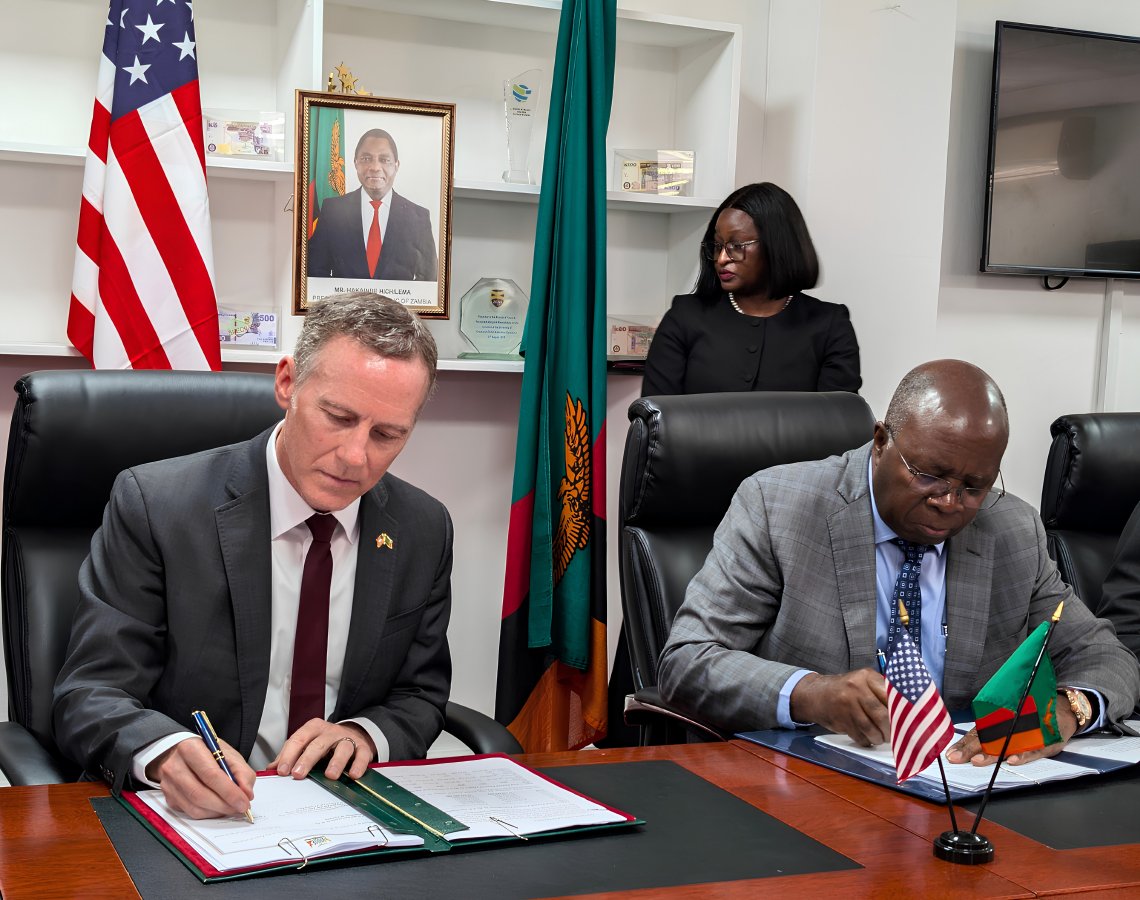
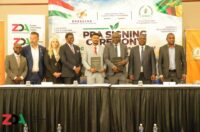
LUSAKA – Zambia and the United States have signed a five year, US$2.49 billion health cooperation agreement aimed at combating infectious diseases, strengthening healthcare delivery and gradually transferring greater responsibility for the country’s health system to its government.
The Memorandum of Understanding (MoU), signed in Lusaka under the Trump administration’s America First Global Health Strategy (AFGHS), sets out a joint commitment to sustaining public health programmes while building a more financially independent and resilient Zambian healthcare system.
Under the agreement, the United States intends to provide more than US$1.5 billion over the next five years, subject to working with Congress, to support priority health interventions in Zambia.
The funding will cover HIV/AIDS, tuberculosis (TB), malaria, maternal and child health, disease surveillance, and preparedness and response to infectious disease outbreaks.
Zambia, meanwhile, has pledged to increase its domestic health expenditure by US$975 million over the same period, with the aim of gradually taking on a greater share of the financial responsibility for its healthcare services and public health outcomes.
US Chargé d’Affaires Mich Coker described the agreement as a significant development in relations between the two countries, pointing to decades of American investment in Zambia’s health sector.
“This Memorandum of Understanding represents a transformative five-year partnership between the United States and Zambia—one built on shared commitment and mutual accountability,” said Chargé d’Affaires Mich Coker.
“Over the past 25 years, U.S. investments have helped save nearly 1.3 million Zambian lives through HIV treatment services and significantly strengthened Zambia’s health system. Now, with Zambia committing to increase its domestic health expenditures over the next five years, the United States is helping Zambia chart a path toward a strong, self-reliant health system that will serve Zambians for generations to come. In addition to sustaining progress against HIV, TB, and malaria, this MOU is empowering Zambia to take full ownership of its health care and systems while protecting both of our nations from emerging infectious disease threats.”
Zambia to assume greater healthcare responsibility
A central component of the agreement is a gradual transition towards domestic financing and management of essential healthcare services, including the workforce, medical supplies and health information systems.
Under the co-investment arrangement, Zambia will increase its domestic health expenditure by US$975 million over five years. The commitment is intended to ensure that the government progressively provides the resources required to sustain national health programmes.
The agreement also provides for the integration of frontline healthcare workers currently supported by the US government into Zambia’s established health workforce structures.
These workers will be aligned with the country’s health worker categories and transferred to the Zambian civil service over several years.
The transition is designed to support the long term continuity of healthcare services as Zambia assumes greater responsibility for staffing and operating its health system.
Medical supplies and other essential commodities will also gradually move from US government procurement to procurement managed by the Zambian government during the five year period.
As part of the arrangement, Zambia has committed to developing systems that track medicines and medical supplies from production to delivery, helping prevent theft, misuse and losses within the supply chain.
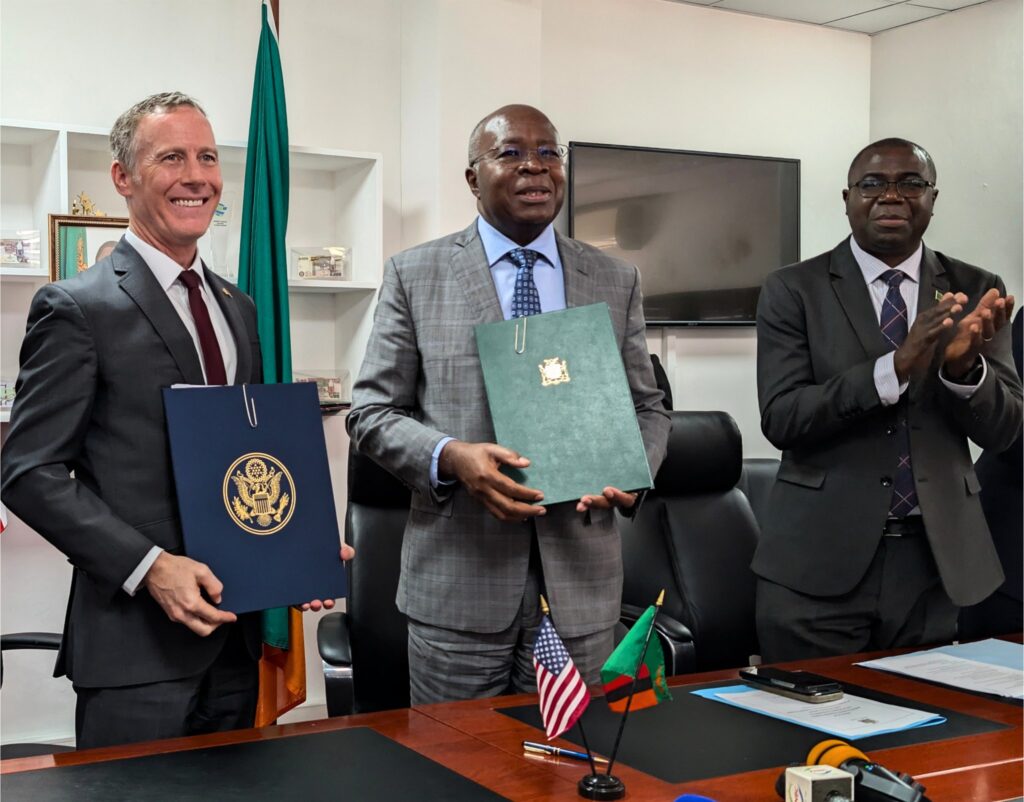
Photo: X/@usembassyzambia
Investment in health data and disease surveillance
The agreement also provides for expanded investment in Zambia’s health information infrastructure, including the development of systems that allow data from different health programmes to be shared and used over the long term.
The funding will support the integration of information covering HIV/AIDS, tuberculosis, malaria and infectious disease outbreaks, strengthening the country’s ability to monitor health trends and respond to emerging threats.
A key priority will be accelerating the nationwide rollout of electronic medical records systems in Zambia.
Improved data management is expected to support the monitoring of patients, strengthen disease surveillance and help health authorities track the performance of major public health interventions.
The agreement further provides for continued support to laboratory infrastructure and data systems, alongside medical interventions necessary to maintain access to quality healthcare.
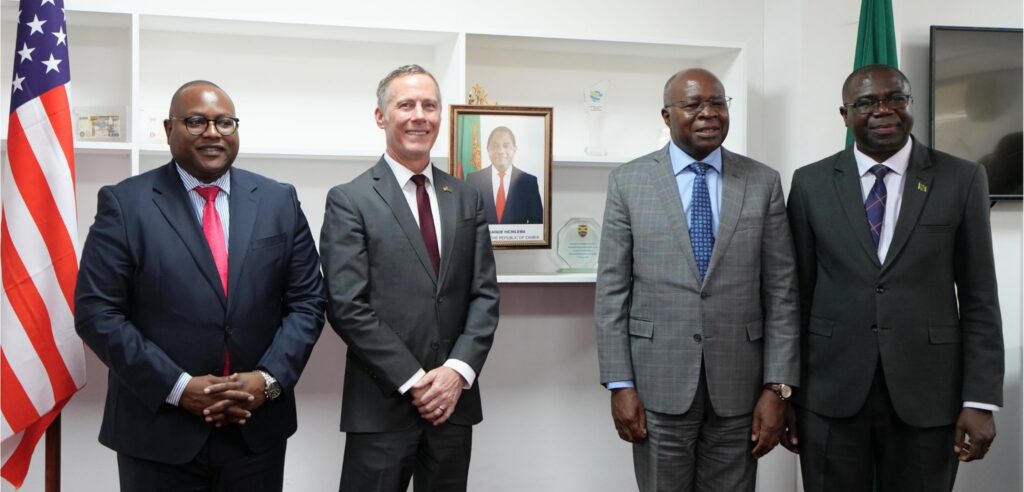
Photo: X/@usembassyzambia
Protecting gains in public health
The United States and Zambia intend for the agreement to preserve health gains achieved through more than two decades of cooperation, particularly in maternal and child health and the treatment and prevention of infectious diseases.
Continued assistance for HIV/AIDS, tuberculosis and malaria programmes will remain a central part of the partnership, alongside efforts to improve preparedness for disease outbreaks.
The arrangement also links Zambia’s domestic health financing commitments to broader regional and international health security objectives, recognising that effective disease surveillance and outbreak response can help protect populations beyond national borders.










Leave a comment