


Windhoek – Namibia is seeking to secure investment, technology transfer, skills development and new opportunities in water, agriculture and energy cooperation as it prepares to participate in the third Russia-Africa Summit scheduled for Moscow on 28 and 29 October 2026.
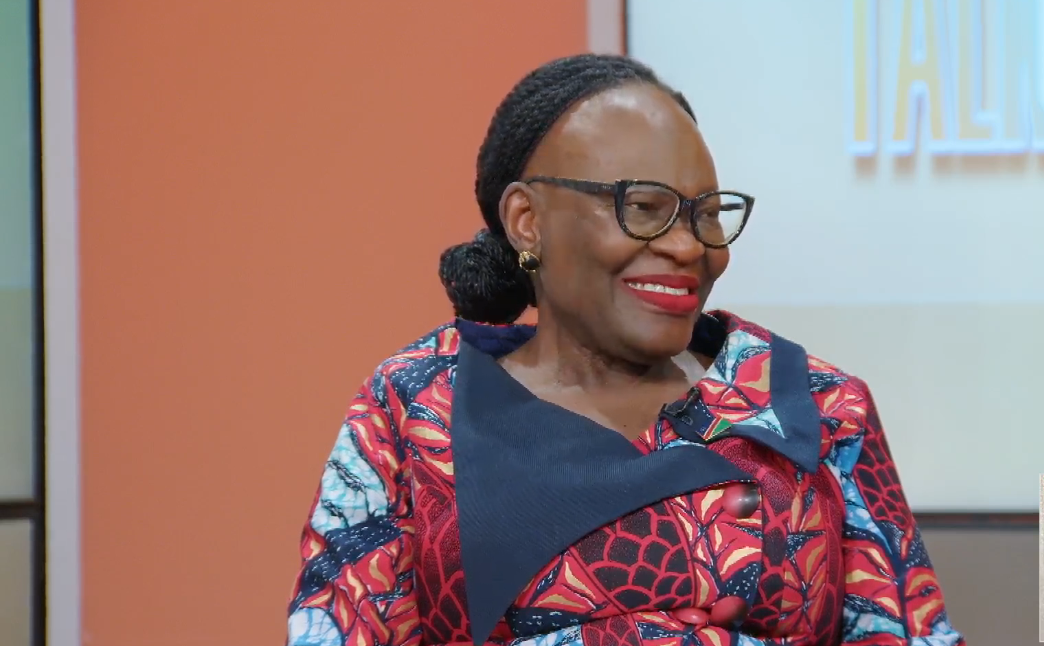
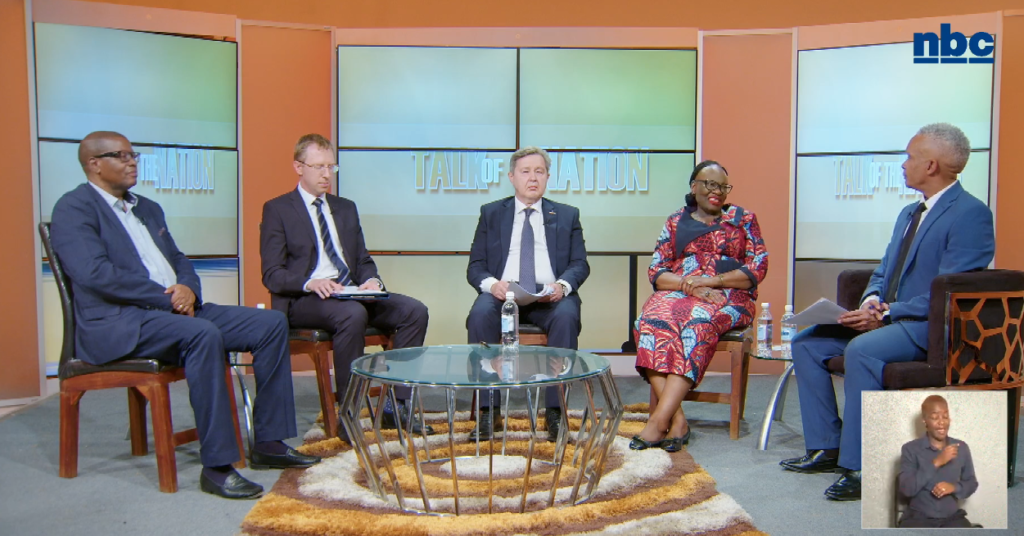
The country’s Minister of International Relations and Trade, Selma Ashipala Musavyi, outlined Namibia’s priorities during an edition of the Namibia Broadcasting Corporation’s (NBC) Talk of the Nation, broadcast live on Monday, 12 October 2026.
The discussion brought together Russian Ambassador to Namibia Dmitry Lobach, Russian Embassy Senior Counsellor Anton Chirva, public policy analyst Dr Marius Kudumo and representatives of Russia’s state nuclear energy corporation, Rosatom, to examine the opportunities and risks associated with closer relations between Namibia, Russia and the wider African continent.
The summit will bring together African leaders and Russian representatives to discuss cooperation in areas including trade, investment, food security, science, technology and economic development.
For Namibia, the engagement presents an opportunity to attract resources for its development priorities while strengthening its diplomatic and economic relationships with international partners.
Ashipala Musavyi said Namibia would use the summit to advance both bilateral relations with Russia and broader cooperation between Africa and its international partners.
She identified water and sanitation as important priorities, noting that the African Union has made these issues a focus of its agenda for the year.
Namibia participates in the African Union’s Water Panel and hosts the Global Water Partnership. The minister said the country wanted to use the Moscow meeting to draw international attention to its role in water cooperation and mobilise resources to address its water needs.
Water is essential to Namibia’s mining, agriculture and industrial development, making it a key consideration in the country’s efforts to expand economic activity and improve living conditions.
Nuclear energy and uranium prospects
Energy cooperation emerged as one of the central issues during the discussion, with Rosatom representatives outlining the potential for uranium mining, nuclear technology and skills development in Namibia.
Namibia is among the world’s leading uranium producers, and participants discussed how the country could benefit more from its mineral resources by developing greater domestic energy capacity and expanding technical expertise.
Vanessa Boitile, a deputy director at Rosatom, said its subsidiary, Uranium One, was involved in exploration and development plans in the Omaheke Region through the Namibian entity Headspring Investments.
The proposed project uses an in situ recovery method to extract uranium. Boitile said the company had also invested in local community development while preparing for potential operations.
Its initiatives include support for primary and secondary schools through the construction of kitchens and the establishment of gardens, as well as bursaries for Namibian students studying in Russia.
She also cited a training initiative involving approximately 19 young people from the Leonardville area, some of whom were subsequently absorbed into employment programmes.
Boitile said the project could create substantial economic opportunities if it proceeds to full implementation.
According to her projections, the project could generate about 600 direct jobs and 4,000 additional mining related jobs, with approximately 20,000 Namibians benefiting from its activities.
She also estimated that it could contribute an additional N$59.5 billion in tax revenue, although these figures were presented as projected benefits rather than confirmed outcomes.
The company believes the project could strengthen Namibia’s position in the global uranium market, potentially moving it from the third largest producer to second place or even first.
Abel Nifitikeko, a deputy chief technical director at Rosatom, said the proposed mining operation could also provide opportunities for local engineers, scientists and researchers to acquire specialised knowledge.
He said cooperation could support technology transfer and give Namibian students access to research opportunities in a field that remains relatively underexplored in the country.
The discussion also examined the possibility of Namibia developing nuclear power generation to reduce its reliance on imported electricity and potentially supply neighbouring markets.
Nifitikeko said Namibia would first need to establish appropriate infrastructure, particularly systems for managing nuclear waste, while developing the skills required to operate and regulate nuclear facilities safely.
Ashipala Musavyi said the country was working on the necessary legal and institutional arrangements, including training personnel and strengthening its regulatory framework.
She also pointed to Namibia’s membership of the Treaty on the Non Proliferation of Nuclear Weapons and its engagement with the International Atomic Energy Agency as part of the broader framework for exploring peaceful nuclear energy.
Lobach said Russia was considering cooperation involving a modular nuclear power plant. He explained that the proposal under discussion would involve returning the unit to Russia for nuclear waste storage.
However, the discussion did not establish that Namibia had approved or committed to building such a facility.
Questions over uranium project safety
The proposed Headspring Investments project has faced scrutiny over concerns about possible contamination of the Stampriet aquifer, an important groundwater resource in Namibia.
Lobach said the project had been suspended amid concerns about potential contamination. He further stated that the International Atomic Energy Agency had this year concluded that the uranium extraction method could be safe provided the necessary precautions were followed.
According to the Russian ambassador, Namibian authorities had authorised additional research by Headspring Investments the previous week, with the expectation that further findings could help resolve outstanding concerns and allow the project to advance.
The safety of groundwater resources remains an important consideration for Namibia as it explores opportunities to expand uranium production, particularly in a country where water scarcity presents significant development challenges.
Rosatom representatives said their proposed in situ recovery method was designed to limit surface disturbance and avoid the creation of waste rock. They also said further geological and hydrological studies were under way to assess groundwater protection before the project could progress to the next stage.
Trade, agriculture and education
Beyond energy and mining, Namibia and Russia are looking to expand cooperation through their intergovernmental commission on trade and economic cooperation.
Ashipala Musavyi said the partnership covered trade, investment, education, transport, health, science, technology, mining and energy, all of which were linked to Namibia’s national development priorities.
Lobach referred to the commission’s 11th session, held in Windhoek in March 2026, where the two countries discussed expanding cooperation in mining and the supply of Russian vehicles, civil helicopters and agricultural fertilisers to Namibia.
He said Russian fertiliser producers were interested in the Namibian market, adding that food security had become an increasingly important area for cooperation.
Potential collaboration could include grain and fertiliser supplies, technology transfer, capacity building and the involvement of Namibian contractors in local projects.
Lobach said about 400 Namibians were studying in Russia, while 35 government scholarships were allocated annually for tuition free studies at Russian universities.
He also pointed to growing interest in the Russian language in Namibia, with the Russian House in Windhoek offering language courses, cultural activities and intellectual competitions.
Chirva cited cooperation in advanced technology, including a memorandum of understanding signed last year between Russian company Sputnik and the Namibia University of Science and Technology.
The proposed initiative involves establishing a specialised laboratory to train local specialists and developing a satellite that could help Namibia monitor agricultural crops and detect illegal fishing and vessel trafficking within its exclusive economic zone.
Tourism was another area discussed. Chirva said Namibia was attracting increasing numbers of Russian visitors, with the figures he cited rising from approximately 3,500 in 2024 to 7,800 in 2025.
He said the absence of direct flights remained a challenge, despite the visa free travel arrangement between the two countries, and suggested that the intergovernmental commission and Russia Africa partnership mechanisms could provide platforms for addressing such barriers.
Namibia urged to protect its national interests
While the participants discussed the potential benefits of closer relations, Kudumo cautioned that Namibia and other African countries needed to approach international partnerships with clearly defined objectives.
He said Africa should ensure that cooperation with Russia and other international partners was guided by the continent’s development priorities and produced tangible benefits for its people.
Kudumo referred to the African Union’s Agenda 2063, which promotes people driven development and a stronger African role in global affairs.
He warned that agreements could fail to deliver results if governments did not establish effective monitoring and evaluation mechanisms to track implementation.
For him, the value of international engagement would depend on whether commitments translated into measurable improvements in areas such as education, agriculture, water, poverty reduction, science and technology.
He also called for African countries to maintain a common position in international forums, arguing that collective engagement would strengthen the continent’s ability to pursue its interests.
Ashipala Musavyi responded that African countries already had a shared development framework through Agenda 2063 and that the African Union Commission helped coordinate preparations for the Russia Africa Summit.
She said a ministerial preparatory meeting had been held in December 2025 to discuss the issues African countries wanted to raise with Russia.
The minister said Namibia would continue using bilateral and multilateral partnerships to advance its national priorities.
Lobach, meanwhile, described Russia’s relationship with Africa as rooted in longstanding political ties and historical cooperation, including support for African liberation struggles during the Soviet era.
He said the summit process, which began with the first meeting in Sochi in 2019 and continued in St Petersburg in 2023, had developed into a platform for political dialogue, business engagement and strategic cooperation.
The third summit in Moscow is expected to provide another opportunity for African countries and Russia to discuss their positions on international affairs, economic development and cooperation across several sectors.
Ashipala Musavyi said Namibia wanted the meeting’s final outcome document to support the principles of the United Nations Charter and international law while addressing Africa’s development needs.
She said the summit should contribute to stronger multilateral cooperation and mutually beneficial relations between African countries and Russia.
Watch : Russia Africa Summit 2026: What Namibia hopes to gain | Talk of the Nation





Leave a comment