


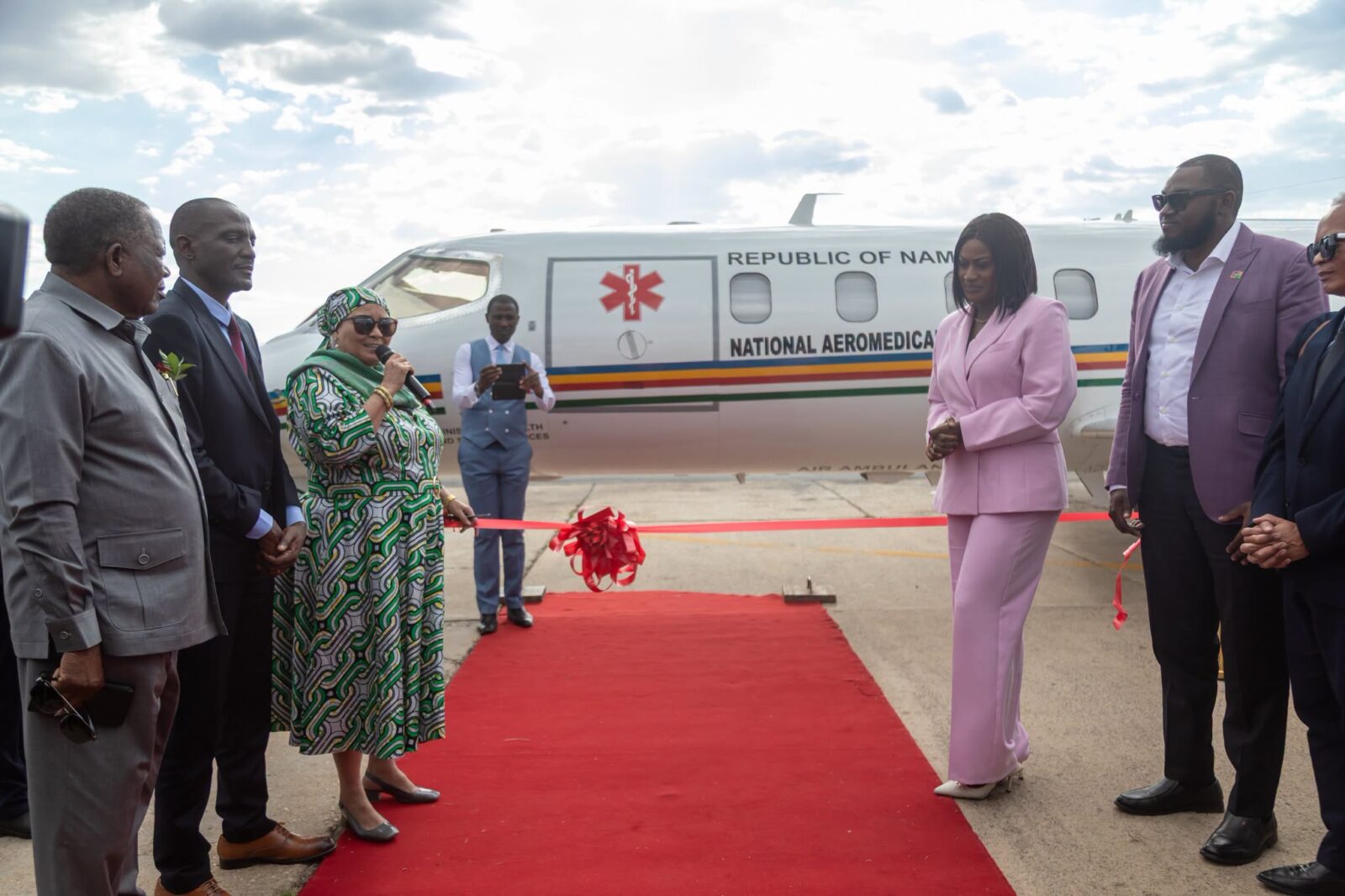
WINDHOEK, Namibia – Namibia has launched its first state-owned air ambulance service, a major investment in emergency healthcare aimed at reducing delays in transporting critically ill and injured patients from remote communities to specialised medical facilities.
The service was officially inaugurated in Windhoek on Wednesday, 4 November 2026, by Vice President Lucia Witbooi, who described the initiative as a historic development in the country’s efforts to achieve universal health coverage and improve access to emergency medical care.
Speaking at the launch, Witbooi said the new service would address longstanding challenges caused by Namibia’s vast geographical landscape and the considerable distances separating rural communities from intermediate and national referral hospitals.
She said patients in remote parts of the country had often faced lengthy road journeys when requiring urgent medical attention, with delays potentially determining whether they survived critical injuries or medical complications.
The new air ambulance service is expected to reduce journeys that previously took several hours by road to minutes or a few hours by aircraft, allowing patients to access specialised treatment more quickly.
“With this dedicated national air ambulance service, we are fundamentally shifting the status quo. Our message today is clear and resolute: No Namibian should lose their life simply because they live far from a hospital,” Witbooi said.
She added that access to emergency healthcare should not depend on a person’s geographical location, financial circumstances or proximity to a medical facility.
According to the Vice President, the initiative represents more than an investment in aviation, as it establishes an integrated emergency medical response system designed to connect patients with appropriate healthcare services when urgent intervention is required.
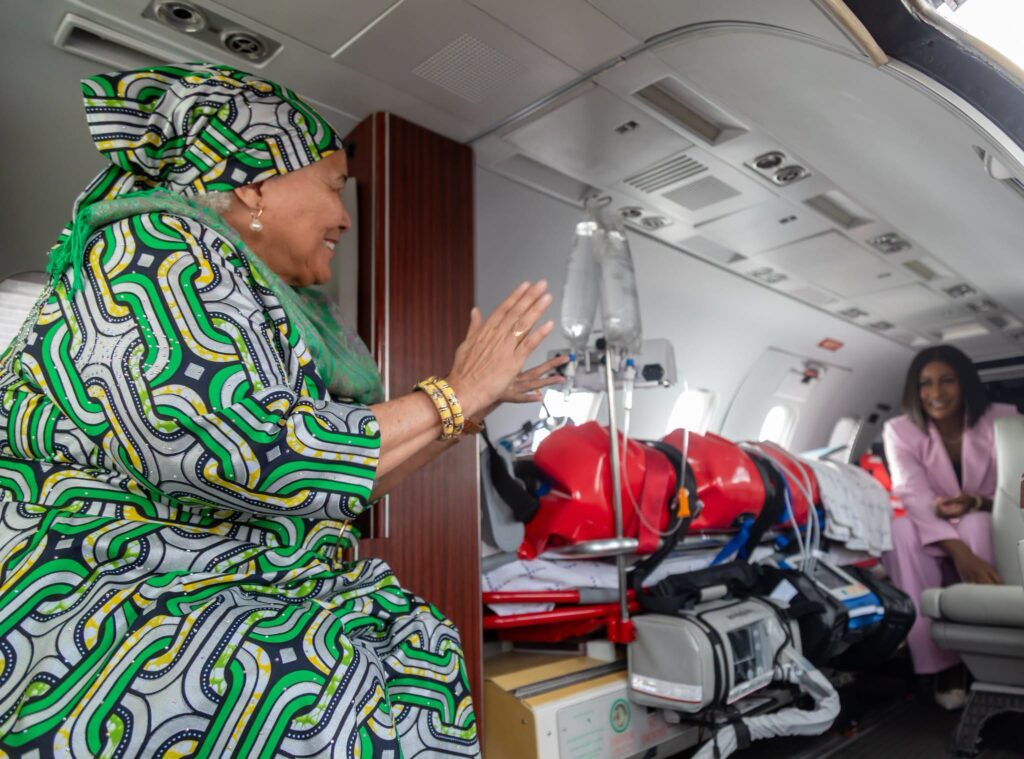
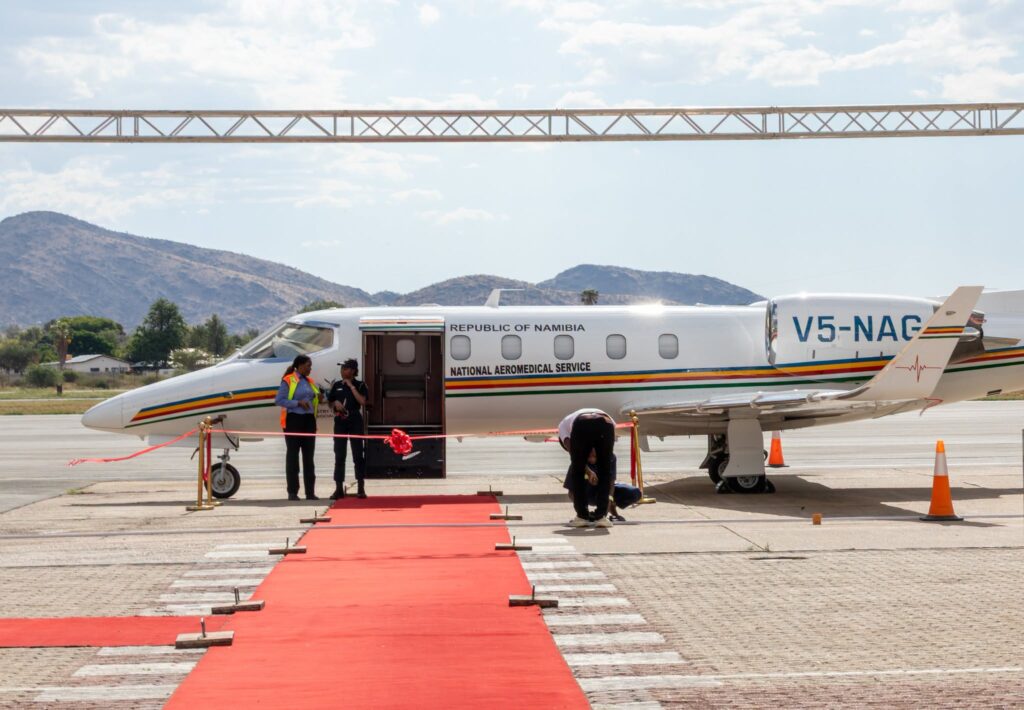
The service comprises several components, including a Learjet aircraft fitted with advanced medical equipment and designed to operate as an intensive care unit in the sky.
It will also incorporate helicopter medical evacuation services, sourced through strategic cooperation with the Namibian Police Force (NAMPOL) and the Namibian Defence Force (NDF), to respond to emergencies in specific locations when required.
Government Air Transport Services (GATS), working alongside the Ministry of Works and Transport and the Ministry of Health and Social Services, will provide the air emergency units and dedicated pilots.
Specialised healthcare professionals trained to deliver critical medical care will accompany patients during evacuation operations, while dedicated emergency service centres at national referral hospitals will facilitate patient transfers and ensure continuity of treatment upon arrival.
Witbooi said the air ambulance would complement Namibia’s existing ground ambulance fleet and strengthen referral arrangements connecting district hospitals with intermediate and national referral facilities.
She described a responsive public healthcare system as fundamental to the country’s development, noting its contribution to national productivity, family welfare and the broader social and economic well-being of the population.
The launch also forms part of Namibia’s wider development ambitions under Vision 2030 and the country’s Sixth National Development Plan (NDP6).
The Vice President commended the Ministry of Health and Social Services for leading the initiative, while recognising the contributions of several government institutions and partners involved in making the service operational.
Among those acknowledged were the Ministry of Works and Transport, Namibia Civil Aviation Authority, Ministry of Defence and Veterans Affairs, Motor Vehicle Accident (MVA) Fund, Road Fund Administration and National Road Safety Council.
She said the complexity of emergency medical aviation required close coordination between healthcare providers, aviation authorities, emergency responders, security institutions and other stakeholders.
Witbooi also called on private sector companies, development partners and non-governmental organisations to work with the government in supporting the initiative and improving healthcare outcomes across the country.
However, she cautioned that the official launch marked the beginning of a demanding operational undertaking, with the long-term success of the service depending on its ability to maintain reliable, safe and sustainable operations.
She pointed to the need for regular aircraft maintenance, proper management of specialised medical equipment, continuous training of personnel, adequate staffing and sufficient financial resources.
The service will also require clear operational procedures, strict clinical protocols and compliance with the highest aviation safety standards.
Witbooi said the Ministry of Health and Social Services would be expected to introduce data-driven monitoring systems to assess the service’s performance, including the quality and scope of its operations.
She called on all participating institutions to ensure that the service was managed in the national interest, with professionalism, compassion, efficiency and accountability guiding its operations.
Addressing the pilots, medical personnel, technicians and dispatchers who will be responsible for running the service, the Vice President urged them to recognise the importance of their responsibilities in protecting human life.
She said their duties went beyond operating aircraft and administering medical treatment, as they would be entrusted with helping patients survive life-threatening emergencies.
“Selfless dedication, absolute discipline, and the highest professional standards must be the unwavering cornerstones of the service you render to the Namibian people,” she said.















Leave a comment