


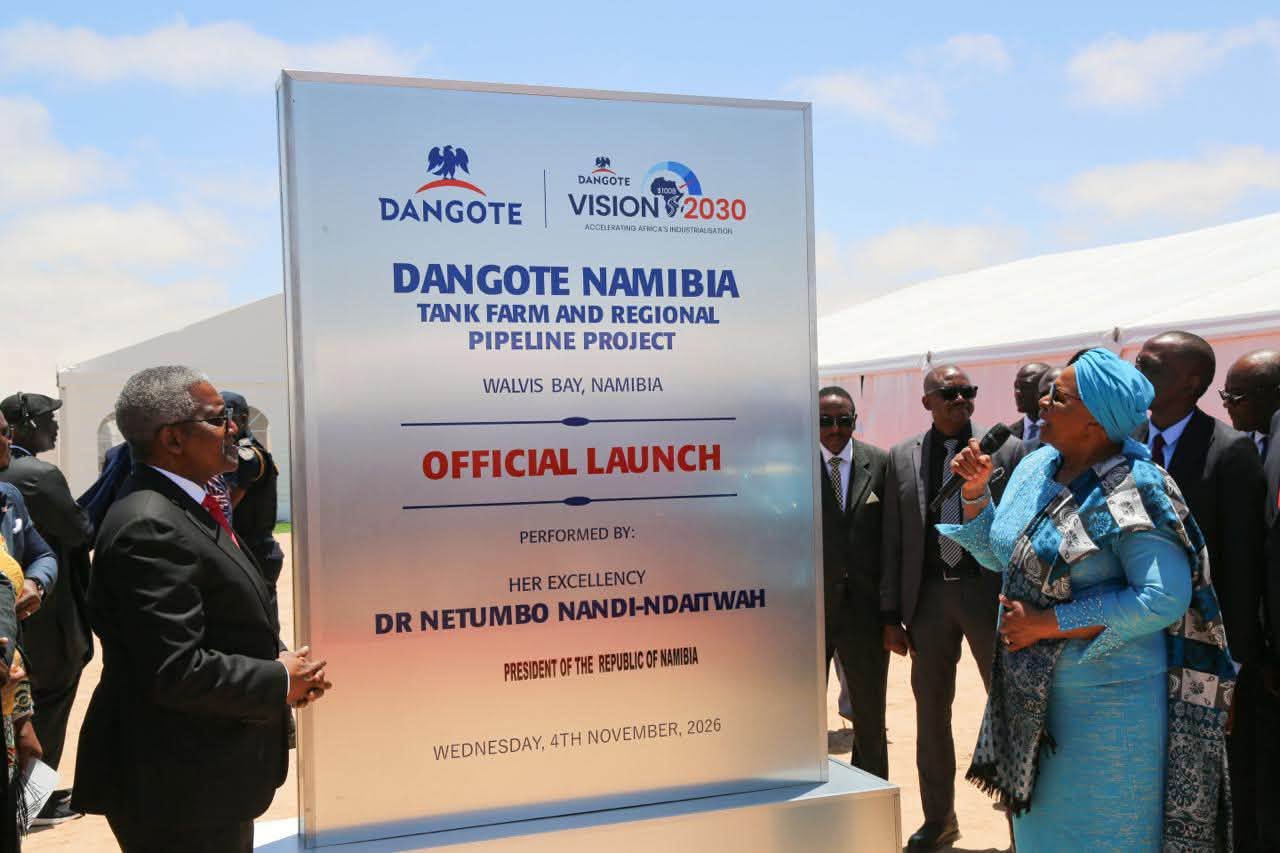
WALVIS BAY, Namibia – Namibian President Netumbo Nandi-Ndaitwah and Nigerian industrialist Aliko Dangote have officially launched a US$2.5 billion energy infrastructure project expected to strengthen Namibia’s fuel security, expand regional trade and position the country as a major petroleum distribution hub in Southern Africa.
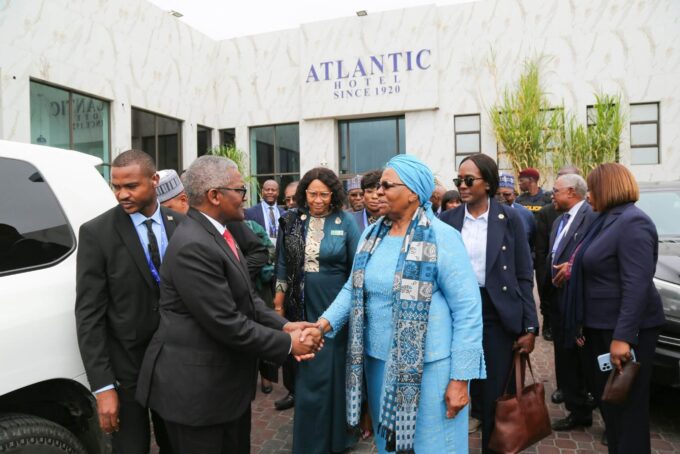
The Dangote Namibia Tank Farm and Regional Pipeline Project was unveiled at Farm 58 in Walvis Bay, Erongo Region, bringing together government officials, business representatives and regional stakeholders for the launch of one of Namibia’s major proposed energy investments.
The development will include a petroleum storage facility with a capacity of 600 million litres and a planned regional pipeline network stretching approximately 1,700 kilometres.
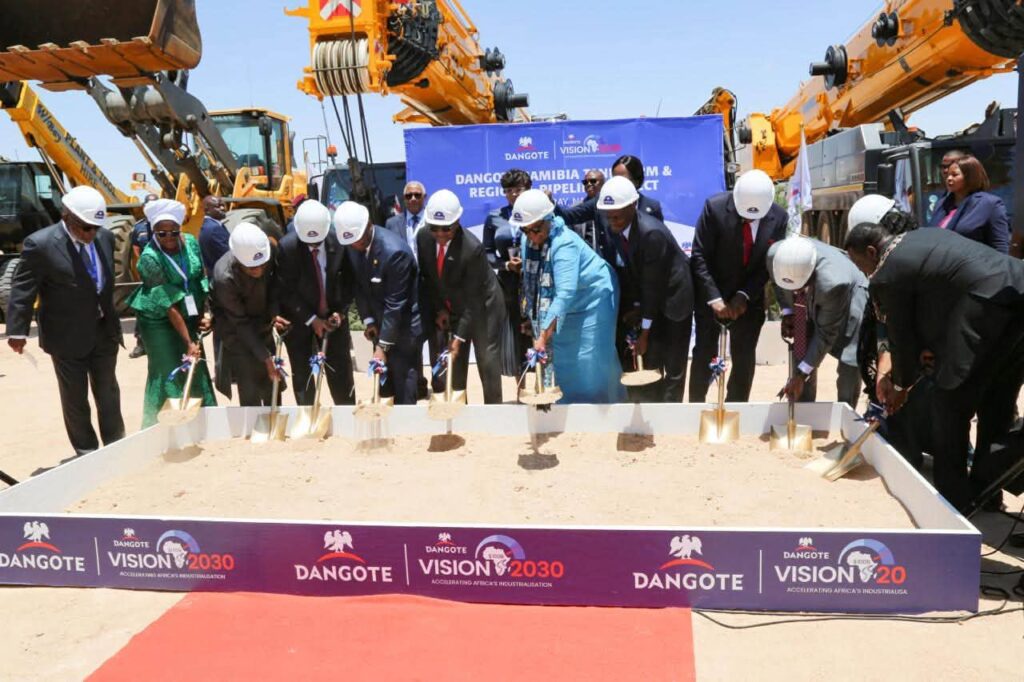
Once operational, the infrastructure is expected to improve fuel storage, supply and distribution while providing access to regional markets, particularly landlocked countries in Southern Africa that depend on neighbouring states for petroleum imports.
The project is also expected to create opportunities in employment, technical skills development, logistics, construction and other supporting industries.
Nandi-Ndaitwah places project under presidential oversight
For Nandi-Ndaitwah, the launch represents the progress of discussions that began when she first met Dangote, Chairman and Chief Executive Officer of the Dangote Group, in June 2025.
Recognising the project’s strategic importance to Namibia’s economy, the President placed it under the supervision of the Office of the President to prevent unnecessary administrative procedures from delaying its implementation.
Reflecting on the challenges encountered during the process, she called on government institutions to demonstrate urgency, accountability and cooperation in delivering projects that support national development.
“This project will remain a presidential project until it is completed,” President Nandi-Ndaitwah said.
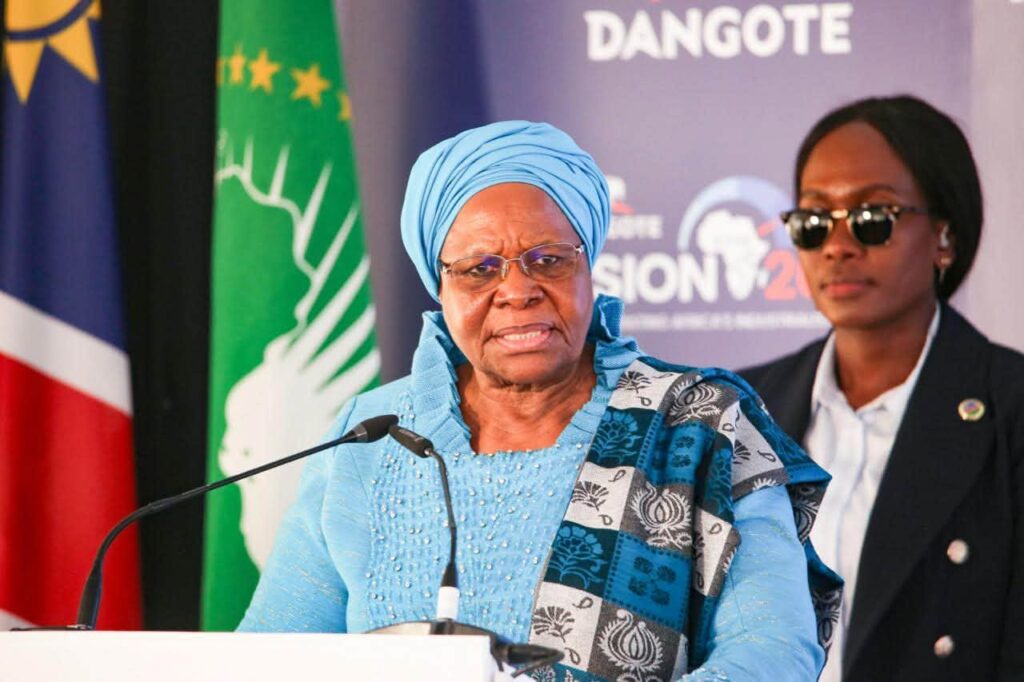
She maintained that the success of major investments should not be judged solely by the amount of capital committed, but also by the economic opportunities they generate for ordinary Namibians.
The President called for local companies to secure meaningful participation in the project, including opportunities for contractors, suppliers and small and medium-sized enterprises.
She also called for investment in skills development and employment, particularly for young people, who should be positioned to benefit from the opportunities created by major infrastructure developments.
Another priority raised was the need to expand value addition and industrialisation by building partnerships that allow Namibia to derive greater economic benefits from its resources and geographical advantages.
These objectives align with the country’s Sixth National Development Plan (NDP6), which seeks to accelerate economic transformation, expand industrial capacity and improve employment opportunities.
Beyond the financial value of the project, Nandi-Ndaitwah presented the investment as an example of what African countries can achieve through stronger commercial partnerships and greater confidence in the continent’s economic potential.
“As Africans, we are beginning to believe in ourselves,” she said, calling for partnerships founded on mutual trust and shared prosperity.
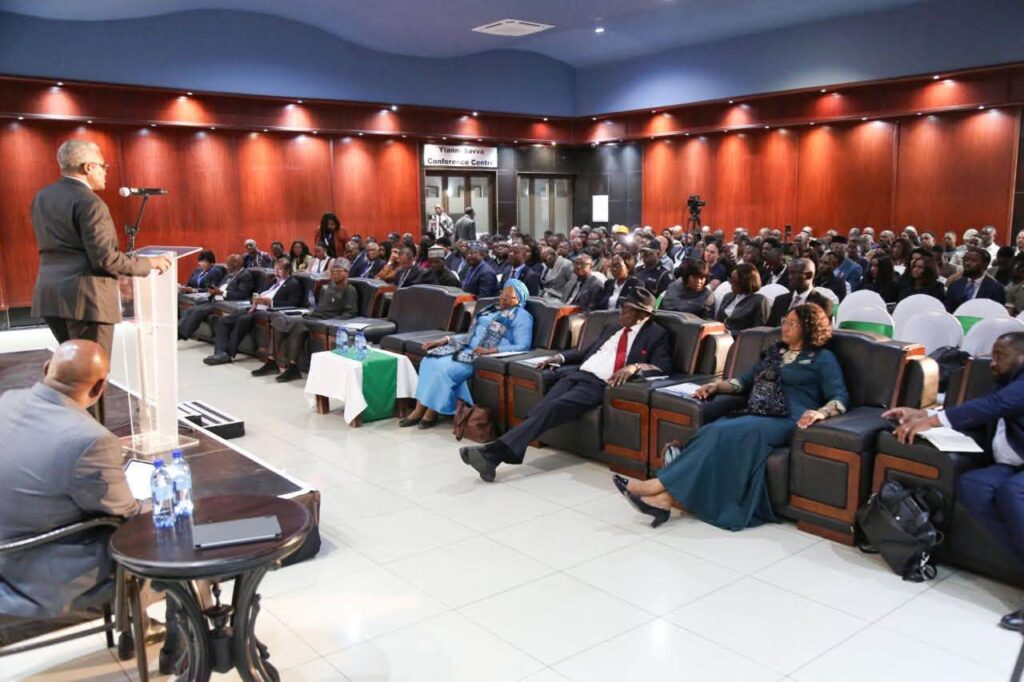
Dangote pledges further investment
Dangote expressed confidence in Namibia’s economic prospects and commended Nandi-Ndaitwah for her leadership and commitment to advancing the investment.
The Nigerian businessman said Africa needed to take greater responsibility for building the industrial infrastructure required to support its economic development.
“Africa must industrialise Africa,” Dangote declared.
He argued that the continent already possesses the natural resources, human capital, markets and entrepreneurial capabilities required to develop industries that can support its long-term transformation.
According to Dangote, the group’s investment approach extends beyond commercial returns to include employment creation, skills development and reinvestment in the economies where it operates.
He described the company’s expansion into Namibia as part of a broader commitment to African economic integration.
“Whenever we enter another African country, we are coming home,” he said.
Dangote also indicated that the US$2.5 billion investment could be the starting point for a wider business relationship with Namibia, revealing the group’s interest in exploring additional opportunities across other sectors of the economy.
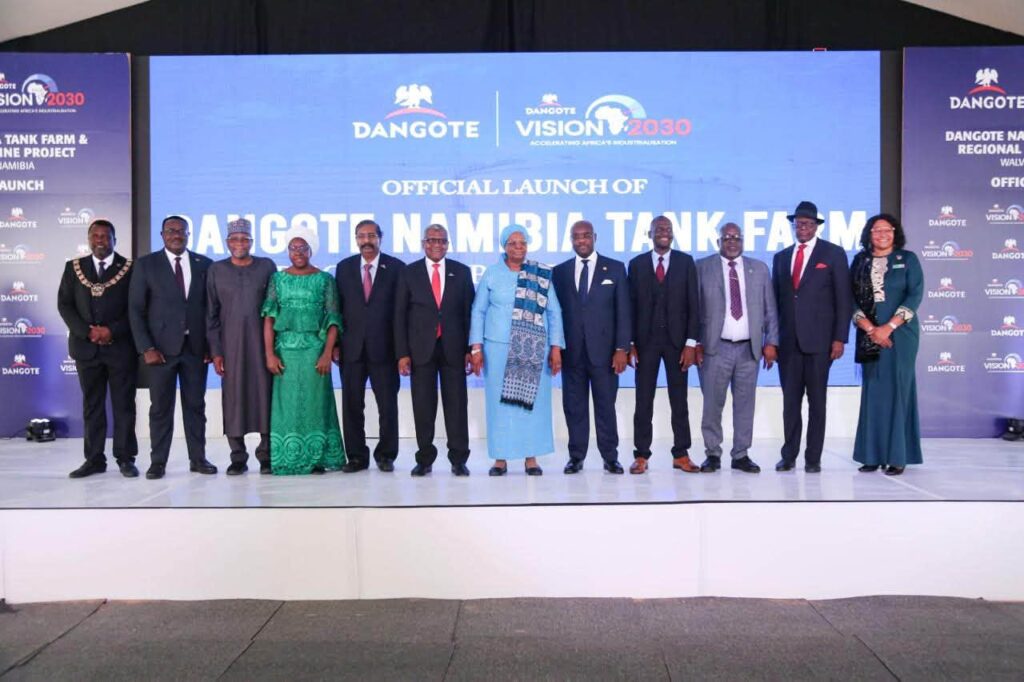
He assured the President that the company intended to honour its commitments and deliver the proposed development.
“We will not disappoint you. We will deliver as promised,” he said, describing trust as a critical foundation for sustainable investment partnerships.
Erongo welcomes strategic investment
Erongo Regional Governor Nathalia /Goagoses welcomed the development, pointing to the region’s geographical importance as a gateway for trade, logistics and industrial activity.
Walvis Bay’s position along the Atlantic coast and its established port infrastructure give Namibia an important advantage in connecting Southern African markets to international trade routes.
The proposed pipeline network could further strengthen these connections by facilitating the movement and distribution of petroleum products to neighbouring countries.
The investment also supports the objectives of the African Union’s Agenda 2063, particularly its priorities on industrialisation, regional integration, economic growth and employment creation.
As implementation moves forward, Nandi-Ndaitwah called on government institutions, the private sector and other stakeholders to translate the commitments made at the launch into practical results.
“Today we have spoken, and now we must act,” the President declared.




Leave a comment