


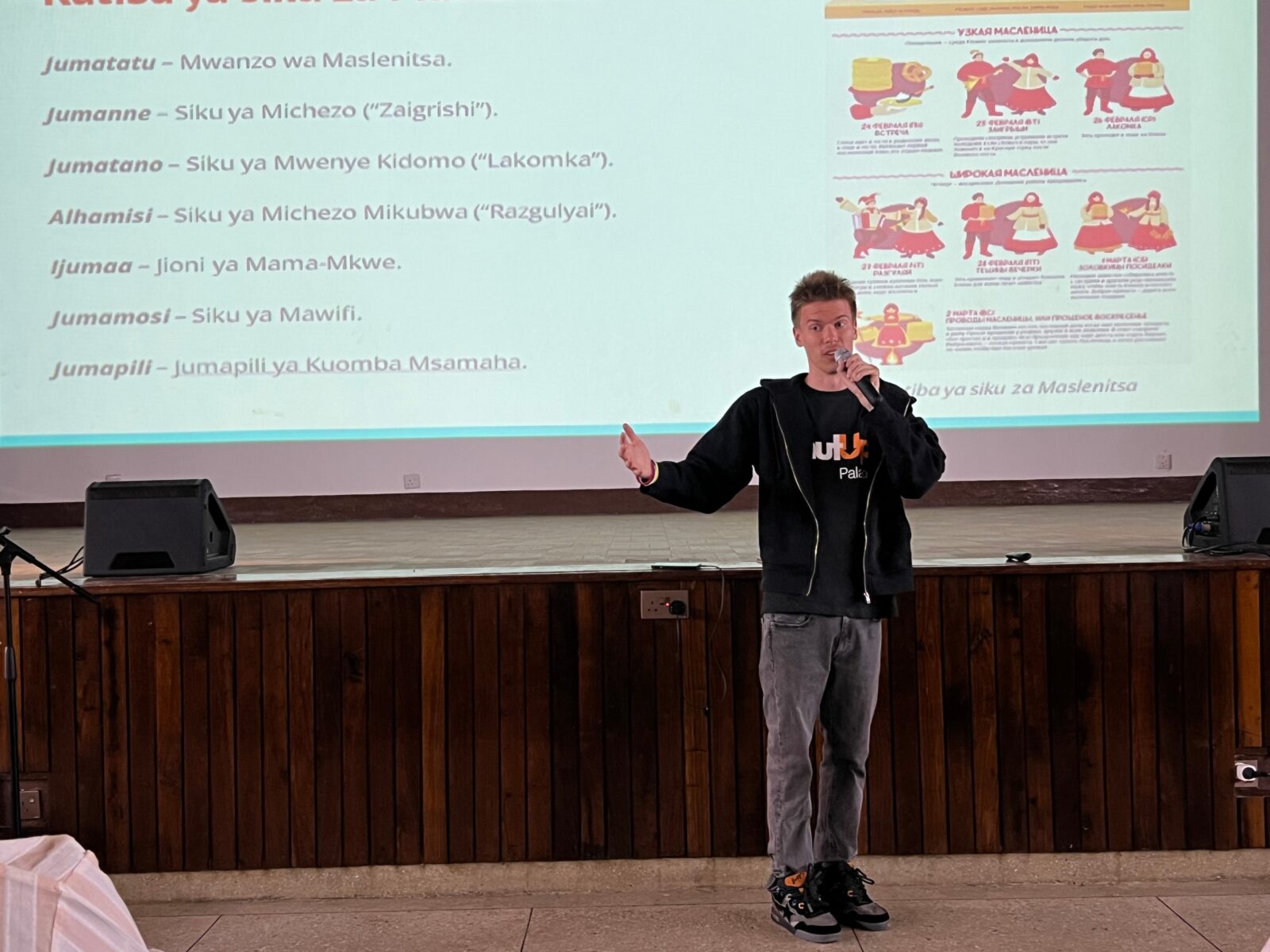
Moscow, Russia – Alexander Kulikov, a Russian African studies researcher and literary translator, wants to bring Russian classics to readers in siSwati and introduce Eswatini literature to Russian audiences. He is proposing a joint publishing and language programme between the two countries.
Kulikov is a doctoral student at St Petersburg State University (SPbU), where he earned his bachelor’s and master’s degrees with honours. He specialises in Bantu linguistics. He told The African Daily that he wants to help build lasting cultural and educational cooperation between Russia and Eswatini, with projects that continue after official visits end.
From St Petersburg to Dar es Salaam
Kulikov chose African studies in 2020 because he saw room to develop new projects and professional relationships. His Swahili teacher and academic supervisor, Professor Alexander Zheltov, played an important role in his training, and his university studies later led to field research, interpreting and cultural work in Africa.
Swahili was his first African language. On his first day in Tanzania, Russian Africanist Rifat Pateev introduced him to the Russian House in Dar es Salaam and then took him to a busy fish market, where they spoke Swahili with traders, tried street food and talked about the city’s history.
“I immediately understood why language matters: it allows you to participate in people’s lives and understand their perspectives,” he said.
He later took up Kinyarwanda, mainly through his work with Rwandan teacher and language consultant Valens Maniragena.
At the Russian House in Dar es Salaam, the cultural centre run by Rossotrudnichestvo, Kulikov has translated literature, interpreted professional discussions and contributed to cultural events and presentations in Swahili. He has also worked with Russian journalists in Tanzania, Uganda and Rwanda, including reporters from Argumenty i Fakty. He found interviewees, interpreted conversations and explained local customs, which helped Russian audiences see everyday life in East Africa beyond the familiar images of beaches and safaris.
“These assignments depend on relationships built over time,” he said. “Tanzanian motorcycle riders who assisted my fieldwork became friends.” Their conversations about Russia later led the riders to ask for Russian flags, President Putin and Zenit football club symbols for their motorcycles.
“Knowing a language is also a responsibility. People notice whether you understand their customs, listen carefully and keep your word,” Kulikov said.
“For some people I meet, I am the first Russian they know personally. I want that encounter to leave an impression of competence, openness and respect.”
He describes this as an important part of cultural diplomacy, because a country’s image develops through the conduct of the people who represent its culture.
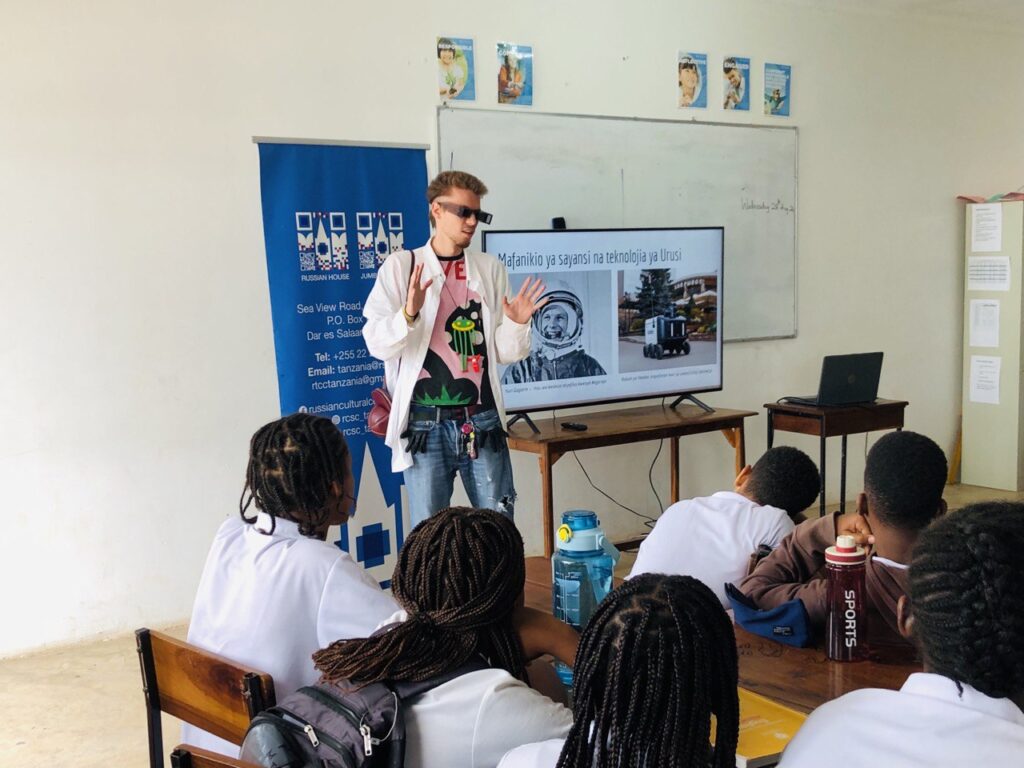
Chekhov in Kinyarwanda
Kulikov translated Anton Chekhov’s The Man in a Case into Kinyarwanda to mark the writer’s anniversary, since 2025 marked 165 years since Chekhov’s birth. He said a short story made a manageable first publication and allowed close attention to language and consultation with Maniragena. The story deals with fear of change, conformity and withdrawal from life, themes he believes give readers plenty to discuss whatever their cultural background.
“I am proud of Russia’s contribution to world literature and want more people to encounter it directly,” he said. He added that publishing in African languages widens access while supporting those languages as vehicles for literature, education and complex ideas.
Keeping Chekhov’s irony and metaphor was the hardest part of the work. “A literal translation can reproduce the words while losing the author’s intention,” he said. He wrote the drafts alone and then went through difficult passages with Maniragena, debating idioms, imagery and cultural references until the wording carried the meaning naturally.
The Kinyarwanda title, Umuntu mu Gafuka, introduces an image whose meaning grows as the story unfolds. “I hope readers will recognise the character’s behaviour around them and remember the expression,” he said.
Seventy five copies of the translation went to Petit Séminaire Saint Pie X de Nyundo in Rwanda. The relationship with the school began after its library suffered serious losses in the 2023 floods. Donations included books in several languages and translations of Russian literature. According to Kulikov, the rector reported that students had started reading Chekhov and would discuss the story in lessons. Kulikov and his collaborators also meet students and hold literary conversations during visits to the school.
Saltykov-Shchedrin on stage in Tanzania
Kulikov also translated Mikhail Saltykov-Shchedrin’s The Wise Gudgeon and The Wild Landowner into Swahili. The Russian House initiated the publication, which was presented at Tanzania’s National Library.
Kinyarwanda versions of both tales are being prepared, with the aim of publishing them before the end of 2026, which marks Saltykov-Shchedrin’s bicentenary. For The Wise Gudgeon, the translators used indagara, a small fish familiar to Rwandans, and researched suitable predators through consultations and written sources. Chekhov’s Kashtanka and Aleksey Konstantinovich Tolstoy’s The Vampire are possible projects for 2027, depending on funding and editorial preparation.
Tanzanian performers have staged The Wild Landowner in Swahili through cooperation between the Russian House and AFASR, including at the Bagamoyo arts festival. Kulikov said such performances turn the text into a starting point for local interpretation, while Russian readers can find connections with Swahili works such as Farouk Topan’s Mfalme Juha when discussing satire, authority and arrogance.
A siSwati and Russian partnership
Kulikov said the priorities set out by Eswatini’s tourism representatives in Moscow offer a practical starting point: Russian language training, cultural interpretation and introducing the Kingdom to Russian audiences. Literary translation and university cooperation could grow alongside this.
He plans to learn siSwati and work with native speakers on translations. A first publication, he suggested, could pair a Russian short story in siSwati with an Eswatini text in Russian, creating work for translators, editors and students. He would begin with short works by Pushkin, Chekhov or Lermontov, chosen together with local literary specialists, and use literary anniversaries as occasions for publication and events.
He said he would welcome cooperation with the University of Eswatini, writers, libraries, publishers and cultural organisations. He would contribute Russian language expertise, translation, lectures and project coordination, while local colleagues would set priorities, select Eswatini texts and shape the siSwati work.
To get started, he said a partnership would need an interested institution, a small translation team, an agreed publication and a budget covering translation, editing and distribution. He pointed to the Russia and SADC Action Plan signed during the Moscow summit, which covers education, culture and youth development, as a relevant regional framework.
Scholarships and study routes
Kulikov said Russian universities offer degree programmes, language preparation and research opportunities. The Russian government scholarship scheme can cover tuition, a monthly stipend and preparatory Russian language study, subject to competitive selection. Applicants can explore government funded study through education-in-russia.com and follow the instructions of the Russian diplomatic mission responsible for Eswatini.
The two countries already have an educational dialogue. Their education ministers discussed cooperation in June 2025, including vocational training and support for Russian language teaching.
Kulikov named SPbU as his first academic point of contact, with Rossotrudnichestvo and Russian Houses as partners for cultural and educational programmes. Volgograd State Socio Pedagogical University already includes Eswatini in its 2026 Russian language outreach project, and the Institute for Literary Translation runs a grant programme open to proposals from publishers.
He also said he would explore academic links with institutions in Luhansk, Donetsk and Mariupol, where he has given guest lectures, but only after assessing programme recognition, living conditions and student safety before promoting any placements.
Tourism, digital learning and a pilot programme
Beyond literature, Kulikov sees tourism as an immediate opportunity. Following the Eswatini delegation’s talks in Moscow, he suggested Russian lessons for guides and hospitality workers, Russian language visitor materials and cultural presentations for prospective travellers.
He said Russian could help Emaswati students follow lectures and build professional networks, and help the country work with Russian visitors, businesses, universities and cultural institutions. Learning should follow a purpose, he added, since an engineer, a guide and a literary translator need different vocabulary.
His proposed first project is a pilot Russian language and cultural programme with a partner in Eswatini. It would combine Russian lessons taught with English support by qualified teachers, cultural discussions and a small translation workshop. One strand would prepare prospective university students and another would serve tourism professionals. Online lessons, recorded lectures and downloadable materials would keep the work going between visits.
To make sure the relationship runs both ways, Kulikov wants joint authorship and decision making, translations in both directions, shared workshops and chances for Eswatini speakers to address Russian audiences. “For me, promoting Russian culture includes taking African languages and cultural priorities seriously,” he said.
Within three to five years, he hopes to see regular Russian language study in Eswatini, a first joint Russian and siSwati publication, Eswatini literature reaching Russian readers and Emaswati students at a wider range of Russian universities.
“Eswatini’s institutions, writers and young people should help decide how these resources can serve their priorities,” he said. “I am ready to contribute my languages, translation experience and project work to building that cooperation.”












Leave a comment