


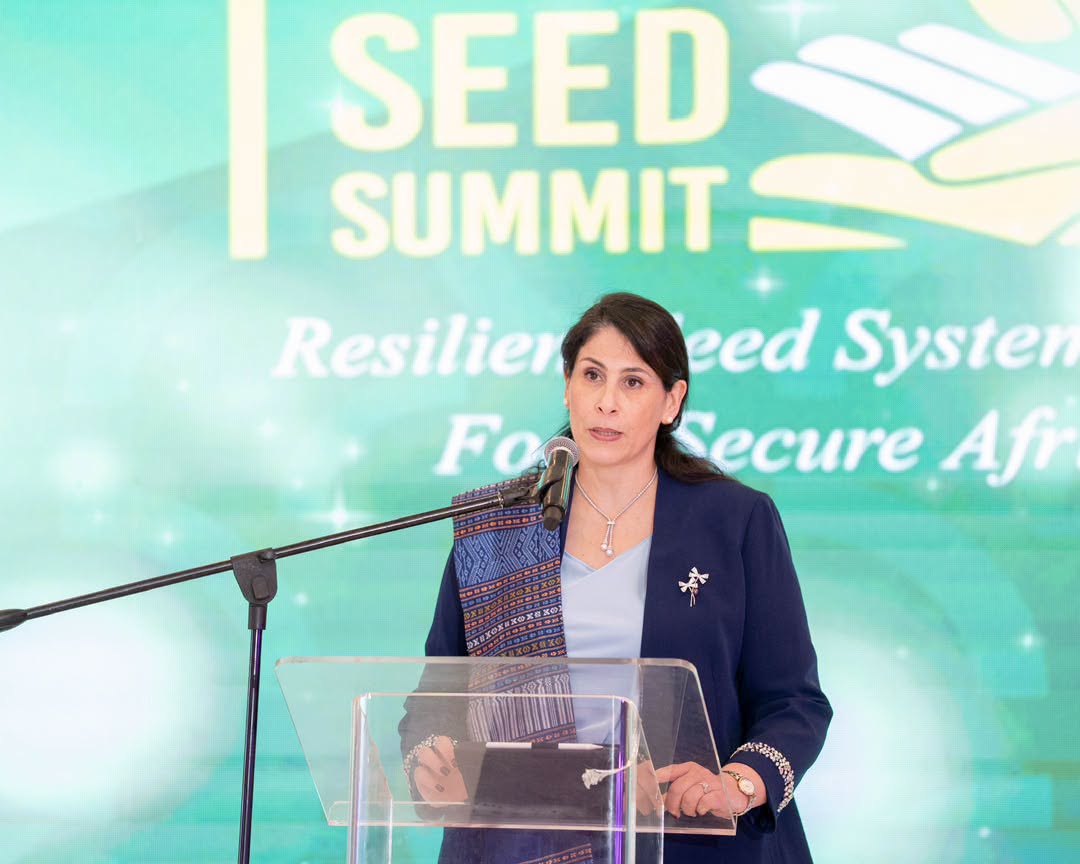
Ezulwini, Eswatini – The African Union has called for increased investment in seed research, agricultural innovation and regional trade to improve food security and strengthen farmers’ resilience to climate change across the continent.
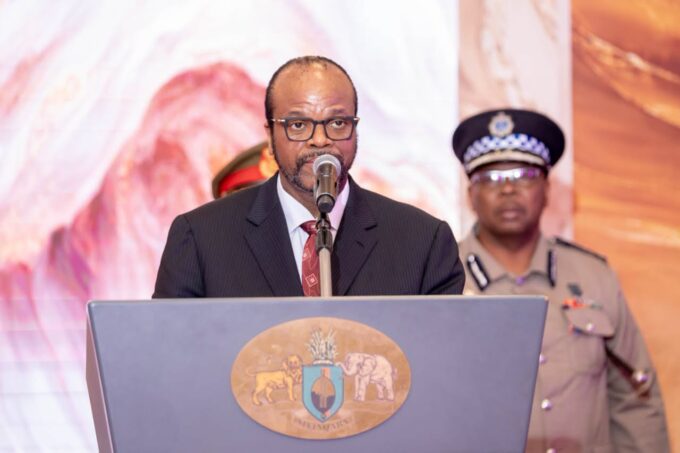
The call was made by African Union Commission Deputy Chairperson Ambassador Selma Malika Haddadi during the opening ceremony of the inaugural African Seed Summit, held in the Kingdom of Eswatini on 6 October 2026.
Representing African Union Commission Chairperson Mahmoud Ali Youssouf, Haddadi attended the ceremony, which was graced by His Majesty King Mswati III and brought together African Union leadership, the Eswatini government and key agricultural stakeholders ahead of the ministerial session.
Held under the theme “Resilient Seed Systems for a Food-Secure Africa,” the summit was convened in line with an African Union Executive Council decision to deepen engagement and investment in the continent’s seed sector.
Haddadi said Africa’s ambition to transform its agricultural sector depended on the availability of quality seeds that farmers could access at affordable prices and in sufficient quantities.
She said governments needed to move beyond policy commitments and ensure that agricultural programmes delivered measurable improvements in farmers’ fields, livelihoods and communities.
The deputy chairperson linked stronger seed systems to the African Union’s Agenda 2063 and the continent’s agricultural development commitments under the Comprehensive Africa Agriculture Development Programme (CAADP), including its 2026 to 2035 strategy.
She said improving agricultural productivity, transforming food systems, expanding trade between African countries and tackling hunger would remain difficult without reliable access to high quality seeds.
Despite existing continental frameworks, Haddadi noted that many African countries continued to face shortcomings in seed research, plant breeding and quality assurance certification systems.
Smallholder farmers, she said, often struggled to obtain improved seed varieties in sufficient quantities, at the right time and at prices they could afford.
The challenges are compounded by climate change, with recurring droughts, floods, pests and diseases increasing the need for crop varieties that can withstand environmental stress and adapt to local conditions.
Haddadi called for stronger cooperation between governments, research institutions, seed companies, farmers and development partners to address these gaps.
She outlined three priorities for building resilient seed systems, beginning with increased and sustained investment throughout the agricultural value chain.
This includes funding agricultural research and development, plant breeding, seed testing laboratories, certification systems, extension services and market development.
While public funding remained essential, she said governments also needed to create favourable policy and regulatory environments to attract private investment and encourage innovation.
African seed companies, particularly small and medium sized enterprises, required greater support to improve their operations and expand access to farmers, she added.
The second priority was developing seed systems that accommodated Africa’s diverse agricultural conditions and production methods.
Haddadi said formal seed industries and farmer managed seed systems both contributed to agricultural production and resilience, arguing that the two approaches should complement one another rather than compete.
She also called for greater participation by women and young people in the seed industry, noting that both groups continued to encounter barriers in accessing agricultural inputs, finance, markets and business opportunities.
An inclusive seed sector, she said, was necessary to ensure that the benefits of agricultural transformation reached communities across the continent.
Regional cooperation was another key component of this effort. Haddadi called for harmonised regulations, mutual recognition of quality standards and more efficient cross border seed trade to expand access to improved varieties and create larger markets for African producers.
She said progress by regional economic communities had demonstrated the benefits of cooperation and provided a foundation for deeper integration.
The third priority was stronger accountability and implementation of agricultural policies.
Haddadi said Africa had developed several frameworks for agricultural transformation, but the challenge remained translating those commitments into practical results.
She called for monitoring systems, regular reporting and effective performance management tools to track progress, guide policy decisions and ensure that investments produced tangible benefits for farmers.
She said the success of Africa’s seed development efforts should be judged by whether farmers could obtain drought tolerant varieties before planting seasons, researchers could develop climate resilient crops, and women entrepreneurs could establish and grow seed businesses.
Communities should also become better equipped to withstand food insecurity and climate related shocks, she said.
Haddadi urged African governments and their partners to translate commitments into action, build stronger investment partnerships and ensure that agricultural strategies delivered measurable outcomes.
She said every African farmer should have access to quality seed to support a more food secure, prosperous and climate resilient continent.
Addressing King Mswati III, the deputy chairperson expressed the African Union’s appreciation for the King’s participation and leadership in hosting the continent’s first African Seed Summit in Eswatini.










Leave a comment