


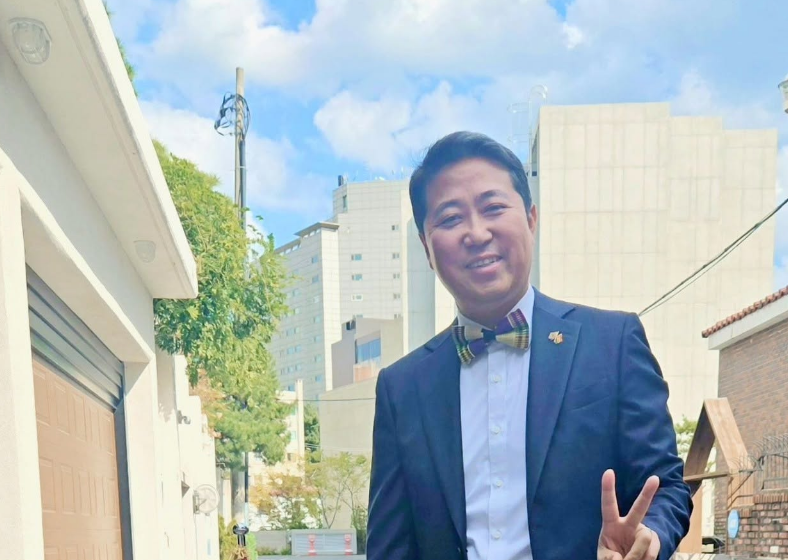
SEOUL, South Korea Ghana’s Ambassador to South Korea, Kojo Choi, has pledged to pursue increased investment, trade, employment and technology partnerships between the two countries as he begins his second year in office.
Choi made the commitment while reflecting on his first year as Ghana’s representative in Seoul, during which he said progress had been made in diplomatic relations, agricultural cooperation, climate action and engagement with Ghanaians living in South Korea.
He attributed some of the progress to President John Dramani Mahama’s state visit to South Korea, which helped advance issues that had remained unresolved for more than a decade.
Among the developments was a visa waiver arrangement for Ghanaian diplomatic and service passport holders. Discussions are also continuing on improving travel opportunities for ordinary Ghanaian passport holders.
The Ghanaian embassy is working with South Korean labour, justice and immigration authorities to explore opportunities for Ghanaian workers to access the Korean labour market.
Choi also cited the conclusion of the Ghana Korea Climate Change Agreement, which is expected to provide a framework for projects, technology transfer and investment once the ratification process is completed.
Reflecting on his first year, the ambassador said his diplomatic efforts had centred on securing Ghana a stronger presence in international discussions and creating opportunities for the country.
“If you would ask me what I achieved in my 1 year in Korea, my answer would be, “It was about putting Ghana where Ghana belongs: At The Table.””
Ghana co hosted the Korea Africa Foreign Ministers’ Meeting in Seoul and participated in the Korea Africa Finance Ministers’ Conference.
The country also represented the African and Middle Eastern diplomatic community at a meeting of heads of diplomatic missions hosted by South Korea’s president.
Choi further pointed to South Korea’s support for Ghana’s resolution at the United Nations addressing the historical injustice of slavery and the transatlantic slave trade as an important development in bilateral relations.
The two countries have also pursued cooperation in agriculture, education, healthcare, infrastructure, green growth, digital transformation, artificial intelligence, investment, trade, tourism, culture and official development assistance.
According to Choi, Korean companies and institutions are showing growing interest in Ghana, with discussions underway on projects and partnerships that could support economic development.
He said more students were moving between the two countries and Korean development cooperation was reaching Ghana through various initiatives.
The ambassador said his second year would focus on translating diplomatic engagement into practical economic benefits.
His priorities include attracting additional Korean investment into Ghana, facilitating partnerships between businesses in both countries, expanding employment opportunities for Ghanaian workers and increasing access to the South Korean market for Ghanaian products.
He also wants to expand technology transfers, climate financing, development projects, tourism and trade, while creating more opportunities for young people and students.
“The first year was about opening doors, rebuilding relationships, raising Ghana’s visibility and creating platforms.
The second year must be about walking through those doors.”
Choi said he planned to travel more frequently between Ghana and South Korea to connect opportunities identified in Seoul with businesses and institutions capable of implementing projects in Ghana.
“I want the conversations in Seoul to become projects in Accra.
I want Korean investment to create jobs in Ghana.
And I want the Ghana–Korea relationship to become something that ordinary Ghanaians can feel in their lives.”
Beyond government and business relations, Choi said engagement with Ghanaians living in South Korea remained an important part of his work.
During his first year, the embassy restored Ghana’s National Day celebration after almost eight years, organised its first Joint Worship and Thanksgiving Service and revived the Ambassador’s Town Hall Meeting.
The embassy also increased engagement with Ghanaian students, churches, professionals, businesses and community organisations.
Choi recently joined more than 400 Ghanaians in Paju to mark the 30th anniversary of GHANASKO, an occasion he described as one of the most memorable moments of his first year.
He recalled seeing a woman identified as Miss Vida dancing Adowa, a traditional Ghanaian dance, while wiping tears from her eyes. The experience reminded him of the importance of ensuring that Ghanaians living abroad feel connected to their country.
Born in South Korea, Choi left the country at the age of 14 and grew up in Ghana. He later returned to his birthplace as Ghana’s ambassador, a role he said carried significant personal responsibility.
He thanked staff at the Embassy of Ghana in Seoul, Foreign Affairs Minister Samuel Okudzeto Ablakwa, President Mahama and the Ghanaian community in South Korea for their support during his first year.
He also expressed appreciation to South Korean partners for their cooperation and willingness to engage with Ghana.
Choi said he would continue working to strengthen relations between the two countries, with a greater focus on investment, job creation and opportunities that directly benefit Ghanaians.




Leave a comment