


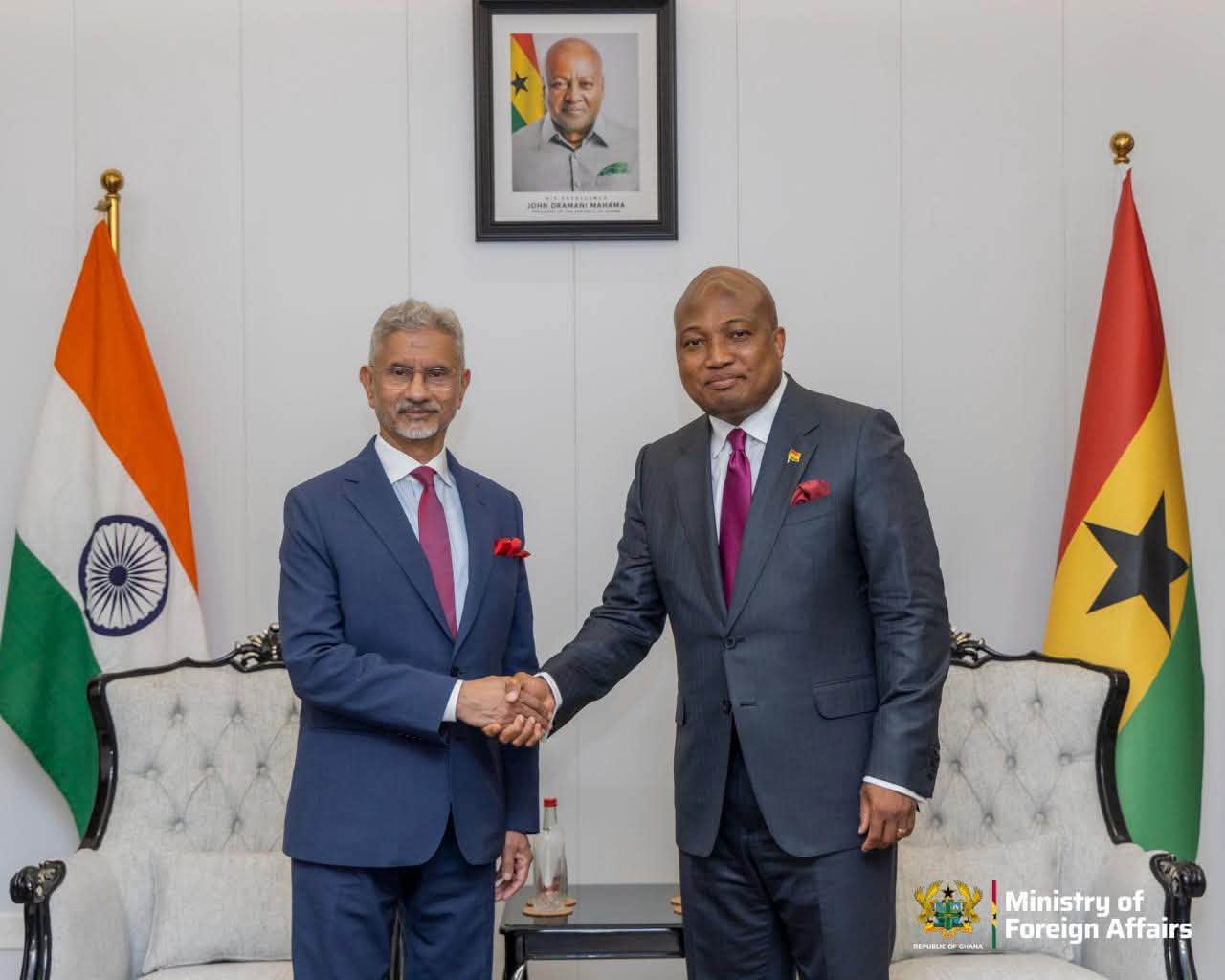
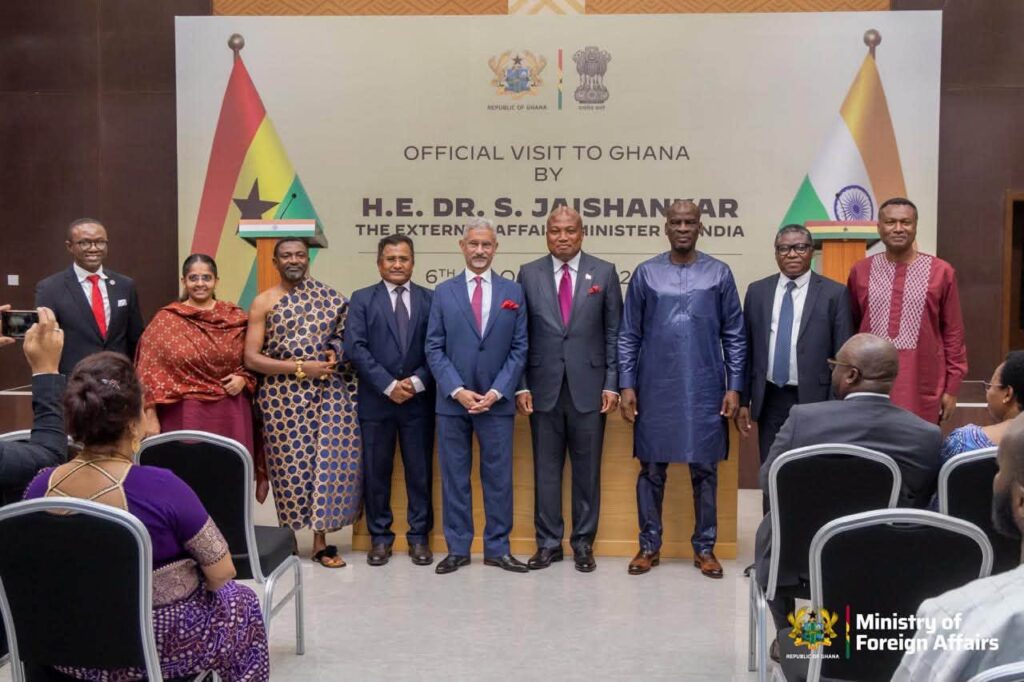
ACCRA, Ghana – Ghana and India have agreed to expand cooperation in agriculture, biodiversity, diplomatic training, railway development and multilateral affairs following the first official visit to Ghana by India’s External Affairs Minister, Dr Subrahmanyam Jaishankar, from 6 to 7 October 2026.
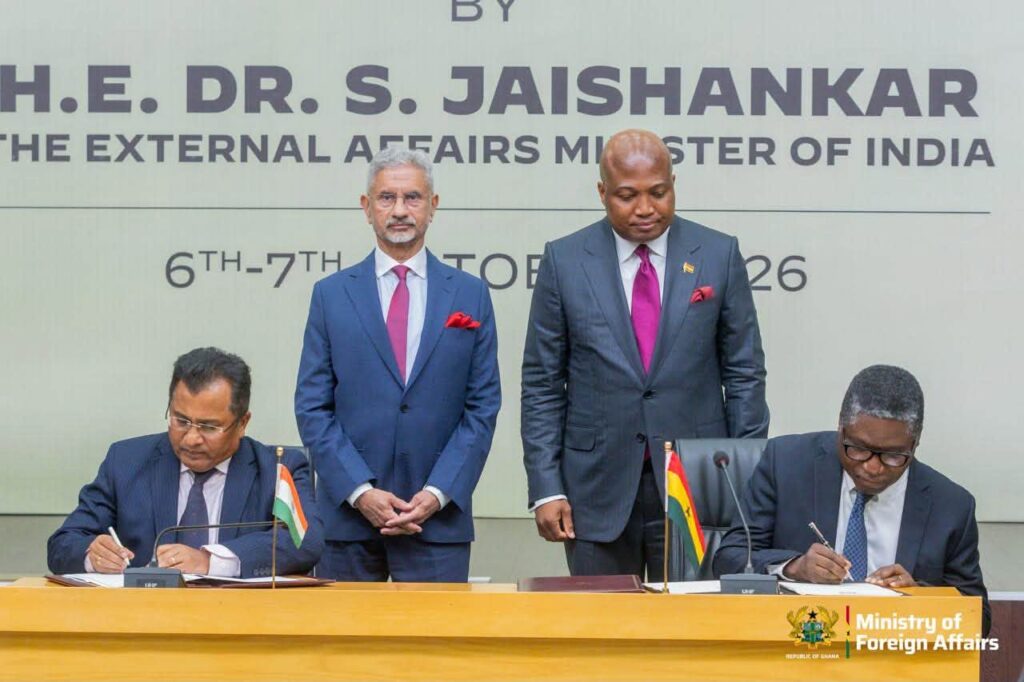
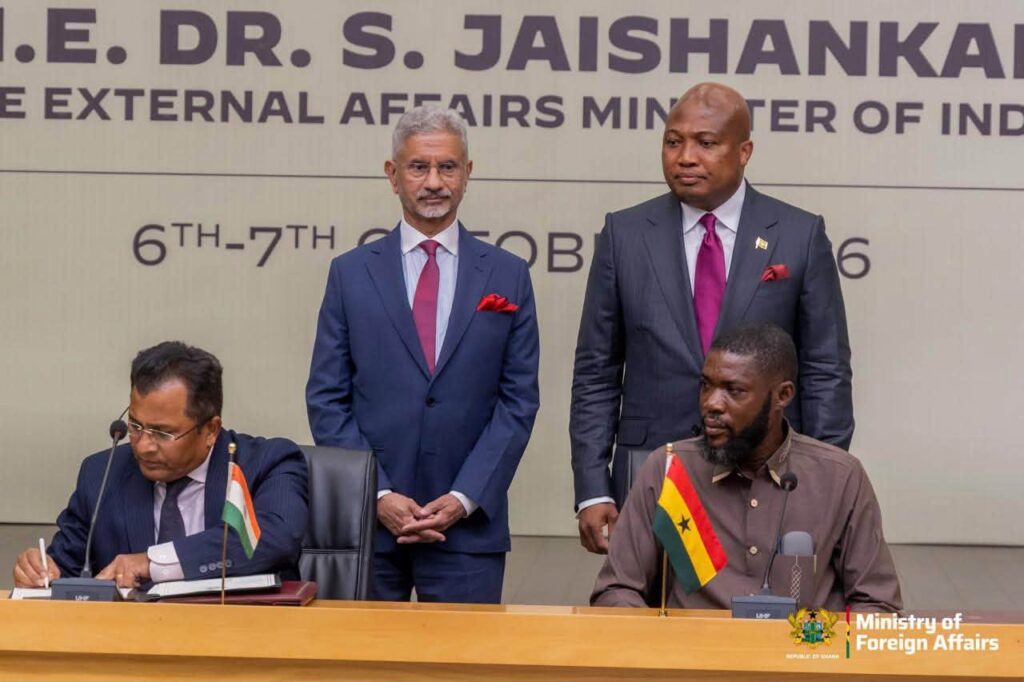
The visit, which included meetings with Ghana’s Foreign Affairs Minister Samuel Okudzeto Ablakwa, resulted in the signing of two memoranda of understanding covering agricultural research and education, and biodiversity. The agreements form part of broader efforts by the two countries to strengthen their Comprehensive Partnership and expand cooperation across sectors linked to economic development.
The agricultural agreement was signed between the Indian Council of Agricultural Research (ICAR), based in New Delhi, and Ghana’s Council for Scientific and Industrial Research Crops Research Institute (CSIR CRI), in Accra.
The partnership provides a framework for exchanging scientists and technologists, sharing scientific information and research materials, conducting joint research and supporting training programmes.
A separate agreement on biodiversity was also signed during the visit, reflecting the two countries’ intention to broaden their collaboration beyond agriculture and diplomatic relations.
Agriculture partnership targets tomato production
The agricultural cooperation agreement is expected to support Ghana’s efforts to improve domestic food production through research, technology transfer and stronger agricultural value chains.
The initial areas of focus include vegetable crop research, particularly tomato production, alongside cassava and yam processing, value addition and improved post harvest management.
Under the arrangement, ICAR will support the introduction and adoption of high yielding tomato varieties and established agricultural technologies to strengthen Ghana’s production capacity.
The partnership will also facilitate scientific exchanges, collaborative research projects, institutional cooperation and capacity building.
Arima Farms Ltd, a Ghanaian company, facilitated the collaboration, which is intended to help reduce post harvest losses, improve agricultural productivity and support sustainable development in the sector.
The agreement was also described in a separate statement dated 10 October 2026 by Gautam Karve, Editor in Chief of the World Media Organization, who linked the partnership to the wider relationship between India and African countries.
“India and Africa share deep-rooted historical ties built on trust, solidarity and mutual respect. Partnerships such as the India–Ghana agricultural MoU demonstrate how cooperation in research, technology and knowledge exchange can create practical benefits for people. Stronger India–Africa relations will contribute to food security, economic growth, employment generation and a more self-reliant future for both regions.”
Ghana and India expand diplomatic training
During their discussions, Ablakwa and Jaishankar also considered ways to strengthen cooperation between their countries’ diplomatic training institutions.
The proposed collaboration involves Ghana’s Foreign Service Institute (FSI) and India’s Sushma Swaraj Institute of Foreign Service (SSIFS).
The institutions are expected to facilitate the training of diplomats, exchanges of perspectives and the sharing of professional experiences on issues of common interest, including diplomacy and multilateral affairs.
The discussions reflect the two countries’ interest in building the capacity of their foreign services while improving coordination on international priorities.
Partnership rooted in Global South cooperation
Ghana and India also reaffirmed their longstanding relationship as advocates of the interests of developing countries, commonly referred to as the Global South.
Their diplomatic ties draw on the political legacies of Ghana’s first president, Kwame Nkrumah, and India’s first prime minister, Jawaharlal Nehru, who were associated with the struggle for independence and efforts to strengthen cooperation among newly independent nations.
During the talks, Ablakwa said the two countries shared commitments to independence, self reliance, dignity and strategic autonomy.
He also noted that Ghana and India faced similar development challenges, creating opportunities for them to combine their experience and expertise in addressing common priorities.
Jaishankar drew comparisons between Ghana’s Accra Reset, Feed Ghana and One Million Coders initiatives and Indian programmes covering healthcare, food security, digital transformation and entrepreneurship.
He said the similarities between the countries’ development priorities created opportunities for exchanging knowledge and practical experience.
The discussions placed development cooperation at the centre of the bilateral relationship, with both countries seeking ways to apply their respective experiences to economic and social challenges.
Tree planting marks diplomatic visit
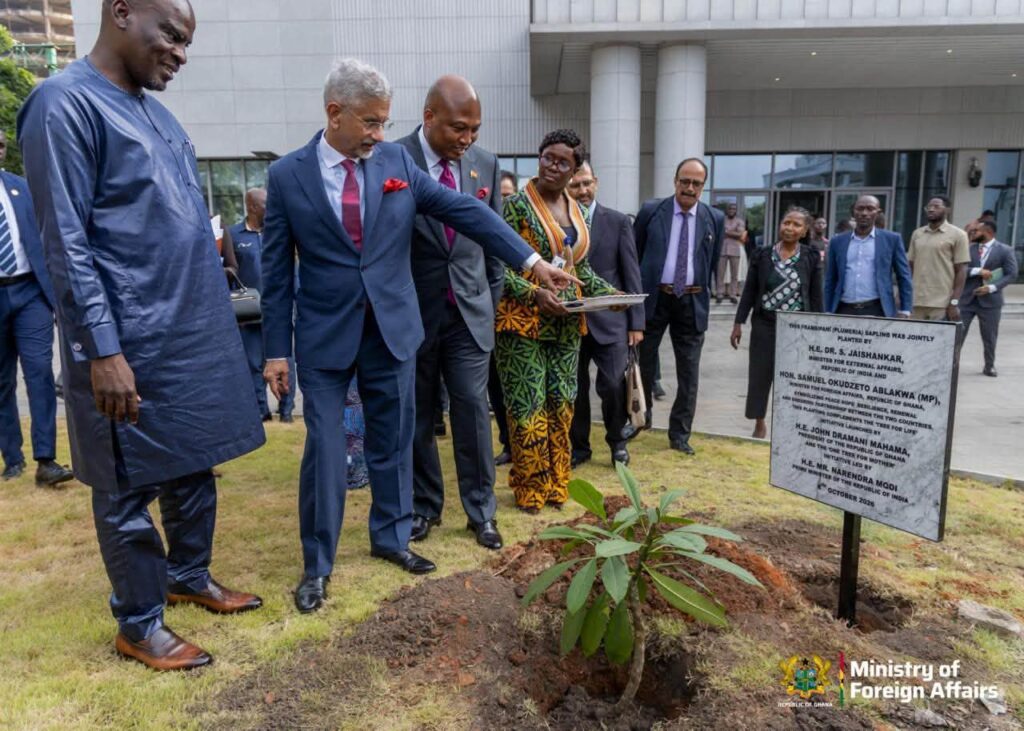
Jaishankar’s visit also included a tree planting ceremony at Ghana’s Ministry of Foreign Affairs on 6 October.
Ablakwa and his Indian counterpart took part in the activity, assisted by Ghana’s Education Minister, Haruna Iddrisu.
The ceremony symbolised the longstanding friendship between the two countries and their shared interest in environmental sustainability.
India backs Ghana on global reforms
The discussions also covered Ghana’s position on reparatory justice, the restitution of cultural property and reform of the United Nations system.
India welcomed Ghana’s participation in continental and multilateral affairs, with Jaishankar commending the West African country’s commitment to the reparatory justice agenda and the return of cultural properties.
He also called for stronger cooperation on the Sustainable Development Goals and reform of the United Nations, including the Security Council.
The two countries’ positions on international reform reflect their broader interest in ensuring that developing nations have a stronger voice in global decision making.
Existing projects provide foundation for cooperation
Addressing a press briefing during the visit, Ablakwa said the elevation of Ghana and India’s relationship to a Comprehensive Partnership reflected the strength of their longstanding ties and the development projects delivered through bilateral cooperation.
He cited the Jubilee House, the Kofi Annan ICT Centre, the Foreign Service Institute and the Tema Mpakadan Railway Project as examples of projects associated with the relationship.
Railway development was identified as a potential area for further cooperation, particularly following the operationalisation of the Tema Mpakadan railway line.
Ablakwa said Ghana was interested in expanding its railway network to ease pressure on roads, facilitate the transportation of heavy cargo and help address traffic congestion.
He expressed the government’s readiness to use the Comprehensive Partnership framework to expand collaboration in areas of mutual interest and deliver greater benefits to the populations of both countries.
Jaishankar said his visit also provided an opportunity to follow up on Indian Prime Minister Narendra Modi’s historic visit to Ghana and advance cooperation under the newly established partnership.








Leave a comment