


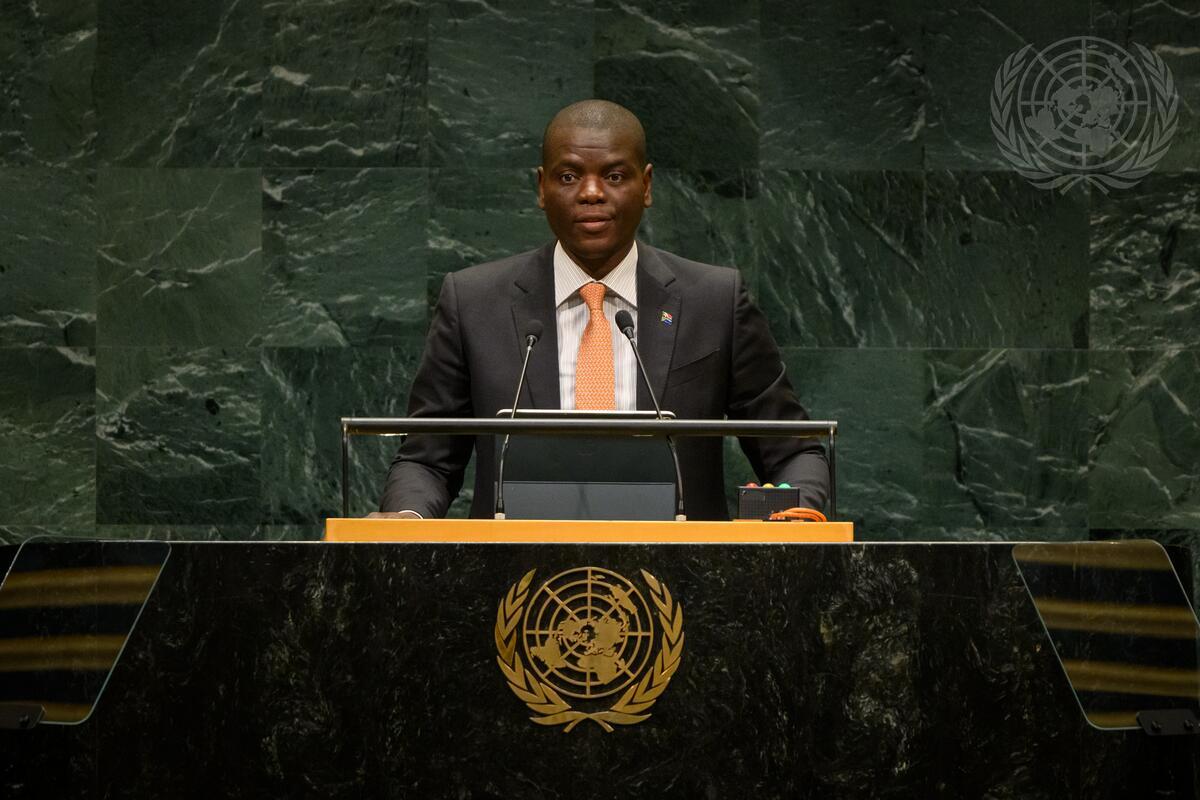
New York – South Africa has called for stronger international action to tackle inequality, debt, climate change and the underrepresentation of Africa in global decision making, with International Relations and Cooperation Minister Ronald Lamola telling the United Nations General Assembly that multilateral institutions must deliver more tangible results for developing countries.
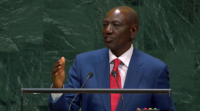
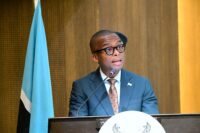
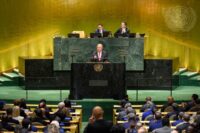
Lamola made the call on 24 September 2026 in New York while delivering South Africa’s national statement during the general debate of the 81st session of the United Nations General Assembly. His address covered South Africa’s democratic transition, global inequality, debt sustainability, climate finance, critical minerals, artificial intelligence, conflicts, nuclear disarmament and reform of the UN Security Council.
The minister began by reflecting on South Africa’s Heritage Day, which was observed on the same day, describing it as a time for the country to recommit to unity and diversity.
He also congratulated the President of the 81st General Assembly, Khalilur Rahman, on his election and paid tribute to outgoing UN Secretary General António Guterres as he approaches the end of his tenure.
Lamola recalled that 60 years ago the United Nations adopted a resolution condemning apartheid as a crime against humanity.
“The demise of apartheid freed the people of South Africa from racial segregation and slaughter, domination and deprivation, humiliation and exploitation,” he said.
He described the end of apartheid as a demonstration of what multilateral cooperation can achieve, while noting that the transition also ended a system that had contributed to violence and instability across Southern Africa.
Lamola said democratic South Africa had since pursued a foreign policy based on Ubuntu, international law, dialogue and multilateralism, while recognising the country’s links to the wider African continent.
He pointed to expanded access to education, electricity, water and sanitation, housing and social protection since the end of apartheid. He also referred to South Africa’s democratic record, including seven national elections since 1994, and the formation of a Government of National Unity after the 2024 elections.
South Africans are scheduled to participate in local government elections on 4 November 2026.
Inequality remains central concern
Lamola said the credibility of democracy and international cooperation is affected when governments are unable to address inequality and insecurity.
He said South Africa’s position as one of the world’s most unequal societies was one of the reasons inequality became a major focus of the country’s G20 presidency in 2025.
“Today, the top 10% own roughly 75% of global wealth, while the bottom 50% own only 2%.”
South Africa, together with Brazil, Norway and Spain, is calling on UN member states to support the establishment of an International Panel on Inequality. The proposed panel would examine inequality globally and provide evidence to inform policy responses.
Lamola also linked economic inequality to growing political divisions, saying large numbers of people who have seen limited improvement in their economic circumstances are increasingly turning towards political ideas that conflict with the principles of the UN Charter.
As the international community marks the 25th anniversary of the Durban Declaration and Programme of Action, he said South Africa remains committed to confronting racism, racial discrimination, xenophobia and other forms of intolerance through its Constitution, laws and institutions.
Africa’s debt burden
The South African minister said governments across the developing world face difficult decisions over how to meet the needs of their citizens while servicing debt.
He said African countries had spent roughly the same amount on debt servicing over the past year as would be required to close the continent’s infrastructure financing gap.
The issue formed part of South Africa’s G20 agenda in 2025, which included a focus on debt sustainability.
Lamola referred to the Africa Expert Panel report, which calls for stronger multilateral action, including the establishment of a Borrowers’ Club to provide greater balance in negotiations between borrowers and creditors.
The report also calls for increased transparency around debt and greater scrutiny of credit rating agencies.
“With only 36% of the Sustainable Development Goals showing sufficient progress, we are running out of time,” Lamola said.
He called for international measures that would free resources currently being absorbed by debt servicing and redirect them towards development, including implementation of the 2030 Agenda for Sustainable Development and the African Union’s Agenda 2063.
Climate finance and regional resilience
Lamola said climate disasters and extreme weather events were increasingly threatening development gains across Southern Africa.
He said about two million people in the Southern African Development Community had experienced the combined effects of floods, cyclones, wildfires and disease outbreaks during the past year.
According to Lamola, developing countries continue to face constraints because of the structure of international climate finance.
He called for greater international action on disaster resilience and predictable financing to support a just energy transition.
South Africa, he said, also intends to use its regional leadership role to promote greater integration, industrialisation and trade within SADC, which is home to about a quarter of Africa’s population.
He said increased intra regional trade could help countries in Southern Africa share economic opportunities and strengthen their ability to withstand external shocks.
Africa’s critical minerals and AI
Lamola said Africa’s vast reserves of critical minerals could play a role in narrowing the economic gap between wealthy and developing countries.
He called for greater beneficiation of minerals on the continent rather than relying solely on the export of raw resources.
He also said Africa should have a meaningful role in determining international rules governing the development and deployment of artificial intelligence.
According to Lamola, Africa’s young population has an important role to play in mineral beneficiation, research, innovation and the development of artificial intelligence.
Conflicts and humanitarian protection
The minister called for renewed commitment to the peaceful resolution of conflicts, saying confidence in multilateral institutions depends partly on their ability to protect civilians and uphold international law.
He referred to conflicts in Sudan, eastern Democratic Republic of Congo, Iran and Ukraine, and raised concern over humanitarian workers being prevented from reaching people in need or being killed while carrying out their duties.
South Africa has endorsed the Declaration for the Protection of Humanitarian Personnel, which is supported by nearly 120 countries, according to Lamola.
He also criticised the scale of global military spending in relation to development needs.
“ending hunger and expanding access to safe water and sanitation would require no more than 5% of the $2.9 trillion spent on arms,” he said.
Nuclear disarmament and UN reform
Lamola said South Africa would later in 2026 preside over the First Review Conference of the Treaty on the Prohibition of Nuclear Weapons.
South Africa remains the only country known to have voluntarily dismantled its nuclear weapons programme, and Lamola said Pretoria was prepared to share its experience as an example of what political commitment can achieve in nuclear disarmament.
He also called for reform of global governance, particularly the UN Security Council.
Africa accounts for nearly one fifth of the world’s population and more than a quarter of UN member states, he said, while around 70% of Security Council resolutions over the previous decade had concerned conflicts on the African continent.
Lamola said Africa’s demographic weight and the continent’s role in international affairs justified greater representation in global decision making.
South Africa supports the Ezulwini Consensus, which calls for permanent African representation on the Security Council with the same prerogatives attached to other permanent members.
South Africa’s position on Palestine and Western Sahara
On Palestine, Lamola said South Africa regarded the rights and dignity of Palestinians as central to the international community’s responsibility to uphold international law.
He accused Israel of continued violations of international and humanitarian law and described these as genocide, reflecting the South African government’s established position on Israel’s conduct in Gaza.
South Africa continues to support a two state solution based on UN resolutions and has called for international action on the conflict.
Lamola also reiterated South Africa’s longstanding support for the people of Western Sahara and their right to self determination, calling for a lasting and mutually acceptable political settlement consistent with international law and the UN Charter.
Cuba and Zimbabwe
The minister also criticised the use of economic sanctions and other coercive measures against countries.
He called for an end to the US blockade against Cuba and said the designation of Cuba as a state sponsor of terrorism should be removed.
South Africa also called for the removal of sanctions against Zimbabwe, arguing that unilateral coercive measures can have economic consequences beyond the countries directly targeted.
Lamola said international institutions of justice should be protected from sanctions and intimidation because of their role in addressing issues affecting the international community.
He concluded by linking South Africa’s democratic journey to the role played by the United Nations and quoted former President Nelson Mandela’s 1994 address to the General Assembly:
“The millions across our globe who stand expectant at the gates of hope look to this Organisation to bring them peace, to bring them life, to bring them a life worth living”.



Leave a comment