


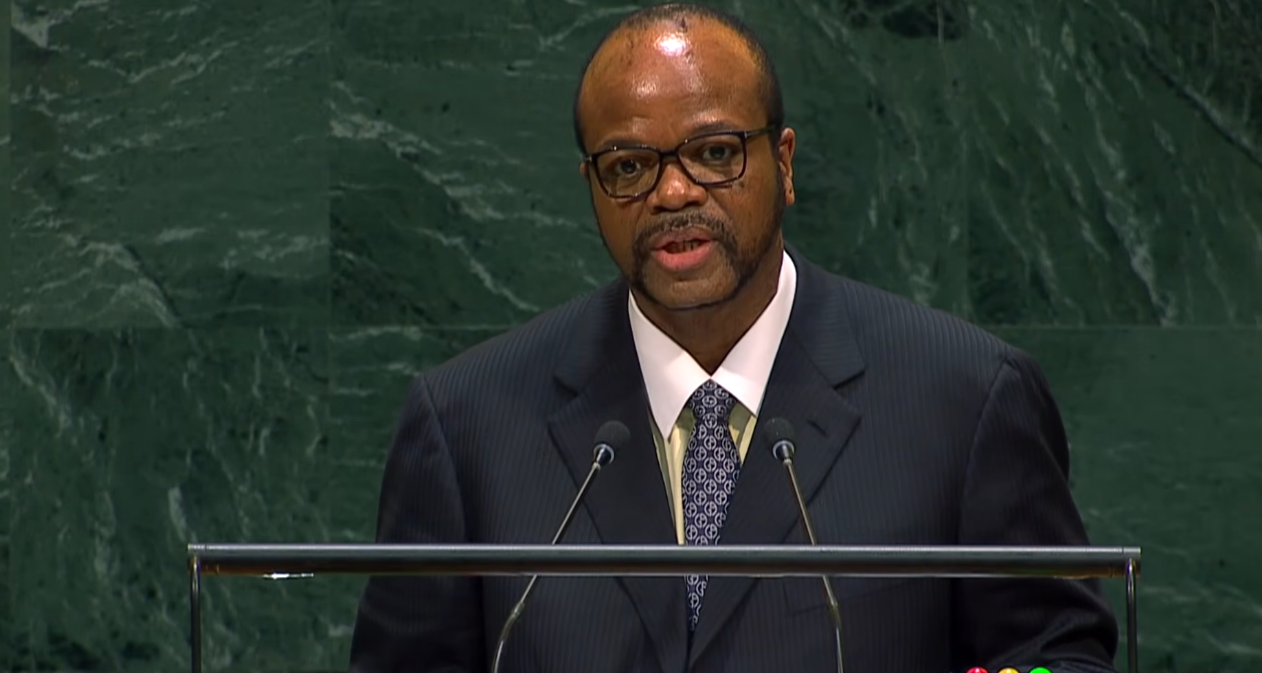
NEW YORK, September 23, 2026 King Mswati III has called for greater African representation in the United Nations Security Council, stronger support for African led peace initiatives and increased international assistance for the continent’s economic transformation.
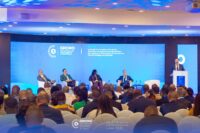
Addressing the General Debate of the 81st United Nations General Assembly in New York on Wednesday, the Eswatini Head of State said Africa continued to be denied a permanent seat on the Security Council despite its importance to global peace and security.
The annual high level debate is being held at UN Headquarters from September 22 to 30 under the theme, “Better together: 81 years and more for peace, development and human rights.”
King Mswati said the UN, established in 1945 after the devastation of the Second World War, must remain a place where countries resolve differences through dialogue and turn international commitments into practical action.
He said the world was facing persistent conflicts, widening inequalities, climate related disasters, poverty and insecurity, requiring renewed international cooperation.
“The international community must renew its commitment to global cooperation to ordinary people across the globe,” he said.
The King said the success of international cooperation should ultimately be measured by whether people in conflict affected communities could live without fear, young people could access decent employment, families could afford food and developing countries could secure the financing needed for their future.
He said trust in multilateral institutions had weakened because commitments and financing pledges had frequently gone unfulfilled.
Developing countries, he noted, face investment gaps running into trillions of dollars as they seek to achieve the Sustainable Development Goals, while billions of people live in countries where debt servicing consumes more resources than healthcare and education.
“Restoring trust cannot be achieved through declarations alone. It requires that promises already made be honored and that our institutions demonstrate the capacity and will have to respond to changing global realities.”
Eswatini presses for Security Council reform
King Mswati questioned how long African leaders would continue travelling to New York to call for permanent representation on the UN Security Council.
“Since the Ezulwini consensus was adopted in 2005, sadly Africa still has no permanent seat on the UN Security Council. And yet the continent remains a global strategic partner in the world stage. The question is, how many more years should African leaders travel to New York and stand before this assembly to call for a fair representation in the UN Security Council.”
He said Africa was being deprived of an opportunity to contribute fully to discussions on international security despite the continent’s growing strategic importance.
The King also called for diplomatic and political solutions to conflicts around the world, saying wars were reversing development, discouraging investment and increasing pressure on economies and households.
“Where there is war, development is reversed.
“Where there is instability, investment withdraws.
“Where there is fear, human potential is lost.”
Eswatini, he said, remained concerned about conflicts and humanitarian crises in different parts of the world and supported continued efforts to resolve them through diplomacy.
“While war may create temporal victories on the battlefield, only through dialogue can sustainable peace be established.”
He called on the United Nations to remain a place where dialogue remains possible and urged greater support for African regional organisations involved in conflict prevention, mediation and peacebuilding.
King Mswati said peace in Europe, the Middle East and Africa required sustained diplomacy backed by the international community.
He also called for stronger UN oversight of existing peace agreements to ensure that countries comply with commitments already made and prevent renewed violence and destruction.
Eswatini takes SADC security role
The King referred to Eswatini’s role following the 46th SADC Summit, where the country assumed the chairmanship of the SADC Organ on Politics, Defence and Security Cooperation.
The organ is responsible for promoting peace and stability within the Southern African region.
He said Eswatini would work with SADC member states to strengthen preventive diplomacy, dialogue and mediation.
“We believe that for SADC to attain its vision 2050, we have to create a peaceful, competitive and industrialized region that guarantees sustainable well-being and freedom for all our citizens.”
King Mswati also pointed to the African Union’s Agenda 2063 and its objective of silencing the guns across the continent.
He expressed concern over continued unconstitutional changes of government, saying they were inconsistent with the principles contained in the charters of the United Nations, African Union and regional organisations.
“Respect for constitutional order and the rule of law is fundamental to stability.”
He urged the international community to oppose the erosion of constitutional order and called on the UN to support decisions taken by regional organisations condemning unconstitutional changes of government.
Calls for African industrialisation
The King said sustainable development must remain central to international cooperation, but developing countries continued to face barriers including inadequate access to finance, technology, infrastructure, healthcare, education and productive investment.
He called for a shift away from exporting unprocessed raw materials towards value addition, industrialisation and the creation of decent jobs within African countries.
For Eswatini, he said economic transformation was increasingly linked to digitalisation and artificial intelligence.
“These emerging technologies, particularly artificial intelligence, are advancing faster than our current capacity to govern them while retaining human agency and control.”
King Mswati said AI and digital technologies could expand access to education, healthcare, financial services and economic opportunities, but their development needed responsible and accountable governance.
He also raised concerns about safety, environmental effects and the possibility of a wider digital divide between countries and communities able to shape emerging technologies and those excluded from their benefits.
The King said Eswatini remained committed to building a resilient, diversified and inclusive economy capable of generating employment, attracting investment and expanding opportunities for young people, women and marginalised groups.
The country, he said, was investing in human capital, infrastructure, healthcare, education, agriculture, tourism, industrialisation, digital development and mining while seeking to strengthen its position within regional and global value chains.
He appealed to the United Nations to support African countries in developing value added industries around their natural resources and creating trading hubs for precious and other minerals and commodities.
King Mswati said the African Continental Free Trade Area provided an important platform for African countries to move from raw material exports towards industrial processing, value addition and increased intra African trade.
“No country can achieve sustainable development while large segments of its population remain on the margins of the economic mainstream.”
He said citizens should be treated as active participants in economic development rather than simply beneficiaries of employment.
Eswatini seeks stronger health cooperation
King Mswati also addressed global health security, drawing lessons from the COVID 19 pandemic and the continued emergence of infectious diseases.
“The Covid9 pandemic taught humanity a vital lesson. No country can protect itself from a global health emergency alone.”
He pointed to recurring Ebola outbreaks and other infectious diseases as reminders of the need for resilient health systems.
The King called for action to reduce inequalities in access to vaccines, medicines and medical technologies, while urging greater international support for African countries seeking to establish local and regional pharmaceutical manufacturing capacity.
He referred to a recent meeting of the East, Central and Southern African Health Community Conference held in Eswatini, where the country discussed acting as a unified bloc when purchasing essential medicines and medical supplies.
He said joint procurement could help reduce costs and improve supply chain stability.
“We appeal to the UN through the World Health Organization to support this endeavor.”
Climate change and food security
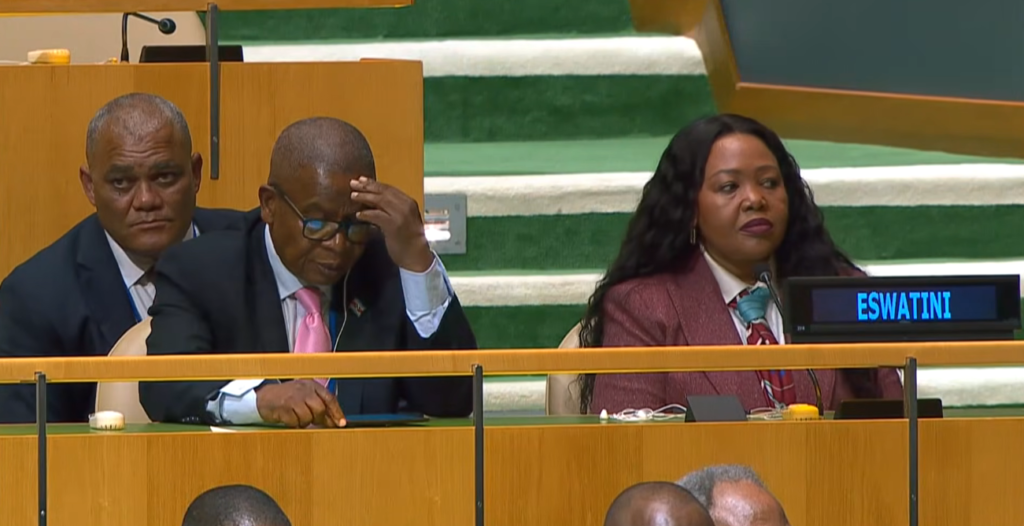
Climate change was another major issue raised by the Eswatini Head of State, who said developing countries contributed relatively little to global emissions but continued to bear the consequences of droughts, floods, changing weather patterns and other climate related shocks.
He called for climate action to be accompanied by climate justice, including stronger international cooperation on adaptation, resilience, technology transfer, capacity building and access to predictable and affordable climate finance.
Eswatini is currently dealing with what King Mswati described as one of the most severe El Niño weather patterns on record, placing additional pressure on national resources as the government works to protect communities and livelihoods.
Climate resilience, he said, was directly connected to food security.
“Our national objective is to ensure that every family has access to sufficient, safe and nutritious food. This is a matter of basic human dignity and sustainable development.”
The government is investing in agriculture, modern farming technologies, research and infrastructure while supporting smallholder farmers through subsidies for agricultural inputs and implements.
The King also pointed to major dam construction projects designed to expand irrigation and transform the country’s agricultural landscape, particularly in the lowveld.
He said international cooperation remained important in supporting such national development programmes.
Eswatini values UN partnership
King Mswati said cooperation between Eswatini and the United Nations had contributed to national development and implementation of the Sustainable Development Goals.
The partnership covers sectors including healthcare, tourism, education, agriculture and renewable energy.
“We deeply value this partnership and remain committed to ensuring a strong and enduring United Nations presence in our country, including the establishment of a permanent UN home in Eswatini.”
He also addressed Taiwan’s participation in the international system, saying the island plays an important role in global supply chains and has expertise that could contribute to international development.
“The United Nations should seek appropriate ways to facilitate Taiwan’s substantive participation in UN meetings and activities, enabling it to share its expertise and actively engage with international partners.”
King Mswati concluded his address with a call for countries to focus on areas where cooperation remains possible despite political differences.
“The world does not require perfect consensus on every issue. It needs the courage to identify areas where cooperation is possible and the will to act upon them.”
He called for renewed confidence in diplomacy and international cooperation, saying the UN should remain a forum where countries of all sizes have a voice and where the sovereignty and dignity of member states are respected.
“The Kingdom of Esatini stands ready to work with all member states, the United Nations system, regional organizations, and international partners to advance peace, dialogue, sustainable development and human dignity for all.”
He also thanked UN agencies and support structures for their work in facilitating the General Assembly.
“I thank you. May almighty God bless us all.”






Leave a comment