


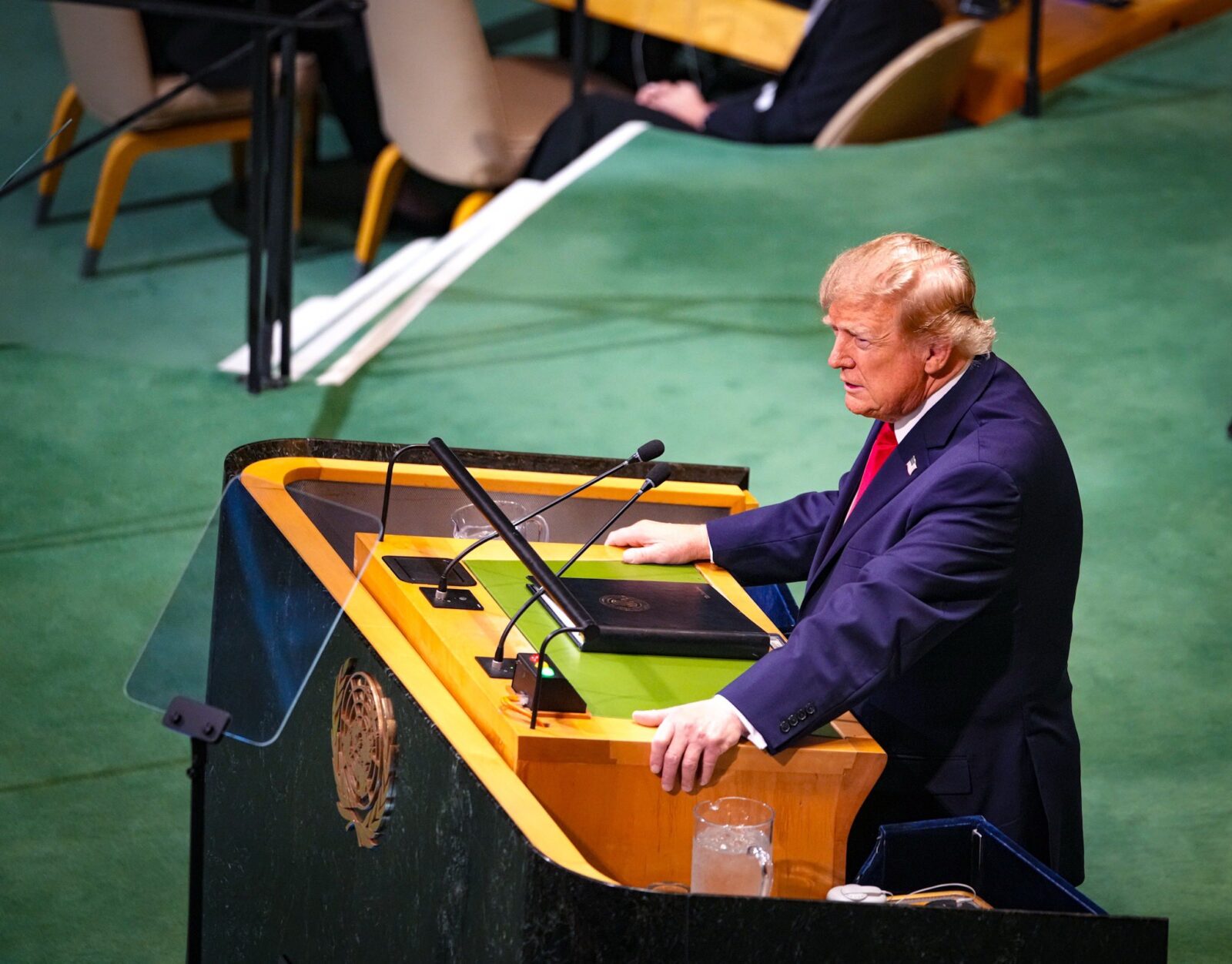
New York – United States President Donald Trump used his address to the 81st United Nations General Assembly in New York to defend his administration’s economic and foreign policies, while outlining his positions on conflicts involving Iran, Gaza, Ukraine and other parts of the world.
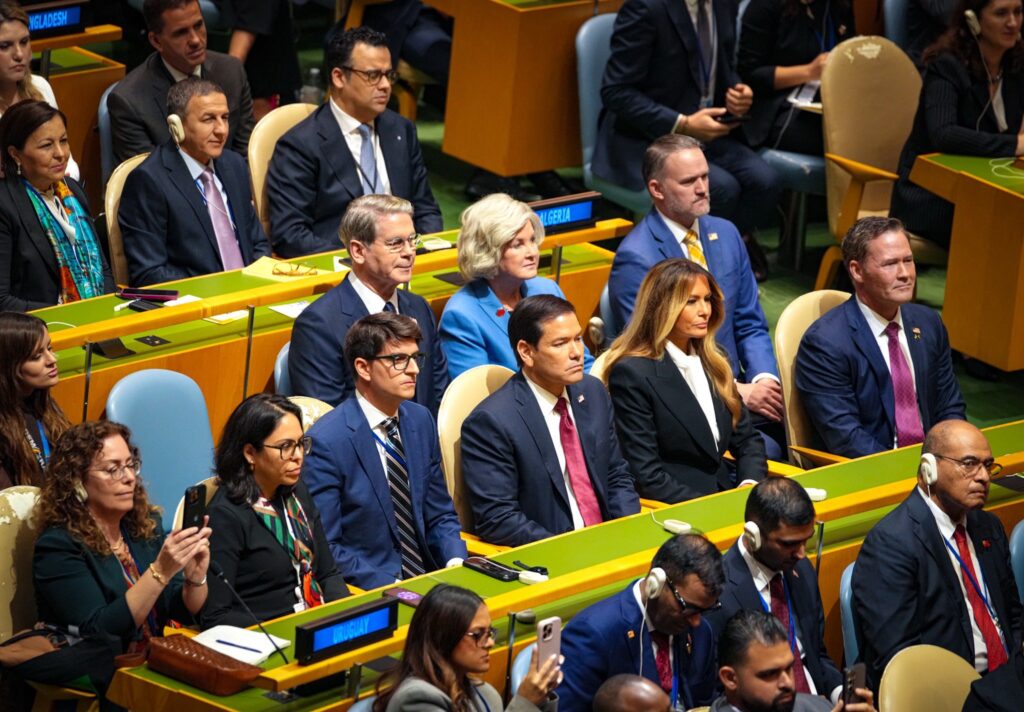
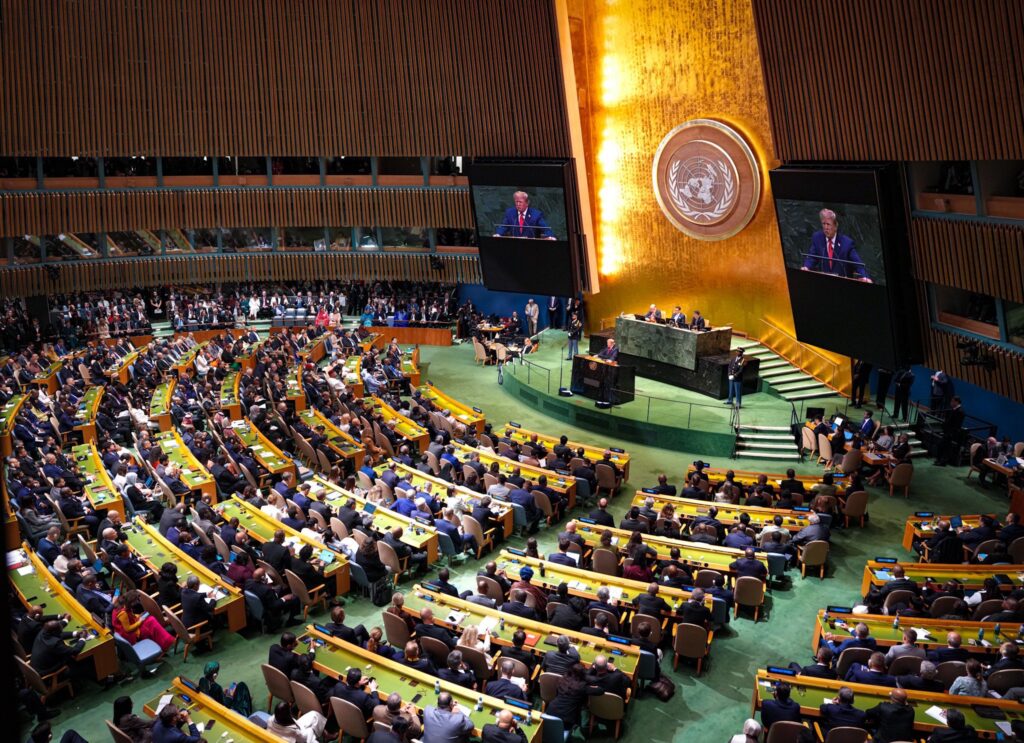
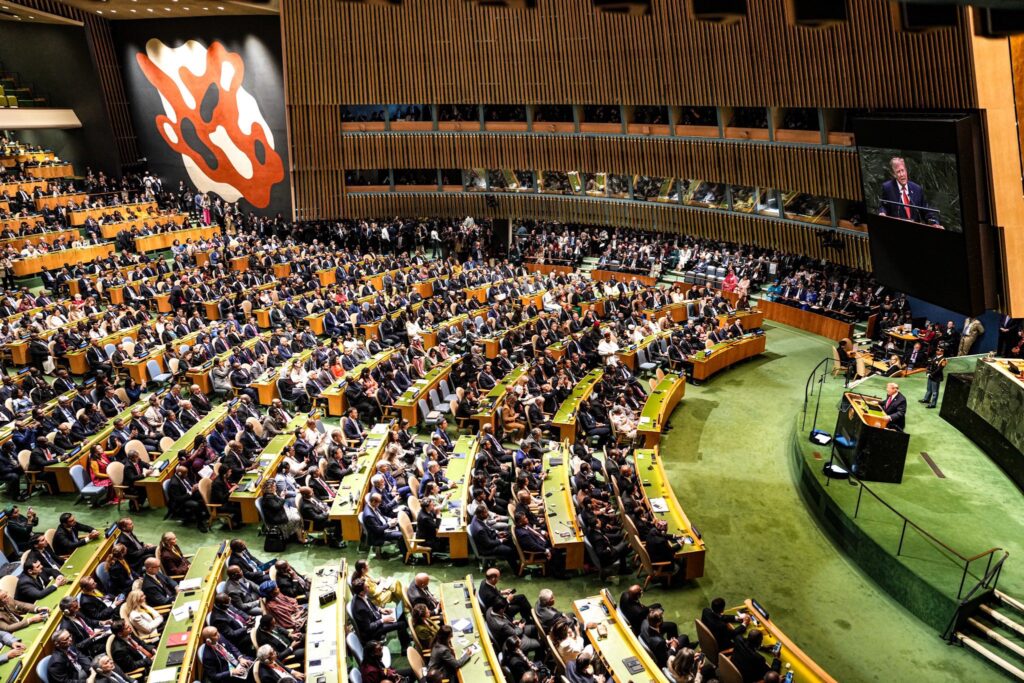
Trump addressed world leaders on Tuesday, 22 September 2026, during the annual General Debate, where heads of state and government gather to discuss international challenges. The 81st session is being held under the United Nations theme of “Restoring trust, managing transformation: a United Nations that delivers for all.”
Opening his address, Trump linked his administration’s record to the United States’ 250th anniversary, describing the country as stronger and more prosperous under his leadership.
He claimed that more than one million private sector jobs had been created since he took office and said the US poverty rate had reached what he described as its lowest level in American history.
Trump also claimed that real household incomes had reached an average of $87,000 and that his administration had secured commitments for $21 trillion in new investment from around the world.
He pointed to what he described as record performance in US financial markets, tax reductions and efforts to remove regulations that he said had previously restricted business activity.
On security and immigration, Trump said his administration had transformed the US border and claimed that no undocumented immigrants had been admitted into the country during the previous 16 months. He also claimed that violent crime had fallen sharply, including reductions in crime in Memphis, New Orleans and Washington, DC.
The President then turned to international security, with Iran occupying a major part of his speech.
Trump accused the Iranian government of pursuing nuclear weapons and supporting militant activity across the Middle East. He said his administration had first attempted negotiations with Tehran before resorting to military action.
He referred to US military operations against Iran’s nuclear and military capabilities and called on other countries to maintain economic pressure on Tehran.
Trump said, “I will never allow Iran to have a nuclear weapon.”
He also called on countries to support what he described as the economic isolation of Iran until it stops attacks on commercial shipping, abandons its nuclear ambitions and ends its support for terrorism.
Trump said the United States remained open to a deal with Iran but warned that Washington would continue to prevent Tehran from obtaining a nuclear weapon.
The US President also spoke extensively about Gaza and claimed that his administration had helped bring an end to the war and secure the return of hostages.
He said the United Nations Security Council had unanimously endorsed his administration’s 20 point Gaza Peace Plan and approved the proposed Board of Peace.
Trump said nearly 30 countries had joined the board and that several governments had committed financial resources and personnel towards humanitarian relief and stabilisation efforts in Gaza.
He named Indonesia, Morocco, Albania, Kosovo, Kazakhstan, Egypt and Jordan among countries that he said had committed troops, police or training to support stabilisation efforts.
Trump also presented his administration as having played a role in resolving several international conflicts.
He cited Cambodia and Thailand, Kosovo and Serbia, the Democratic Republic of Congo and Rwanda, Pakistan and India, Armenia and Azerbaijan, as well as Gaza.
He said the United States was also working with Russia and Ukraine to end the ongoing war, claiming that thousands of people were being killed each month.
The President’s address also covered Venezuela, where he claimed US military action had resulted in the arrest of Nicolás Maduro and the release of political prisoners. He said Washington was working with Venezuelan authorities on the country’s future and pointed to a major oil agreement involving the two countries.
Trump said the United States would continue using its military capabilities to protect what he described as vital American interests in the Western Hemisphere.
He also addressed drug trafficking and migration, saying his administration had designated drug cartels as foreign terrorist organisations and launched operations against them.
Mexico, Cuba and Greenland also featured in the address.
Trump said Washington was seeking closer cooperation with Mexico against organised crime and said his administration was pursuing changes in its relationship with Cuba.
On Greenland, he said the United States had reached an agreement with Denmark concerning security arrangements on the strategically important Arctic territory. He also linked the issue to NATO and European security.
Trump called for an end to the Russia Ukraine war and said the United States would continue efforts to secure a settlement.
He also praised First Lady Melania Trump for her work involving displaced Ukrainian and Russian children and her role in international initiatives focused on young people.
The future of the United Nations itself was another major theme of Trump’s address.
He said the United States had reduced its contribution to the UN budget and eliminated more than 4,000 positions as part of what he described as sweeping reforms of the organisation.
Trump criticised what he called an unelected globalist agenda within the United Nations and opposed the introduction of international taxes.
He also attacked the International Criminal Court and called on member states to withdraw from the institution, arguing that it lacked jurisdiction over the United States.
Trump further criticised United Nations human rights bodies over issues including immigration and transgender rights, while calling for greater attention to the persecution of Christians around the world.
Artificial intelligence was another major issue in the speech.
Trump proposed referring to advanced artificial intelligence as “super intelligence”, arguing that the term better reflected its capabilities.
He said the United States was leading China and other countries in the development of the technology and pledged to encourage its growth while seeking to ensure that it was developed safely.
Trump described super intelligence as potentially more transformative than the industrial revolution or the internet and said the United States would seek to maintain its leadership in the field.
The President concluded by linking his foreign and domestic policies to America’s history of independence and his call for nations to act with greater unity and strength.
He told delegates that countries should work together to build a safer and more prosperous future while defending their national interests and principles.
The United Nations General Assembly General Debate continues through 26 September before concluding on 28 September 2026.
Editor’s note: Claims concerning military operations, economic performance, crime, investment, international agreements and other achievements in this report are presented as statements made by President Trump during his address. They have not been independently established here.






Leave a comment