


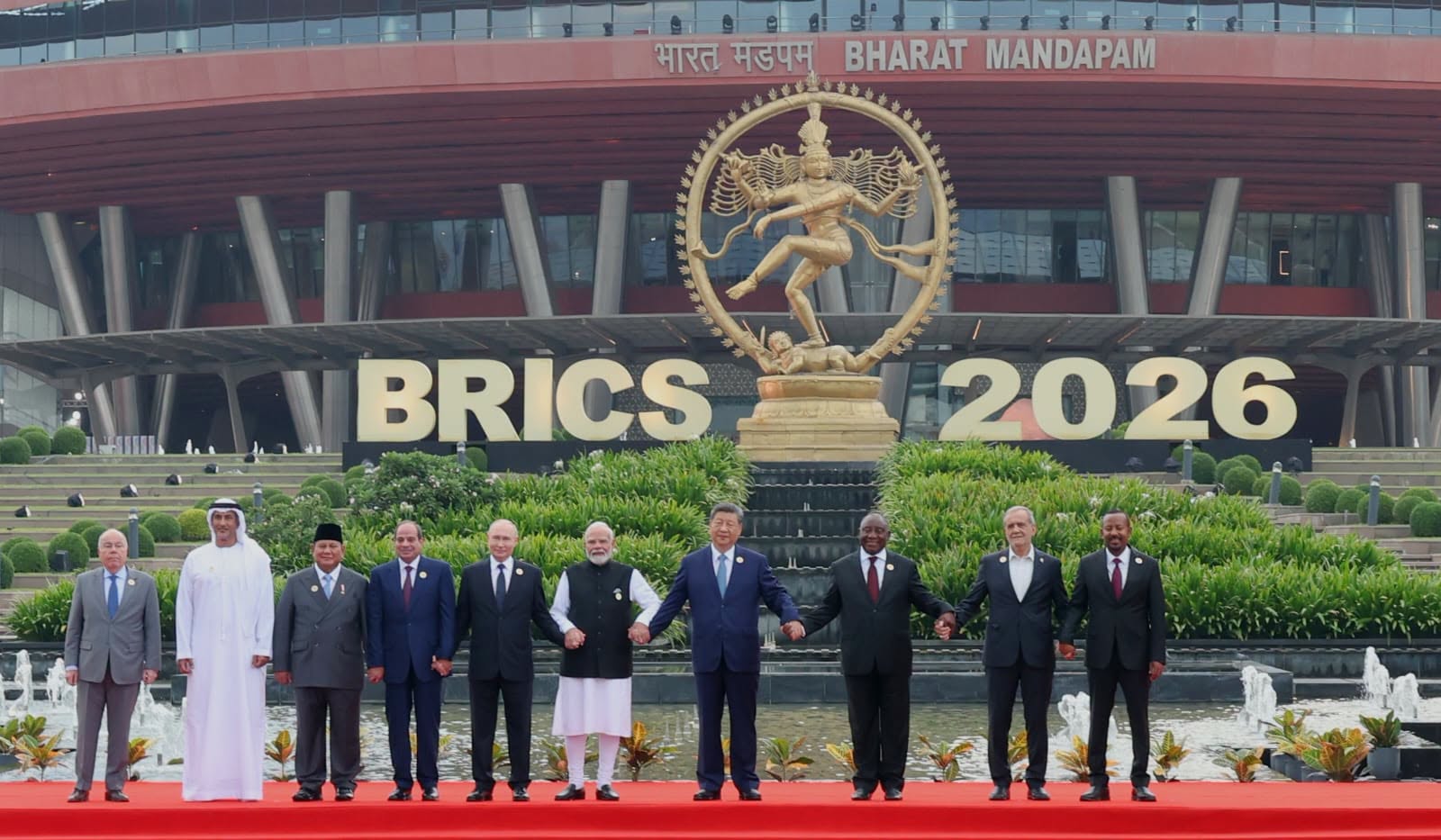
NEW DELHI, India | September 14, 2026 — BRICS leaders have adopted the New Delhi Declaration calling for major changes to global governance, greater representation for developing countries and stronger cooperation across trade, finance, health, technology, climate action, agriculture and security.
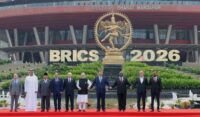
The declaration was adopted after the 18th BRICS Summit held in New Delhi from September 12 to 13 under India’s 2026 chairship and themed “Building for Resilience, Innovation, Cooperation and Sustainability”. The summit also marked the 20th anniversary of BRICS cooperation.
The expanded BRICS grouping committed to strengthening cooperation across its political and security, economic and financial, and cultural and people to people pillars.
Leaders said the partnership should contribute to peace, sustainable development, inclusive economic growth and a fairer international system.
More than 400 BRICS meetings and engagements involving ministers, parliamentarians, government agencies, experts, businesses and civil society were held in 30 cities across India during the year, according to the declaration.
Push for global governance reform
A major focus of the declaration is the demand for a more representative international system that better reflects current global realities.
BRICS leaders called for greater participation of emerging markets and developing countries, particularly those from Africa, Asia and Latin America and the Caribbean, in international decision making.
They also called for fairer geographical representation within the United Nations and other international organisations, including at senior and decision making levels.
The leaders noted that no woman has ever been elected UN Secretary General and that only one person from Latin America and the Caribbean and two each from Africa and Asia have held the position.
The declaration calls for greater participation of women from emerging and developing countries in international leadership positions and says no country or group of countries should monopolise senior positions within the UN system.
BRICS also renewed its call for comprehensive reform of the UN Security Council.
The grouping said developing countries should have greater representation in the Council and recognised the aspirations of African countries as contained in the Ezulwini Consensus and Sirte Declaration.
China and Russia, both permanent members of the Security Council, reiterated their support for Brazil and India playing a greater role in the United Nations, including its Security Council.
The leaders also backed reforms to the IMF, World Bank and other Bretton Woods institutions, arguing that their governance structures should better reflect the changing weight of emerging and developing economies.
They called for more transparent and inclusive leadership selection processes and greater regional diversity.
BRICS backs Africa’s development agenda
The declaration gives considerable attention to Africa and the wider Global South.
BRICS leaders said developing countries, including those in Africa, should have a stronger voice in global decision making and international financial institutions.
They welcomed the United Nations General Assembly resolution recognising the trafficking of enslaved Africans and racialised chattel enslavement of Africans as the gravest crime against humanity.
They also called for the implementation of a 2024 UN resolution aimed at eliminating colonialism in all its forms.
The leaders called for stronger action against racism, racial discrimination, xenophobia, religious discrimination, hate speech, disinformation and misinformation.
BRICS also recalled the 1955 Asian African Conference in Bandung and its principles of equality, independence, non intervention and mutual benefit, describing the Bandung Spirit as a reference point for building a fairer and more representative multilateral system.
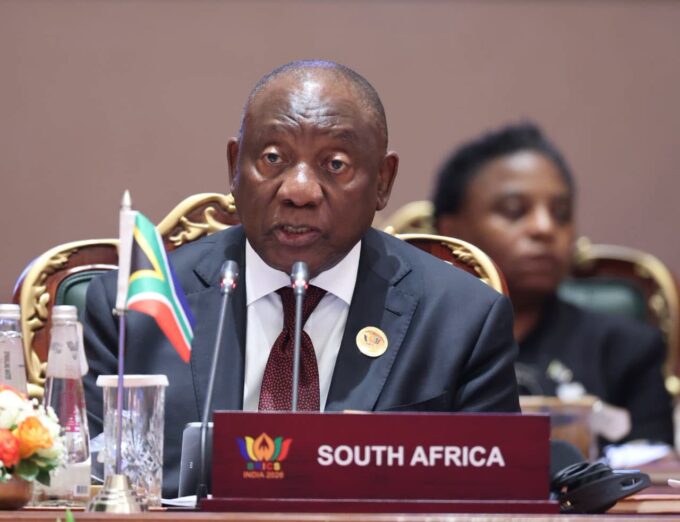
South Africa and Brazil’s proposal for an international panel on inequality was also noted by the leaders, who said tackling inequality must remain central to the global development agenda.
Push for changes to global finance and trade
BRICS leaders called for reform of the international financial system to increase the influence of emerging and developing economies.
They supported changes to IMF quota arrangements that would better reflect countries’ positions in the global economy while protecting the interests of poorer members.
The leaders also backed greater developing country representation in the World Bank through shareholding reforms.
On global trade, BRICS called for a stronger World Trade Organization and an open, fair, transparent and rules based multilateral trading system.
The declaration calls for the restoration of a fully functioning two tier WTO dispute settlement system and the appointment of new Appellate Body members.
BRICS also supported Ethiopia and Iran’s bids to join the WTO and welcomed China’s expansion of zero tariff treatment to 53 African countries with which it has diplomatic relations.
The leaders expressed concern about rising tariffs, non tariff barriers and protectionist measures, warning that such policies could disrupt global supply chains, reduce trade and deepen economic disparities.
They also condemned unilateral economic sanctions and other coercive measures that they said can affect development, health, food security and vulnerable populations.
Call for diplomacy over conflicts
The declaration calls for greater use of diplomacy, dialogue and mediation to prevent and resolve conflicts.
BRICS leaders expressed concern over growing global polarisation, distrust and military spending, saying resources were being diverted away from development needs.
They called for cooperation on conflict prevention, UN peacekeeping, African Union peace support operations and mediation.
The leaders also expressed concern about nuclear risks and called for stronger disarmament, arms control and non proliferation efforts.
Gaza and Palestine
The BRICS declaration contains a strong position on the conflict in Gaza.
Leaders called for the implementation of relevant UN resolutions, the continuation of a ceasefire and full and unhindered humanitarian access to the Gaza Strip.
They expressed concern over continued violence despite the October 2025 ceasefire agreement and opposed policies aimed at forcibly removing Palestinians from Gaza.
BRICS backed the legitimate rights of Palestinians, including self determination and the right of return, and supported full Palestinian membership of the United Nations.
The grouping reiterated its support for a two state solution based on international law, with an independent and sovereign Palestinian state within the internationally recognised 1967 borders, including Gaza and the West Bank, with East Jerusalem as its capital.
The leaders also condemned attacks on civilians and civilian infrastructure, the use of starvation as a method of warfare and restrictions on humanitarian assistance.
They referenced provisional measures issued by the International Court of Justice in proceedings brought by South Africa against Israel concerning humanitarian assistance to Gaza.
Sudan
On Sudan, BRICS leaders expressed grave concern over the worsening humanitarian situation and the growing risk of extremism and terrorism.
They called for an immediate and permanent ceasefire, a peaceful political settlement through dialogue and sustained humanitarian access.
The declaration also calls for greater humanitarian assistance to Sudan and neighbouring countries.
BRICS said the principle of an “African solution to African problems” should remain central to resolving the conflict and called for better coordination among peace efforts.
The leaders also addressed conflicts and instability in Syria, Lebanon, Cuba and the Middle East, calling for diplomacy, respect for sovereignty and territorial integrity and the protection of civilians.
They welcomed the Lebanon ceasefire and called for implementation of UN Security Council Resolution 1701.
BRICS also condemned attacks against UN Interim Force in Lebanon installations and personnel and called for those responsible to be held accountable.
Stronger fight against terrorism and organised crime
BRICS leaders condemned terrorism regardless of its motivation and condemned the April 22, 2025 terrorist attack in Jammu and Kashmir, in which 26 people were killed and others injured.
They called for stronger cooperation against terrorism financing, terrorist safe havens and the cross border movement of terrorists.
The declaration states that terrorism should not be associated with any religion, nationality, civilisation or ethnic group.
BRICS also called for the completion of negotiations on a Comprehensive Convention on International Terrorism under the UN framework.
The grouping raised concerns over illicit financial flows, human trafficking, firearms trafficking, drug related proceeds, money laundering, corruption, cybercrime and illegal virtual asset flows.
It also raised alarm over organised scam networks and cross border fraud operations, including so called scam compounds that exploit digital technology and payment systems.
The leaders called for closer cooperation between customs authorities, financial intelligence units, law enforcement agencies, tax authorities, regulators, telecommunications companies and technology platforms to detect and disrupt financial crime.
BRICS also agreed to strengthen cooperation against corruption and welcomed the establishment of an Expert Network on Asset Recovery.
Technology and digital cooperation
Technology emerged as another major area of cooperation.
BRICS leaders recognised information and communication technologies as important drivers of economic growth and digital transformation.
They backed cooperation on cyber security, responsible state behaviour in cyberspace and the development of common international rules.
The declaration calls on countries to consider signing and ratifying the UN Convention against Cybercrime.
BRICS also plans continued cooperation between computer emergency response teams, law enforcement agencies and researchers.
The leaders also recognised the growing role of artificial intelligence in economic development and called for international cooperation to improve access to AI while ensuring safety, security, reliability and inclusion.
They supported AI research and innovation, energy efficient AI systems and the development of trustworthy technologies capable of supporting economic growth and social development.
The declaration also commits BRICS to implementing the Leaders’ Statement on the Global Governance of Artificial Intelligence.
The grouping also backed stronger cooperation on digital public infrastructure, digital public goods, digital skills and research.
A proposed BRICS digital public infrastructure repository and pilot projects are expected to support digital transformation across member states.
Health cooperation expanded
BRICS leaders agreed to deepen cooperation on global health and universal health coverage.
They called for greater sharing of medical experience, innovation and best practices among member states and supported the coordinating role of the World Health Organization.
Tuberculosis was identified as a major global health challenge requiring sustained research, technology sharing and coordinated action.
The declaration also recognises that infectious diseases, antimicrobial resistance and other health emergencies cross national borders and require stronger surveillance, early warning and rapid response systems.
A dedicated sub working group will advance the BRICS Integrated Early Warning System for the prevention and response to mass infectious diseases.
The leaders also supported cooperation between medical products regulatory authorities and welcomed the BRICS GxP White Paper.
They backed people centred digital healthcare and welcomed a BRICS compendium on digital health architecture, including access to healthcare in remote areas.
BRICS also launched a Mission for Healthy Lifestyle and a roadmap for joint healthy lifestyle promotion covering 2026 to 2029.
Mental health was included as an important part of health and sustainable development, with plans for a BRICS Training Hub Network and a Network of Centres of Excellence coordinated by India’s National Institute of Mental Health and Neuro Sciences.
The grouping also supported cooperation in traditional, complementary and integrative medicine and called for stronger health workforces, public health institutions, medical research, local production and the use of digital technology and artificial intelligence in healthcare.
Food and agriculture
Food security also featured prominently in the declaration.
BRICS leaders said member countries, as major food producers, have an important role in improving agricultural productivity, sustainability and global food security.
They raised concerns about food price volatility, supply disruptions and shortages of agricultural inputs such as fertiliser.
The grouping continued discussions around establishing a BRICS Grain Exchange and expanding cooperation to other agricultural products and commodities.
It also called for stronger national food reserve systems and drought resilient and climate adaptive seed systems.
The leaders agreed to establish BRICS AGRIN, a collaborative and farmer focused network dealing with agro inputs, genetic resources and information.
They also welcomed a Global Forum on Farmers’ Rights in Seed Systems.
Further cooperation will cover agroecology, regenerative agriculture, digital agriculture, agroforestry, fisheries and aquaculture.
Energy and critical minerals
Energy security was identified as a foundation for economic development, national security and public welfare.
BRICS called for stable energy markets, reliable supplies, resilient infrastructure and stronger energy value chains.
The declaration recognises that fossil fuels will continue to play a role in the energy mix, particularly for developing economies, while supporting orderly and inclusive transitions towards lower emissions.
The grouping also backed greater use of artificial intelligence and advanced data analytics in energy systems.
It welcomed guiding principles on smart grids and energy storage and proposed a BRICS Digital Centre of Excellence for Smart Grids and Energy Storage.
Critical minerals were identified as important to clean energy technologies, energy security and resilient supply chains.
BRICS called for mineral supply chains that promote value addition and economic diversification in resource rich countries while respecting national sovereignty over natural resources.
The declaration also supports industrial cooperation, Industry 4.0, technology transfer, start ups and small and medium enterprises.
A BRICS Incubator Network has been established, while members will consider creating a BRICS Startup Innovation Fund.
Digital connectivity and research
The leaders also backed greater cooperation in science, technology and innovation.
The declaration supports a BRICS Science and Research Repository and the proposed BRICS Global Research Advanced Infrastructure Network.
The bloc also wants stronger digital connectivity through submarine cables linking BRICS countries.
A dedicated task force has prepared requirements for the proposed high speed submarine cable network, with further technical and economic feasibility work expected.
The BRICS Science, Technology and Innovation Framework Programme is also marking its 10 year milestone in 2026, with new research funding calls launched.
Youth researchers and start ups are expected to receive greater support through initiatives such as the Young Scientists Forum, Young Innovators Prize and a proposed virtual platform for BRICS youth start ups.
Climate and biodiversity
Climate change was another major area of cooperation.
BRICS leaders called for implementation of the Paris Agreement and greater support for developing countries facing climate related risks.
They pointed to the financial constraints created by high debt burdens and called for international action to improve debt sustainability, expand fiscal space and increase climate financing.
BRICS also welcomed Ethiopia’s presidency of the UNFCCC COP32 and the conclusion of Brazil’s COP30 presidency.
The declaration calls for greater financing, technology transfer and capacity building for climate adaptation in developing countries.
It also recognises the value of traditional and indigenous knowledge in building resilience and supports people centred and community based adaptation approaches.
BRICS welcomed cooperation on carbon markets and the implementation of its Carbon Markets Partnership.
On biodiversity, leaders backed the conservation and sustainable use of natural resources and welcomed the Kunming Biodiversity Fund.
They also took note of India’s initiative to establish an International Big Cats Alliance and encouraged cooperation among BRICS countries on big cat conservation.
The declaration calls for greater protection and restoration of forests, wetlands, mangroves and other ecosystems.
It also welcomes the Tropical Forest Forever Facility launched at the Belém Climate Summit and calls for ambitious contributions to ensure its financing and operation.
Water security, drought, desertification, land degradation, sand and dust storms and wildfires were identified as major environmental challenges.
The leaders noted the 2026 UN Water Conference, co hosted by the United Arab Emirates and Senegal, which is scheduled for Abu Dhabi from December 8 to 10.
BRICS also called for stronger waste management, recycling and resource efficiency as urbanisation and industrialisation increase waste generation.
New Development Bank given larger role
The New Development Bank is expected to play a greater role in financing development across BRICS and the wider Global South.
BRICS leaders called for the bank to expand its ability to mobilise resources, increase local currency financing, diversify funding sources and support infrastructure, sustainable development, economic integration and inequality reduction.
They also backed further expansion of NDB membership.
The BRICS NDB Knowledge Portal, launched under India’s chairship, brings together development experiences, policy innovations and lessons from NDB financed projects across member countries.
The leaders also reaffirmed the importance of the G20 as a forum for international economic cooperation.
They referred to the consecutive G20 presidencies held by Indonesia, India, Brazil and South Africa between 2022 and 2025 and welcomed the African Union’s accession to the G20 during India’s presidency.
The declaration specifically recognised South Africa as a founding G20 country and full member.
Trade, payments and infrastructure
BRICS is also seeking to make trade between member countries easier and less costly.
The BRICS Payment Task Force is examining ways of improving cross border payment systems and interoperability between payment and messaging channels.
Members are also studying trade settlements and investment using local currencies, while recognising that different national systems and priorities require flexible approaches.
The objective is to develop payment arrangements that are faster, cheaper, accessible, efficient, transparent and secure.
The declaration also supports public private partnerships for infrastructure and the development of a stronger BRICS insurance ecosystem.
Members are considering the creation of a BRICS Insurance Resilience Centre and India has proposed hosting a BRICS Risk Lab at GIFT City in Gujarat.
BRICS also called for stronger customs cooperation, including an agreement on mutual administrative assistance, greater use of authorised economic operator programmes and an annual joint customs enforcement operation.
The bloc established a Task Force on Growth and Development to examine economic models suited to the national circumstances of BRICS and other emerging and developing economies.
Transport and urban development
Transport cooperation will focus on infrastructure, investment, technology and capacity building.
BRICS countries welcomed work on sustainable aviation fuels, transport decarbonisation, urban mobility and logistics supply chains.
A BRICS Urban Mobility Hub has been established to support knowledge sharing on affordable, accessible and smart urban transport.
The bloc also welcomed the BRICS Logistics Supply Chain Cooperation Framework and discussions around a BRICS Railway Research Network.
The declaration also welcomed the expansion of the International Civil Aviation Organization Council to improve representation of underrepresented regions, including Africa and the Asia Pacific.
Ethiopia, endorsed by the African Union as the sole African candidate, and Indonesia were welcomed as candidates for additional seats.
BRICS also backed people centred urban development, including cooperation on housing, water, sanitation, mobility, waste management and essential services.
Women, youth, education and culture
The declaration places women, young people and education at the centre of the bloc’s social development agenda.
BRICS leaders welcomed the outcomes of the Women Ministerial Meeting in Kochi and called for greater participation of women in governance, business, technology, skills development, entrepreneurship, climate action and food security.
They also welcomed guidelines on women’s digital capacity building and initiatives to expand access to finance, markets and technology for women led enterprises.
Education cooperation will include skills development, digital literacy, academic mobility, scholarships, recognition of qualifications and partnerships between technical and vocational education institutions and industry.
The BRICS Network University remains a key mechanism for cooperation, while members are considering greater collaboration on traditional, indigenous and local knowledge systems.
The bloc also supports exchanges in science, technology, engineering and mathematics and further development of BRICS education rankings and evaluation systems.
BRICS labour ministers are expected to work on employment, social protection and skills forecasting, including for workers in the digital and platform economy.
The declaration welcomes BRICS CONNECT, a cooperation network focused on capacity building, employability, new skills and technologies.
Members are also considering an International Digital Platform for Remote Employment.
Cultural cooperation will cover heritage protection, museums, archives, libraries, creative industries and the repatriation of cultural property to countries of origin.
The BRICS Culture Festival, WAVES Bazaar, Theatre Festival and Film Festival were welcomed as platforms for cultural exchange and collaboration.
Tourism was also identified as an important source of employment, foreign exchange, economic diversification and local livelihoods.
BRICS countries will explore sustainable tourism, ecotourism, digital payments, artificial intelligence, community led tourism and the development of historical, cultural, nature based, gastronomy and health tourism products.
Sport cooperation will include youth participation, sports technology, research and the development of national, traditional, indigenous and non Olympic sports.
The bloc is also considering a BRICS Sports Goods Manufacturing Conclave and further discussions on a sports technology working group.
China takes over BRICS chairship
The declaration concludes with India’s 2026 chairship receiving recognition for hosting the summit and coordinating the year’s programme.
The leaders expressed gratitude to the government and people of India for hosting the summit in New Delhi.
China will take over the BRICS chairship in 2027 and host the 19th BRICS Summit.




Leave a comment