


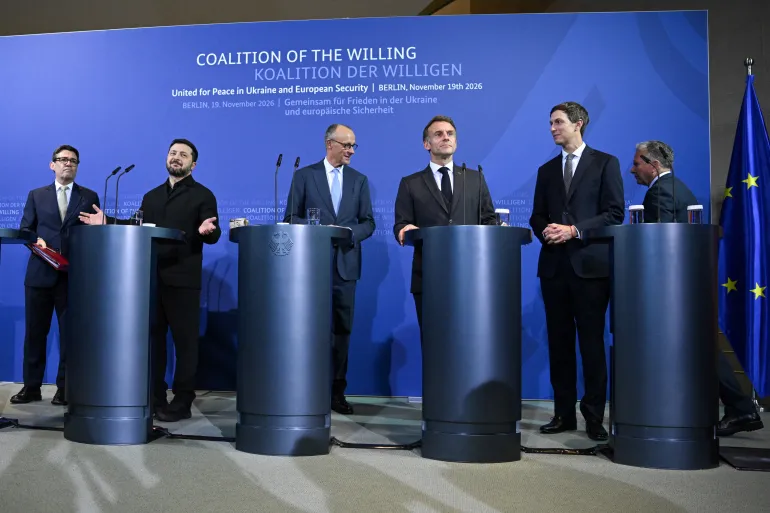
Berlin, Germany: US President Donald Trump’s special envoy Jared Kushner has said Russia is comfortable with the idea of providing Ukraine with security guarantees modelled on NATO’s Article 5, as European leaders push for a greater role in negotiations aimed at ending the war.
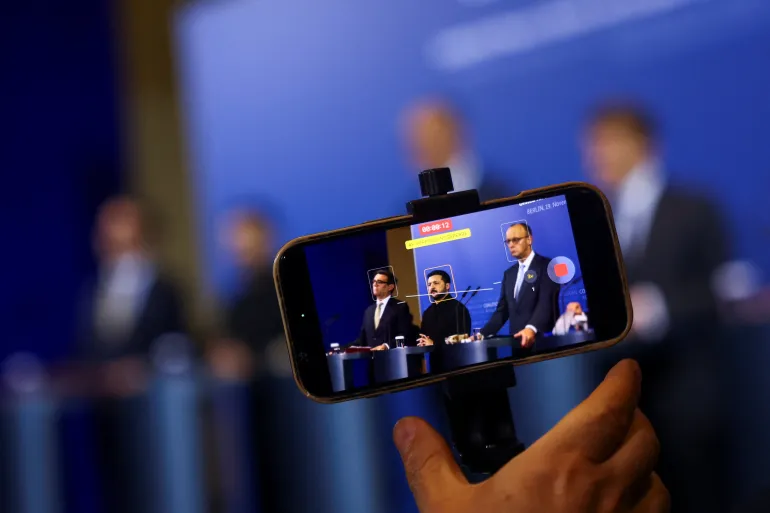
Kushner made the remarks during discussions in Berlin, where European leaders belonging to the so-called Coalition of the Willing gathered to coordinate their position on Ukraine and signal continued support for Kyiv.
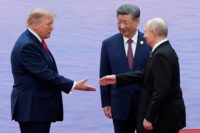
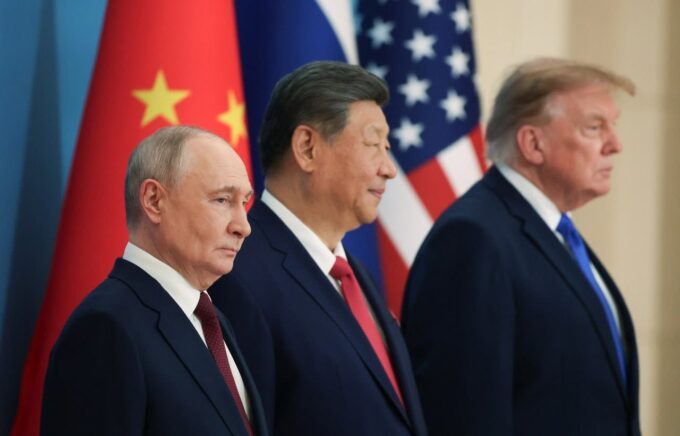
The meeting took place hours after an unprecedented three-way summit in Shenzhen, China, involving Trump, Chinese President Xi Jinping and Russian President Vladimir Putin.
German Chancellor Friedrich Merz questioned the significance of the Shenzhen meeting, describing it as a “photo op” and warning that any peace arrangement reached without European participation would be unlikely to succeed.
Merz said Europe would insist on being part of any negotiations concerning the future of Ukraine.
“If it comes to peace negotiations, then we will be involved,” he said, adding that such discussions “can only be successful with Ukraine and Europe”.
The German leader said he hoped to work as a “team with Kyiv and Washington” when negotiations with Russia eventually take place. However, no date has been announced for such discussions.
British Prime Minister Andy Burnham said European countries were prepared to participate in negotiations, but maintained that an agreement between Moscow and Kyiv should remain the immediate objective.
“Europe is ready to enter negotiations,” Burnham said, insisting that “a peace agreement between Ukraine and Russia must come first”.
“Europe has a clear and consistent and united negotiating position,” he added.
European governments have expressed frustration over what they see as their exclusion from Washington’s intermittent diplomatic engagements with Moscow and Kyiv, despite the war having significant security and economic implications for the continent.
Kushner sought to reassure European leaders that Washington wanted them involved in the diplomatic process.
“Trump wants to make a deal with Europe by his side,” he said.
“We do believe that Russia having Europe at the table will be essential for ending the war.”
He also indicated that Moscow had become comfortable with security arrangements for Ukraine based on NATO’s Article 5, which considers an armed attack against one member an attack against all members.
“I think we’ve gotten the Russians comfortable with that concept where any security guarantee for Ukraine would be based on Article 5,” Kushner said.
He added that Trump was “open” to the proposal, although any arrangement would have to serve American interests and form part of “a broader security package”.
The details of such guarantees remain unclear, including the extent of military commitments they would involve and whether both Russia and Ukraine would accept the arrangement. Moscow has not publicly responded to Kushner’s account.
Kushner also disclosed that Trump had joined the Berlin discussions by telephone following his meeting with Putin in China.
He said the previous round of negotiations, held in Abu Dhabi last week, had not produced a significant breakthrough.
Burnham welcomed Washington’s participation in the Berlin discussions, saying the American involvement could create fresh momentum towards ending the conflict.
“This clearly has got to be a moment to move towards peace because of the US involvement that we’ve seen today and the progress clearly that is being made,” he said.
French President Emmanuel Macron, meanwhile, called on Ukraine’s international partners to increase their assistance to Kyiv as Russian attacks continued.
“Everyone who has the capacity to provide the means to defend and protect Ukrainian citizens must do so now,” Macron said.
He identified the deployment of anti-missile systems and interceptors as an immediate priority, given the continuing threat posed by Russian aerial attacks.
Macron also called for renewed consideration of Ukraine’s potential membership of NATO, an issue that remains one of the major obstacles to reaching a peace settlement.
“Faced with the maximalist nature of the Russian position, I believe we need to reopen the question of Ukraine’s accession to NATO,” he said.
Ukrainian President Volodymyr Zelenskyy also called for increased international pressure on Moscow, warning against allowing the conflict to continue through the winter.
In a statement posted on X, Zelenskyy said: “We do not want Russia to drag all of this out into the winter. Pressure is needed. Europe is ready with new sanctions and new steps to support Ukraine and the Ukrainian people. It is important that the United States of America exert its influence on Russia.”
Putin threatens retaliation over Kerch Bridge attacks
Away from the Berlin discussions, Putin threatened retaliation against Ukraine following three aerial attacks this week that Moscow said had caused serious damage to the Kerch Bridge, which connects occupied Crimea to mainland Russia.
Speaking to reporters in Shenzhen, the Russian president said Moscow would respond to the attacks.
“We will respond to these attacks, and I want everyone to be clear about that,” Putin said.
He acknowledged that the road section of the bridge had been “seriously damaged” but said repairs would be undertaken.
Putin described the structure as civilian infrastructure and said he had ordered that it should not be used to transport military equipment or ammunition.
Train services resumed on Thursday afternoon, according to Russian state news agency RIA Novosti.
Ukraine’s Defence Ministry said the damage would force Russia to transport fuel and ammunition by land, where Ukrainian forces could target military supplies.
“where our drones are waiting for the cargo”, the ministry said.
Putin also said Russia was not opposed to European participation in peace negotiations, suggesting that discussions could even take place in Moscow.
He disclosed that the Kremlin had used diplomatic channels to invite European representatives to the Russian capital “to determine their position”, although no date had been proposed.
Meanwhile, Russia’s Defence Ministry reported intercepting 53 Ukrainian drones overnight.
In Russia’s Saratov region, a Ukrainian attack killed three people, according to regional governor Roman Busargin.
Ukraine, on the other hand, reported that Russian anti-ship missiles and 98 drones had struck 18 locations, leaving two people dead and at least 23 injured.
European embassies damaged in Kyiv
The escalating conflict also raised diplomatic tensions after minor damage was reported at the Dutch and Austrian embassies in Kyiv.
The Netherlands summoned Russia’s ambassador in The Hague following an incident in which a projectile landed behind its diplomatic building on Thursday afternoon. No injuries were reported.
Dutch Foreign Minister Tom Berendsen described the incident as “unacceptable” in comments to broadcaster RTL.
Austrian Chancellor Christian Stocker confirmed that Austria’s embassy in Kyiv had also been struck, although no diplomatic personnel were injured.
Sweden also announced plans to summon Russia’s ambassador following an explosion near its embassy, Reuters reported.
The incidents came amid growing diplomatic friction between Moscow and several European governments over their military and political support for Ukraine.
Earlier on Thursday, Russia’s embassy in the Netherlands said it was becoming “increasingly difficult to regard the Netherlands as a mere bystander” in the conflict.
The statement followed remarks by Dutch defence company Destinus, which said its missiles were the only foreign-made weapons used in Ukraine’s attack on the Kerch Bridge on Tuesday.









Leave a comment