


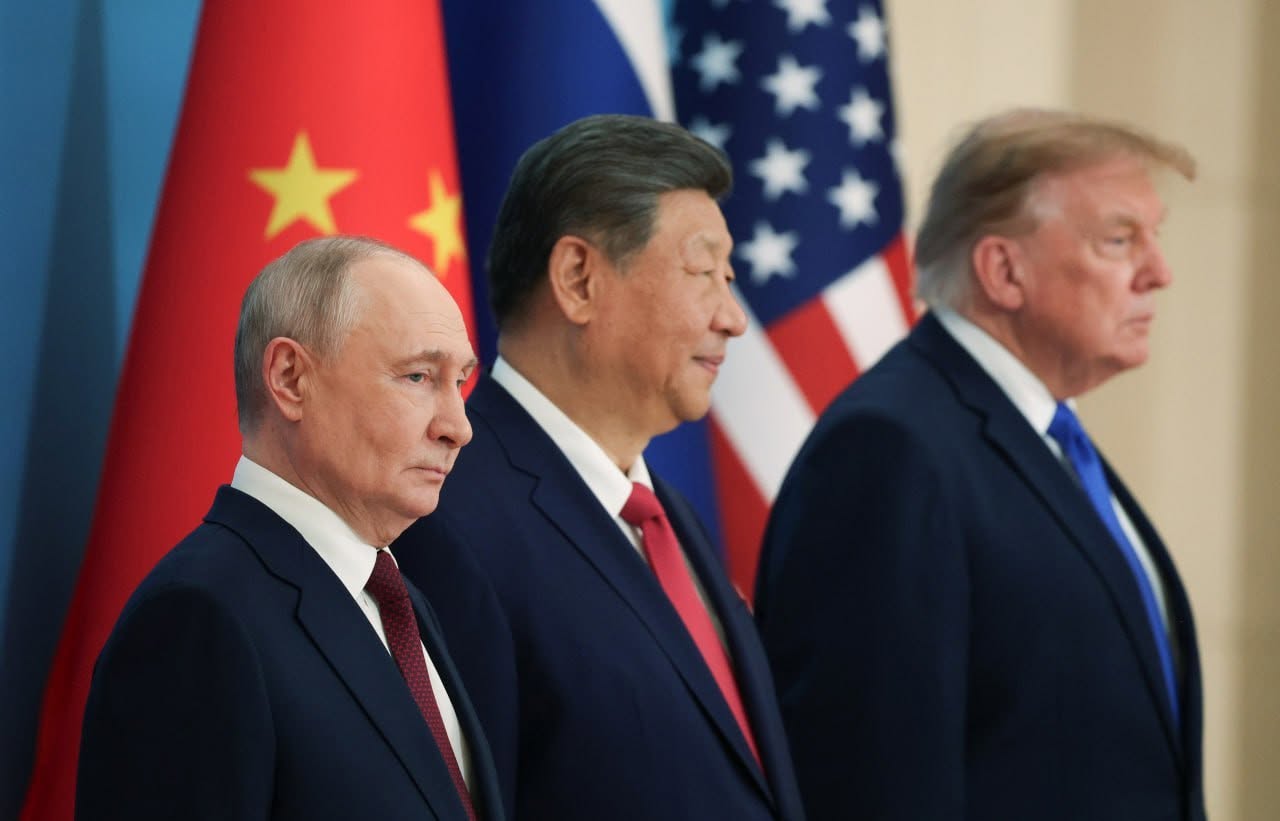
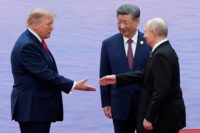
Shenzhen, China: Russian President Vladimir Putin, Chinese President Xi Jinping and US President Donald Trump have adopted a joint declaration on international peace and security following a historic trilateral meeting in Shenzhen on 19 November 2026, outlining areas of cooperation ranging from United Nations reform and energy security to nuclear risk reduction.
The meeting brought together the leaders of the three countries for the first time in this format, creating a platform for discussions on global political and economic challenges, international security and the management of regional conflicts.
According to the declaration, Putin and Trump expressed appreciation to China for hosting what they described as a historic trilateral summit.
The three presidents exchanged views on the international situation and committed themselves to maintaining strategic stability and strengthening international security.
A central component of their agreement concerns the future of the United Nations, where Russia, China and the United States hold permanent seats on the Security Council.
The three countries pledged to pursue reforms that would enable the international organisation to respond more effectively to emerging global challenges while remaining focused on its founding responsibilities of maintaining international peace and security.
The declaration also addressed global energy markets, with the three governments expressing plans to increase the production and supply of refined petroleum products for the benefit of countries worldwide.
They recognised the importance of maintaining stable energy flows, an issue with significant implications for international trade, industrial development and economic security, particularly for energy-dependent economies across Africa and other developing regions.
On international justice, the three leaders recognised the importance of state consent and respect for the immunities of government officials.
They also agreed that the International Criminal Court and other comparable institutions should not exceed or abuse their jurisdiction.
The declaration further addressed nuclear security, with the presidents reiterating their shared position that nuclear conflict must be avoided.
They stated that a nuclear war cannot be won and must never be fought, while committing their countries to dialogue on reducing nuclear risks and preventing the spread of nuclear weapons.
Putin outlines priorities for trilateral cooperation
During his opening remarks, Putin described the meeting as an important opportunity for the three countries to exercise their shared responsibilities as permanent members of the United Nations Security Council.
He said Russia, China and the United States had a particular obligation to contribute to international law, global peace and security.
The Russian president outlined an extensive agenda covering international economic relations, food and energy security, counter-terrorism and efforts to resolve regional conflicts.
The war in Ukraine was among the issues discussed during the summit, with Putin also holding separate bilateral discussions with both Trump and Xi on the conflict.
Putin presented constructive cooperation based on mutual respect and a balance of national interests as an approach capable of contributing to greater international stability.
The Shenzhen meeting comes amid continuing geopolitical tensions, growing competition among major powers and diplomatic efforts to address conflicts affecting different regions.
For African countries, discussions on energy supply, food security, international institutional reform and nuclear risk reduction carry particular relevance, given the continent’s exposure to global commodity price fluctuations, supply chain disruptions and the wider consequences of international conflicts.
The declaration provides a framework for continued engagement among the three permanent members of the UN Security Council, although the practical steps and timelines for implementing the commitments were not specified in the published text.






Leave a comment