


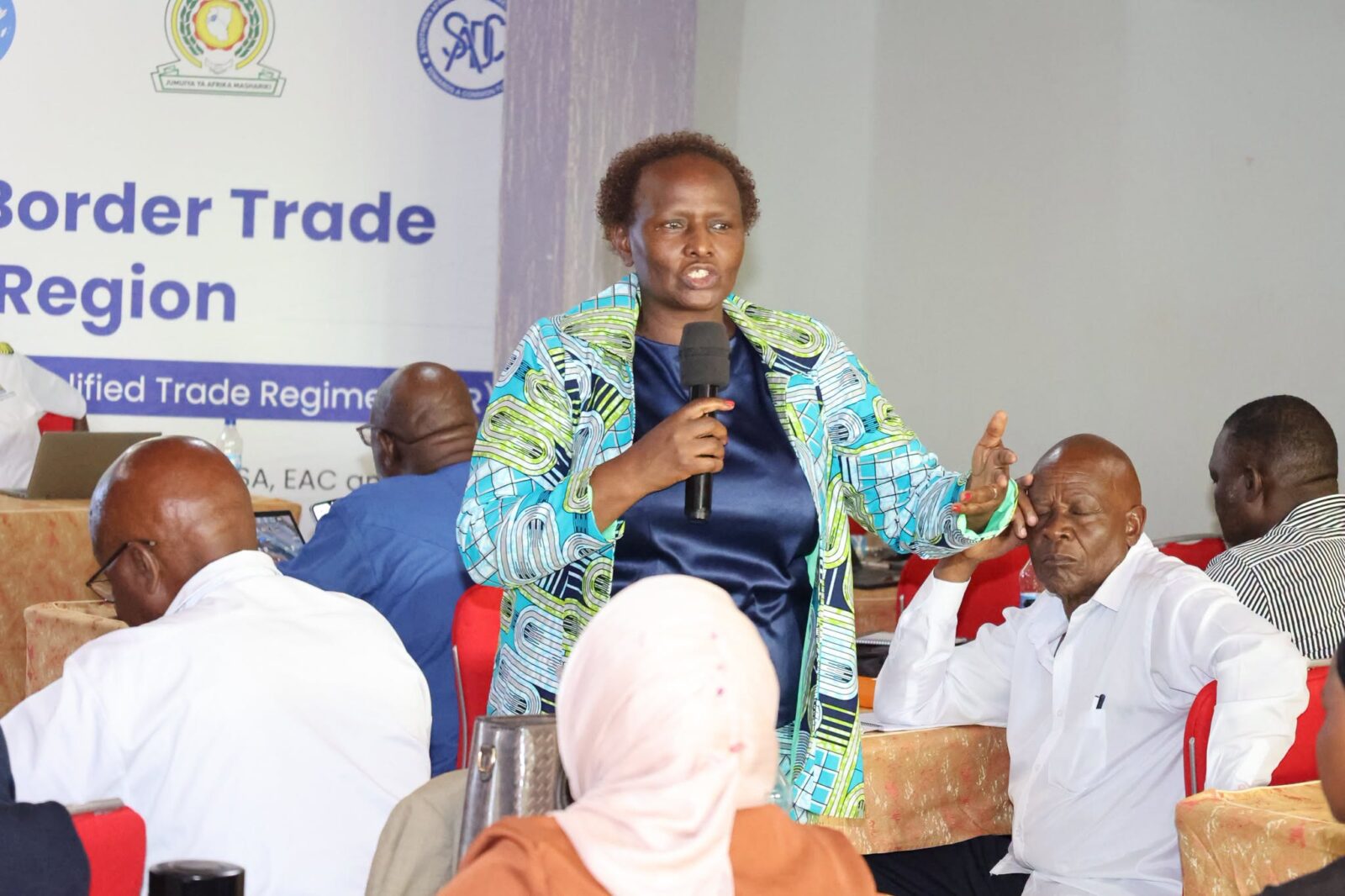
BUSIA, Kenya – Regional trade officials, border agencies and representatives of traders’ organisations have called for stronger awareness and institutional preparedness ahead of the implementation of the Tripartite Simplified Trade Regime (TSTR), a proposed initiative aimed at making cross-border trade easier and more accessible to small-scale traders across Eastern and Southern Africa.
The call emerged from a two-day Capacity Building and Awareness Creation Workshop on the Implementation of the Tripartite Simplified Trade Regime, held at the Busia Border Post between Kenya and Uganda from 16 to 17 November 2026.
The initiative brings together the Common Market for Eastern and Southern Africa (COMESA), the East African Community (EAC) and the Southern African Development Community (SADC) under the Tripartite cooperation framework.
Although the TSTR has not yet become operational, the workshop provided an opportunity for stakeholders to examine how the proposed arrangement could address persistent difficulties faced by small-scale traders under existing Simplified Trade Regimes within the three regional economic communities.
Among the challenges identified were inadequate access to trade information, inconsistent enforcement of border procedures, non-tariff barriers and insufficient institutional support at border crossings.
Small-scale cross-border trade remains an important source of employment, household income and food security for millions of people across Eastern and Southern Africa. Women account for a substantial proportion of traders operating in informal and small-scale markets, making them among the groups expected to benefit from improved trade facilitation.
Through simpler procedures, lower compliance costs and better access to reliable information, the proposed regime is expected to create opportunities for women traders to participate more effectively in regional value chains, expand their businesses and improve household incomes.
The workshop also examined the importance of ensuring that all stakeholders understand how the proposed arrangement will operate before its eventual introduction.
Customs authorities, standards agencies, border management institutions, traders’ associations, local government representatives and individual traders will need a common understanding of the applicable procedures, requirements and opportunities.
Participants were taken through the proposed TSTR framework, including product eligibility criteria, simplified certificates of origin, applicable trade thresholds and customs procedures.
Practical exercises and discussions allowed participants to examine how the proposed arrangements could make cross-border transactions easier while maintaining compliance with customs and other regulatory requirements.
The sessions also addressed the need for consistency among border officials and traders when interpreting trade procedures, particularly to avoid confusion and unnecessary delays once the regime becomes operational.
Another major area of discussion was the role of Trade Information Desks and Trade Information Desk Officers in supporting small-scale traders.
These officers are expected to serve as important contact points for traders seeking guidance on customs procedures, eligible products, documentation, regulatory requirements and available support services.
Participants observed that many difficulties encountered by small-scale traders arise from limited access to information rather than the trade requirements themselves.
Strengthening Trade Information Desks could therefore help traders make informed decisions, improve compliance with border regulations and build confidence when engaging with customs authorities and other border institutions.
The workshop also addressed the continued presence of Non-Tariff Barriers (NTBs), which remain a major obstacle to the movement of goods across African borders despite progress in reducing tariffs.
Delays at border posts, inconsistent application of regulations, excessive paperwork, inadequate transparency and other administrative challenges continue to increase the cost of doing business, particularly for traders operating on a small scale.
Representatives from COMESA and SADC demonstrated the NTB Reporting and Monitoring Mechanism, an existing platform designed to allow traders and other stakeholders to report trade-related obstacles and monitor efforts to resolve them.
Participants were encouraged to make greater use of the mechanism to document barriers encountered along regional trade corridors and improve accountability among institutions responsible for facilitating cross-border commerce.
Sanitary and Phytosanitary (SPS) requirements also featured in the discussions, with participants examining how better awareness of regulatory standards could improve the movement of agricultural products and other goods across borders.
The discussions covered food safety, packaging, labelling and permit requirements, as well as the importance of closer cooperation between border agencies and regulatory authorities.
Improved access to information on these requirements is expected to help traders avoid unnecessary delays, reduce product losses and gain better access to regional markets.
Beyond customs procedures, the proposed TSTR is expected to contribute to wider economic development across the Tripartite region by creating better opportunities for small businesses to access markets beyond their immediate communities.
By facilitating the movement of goods and encouraging small enterprises to participate in formal trade, the initiative could support local production, promote value addition and contribute to regional industrialisation efforts.
The next phase of the awareness and capacity-building programme is expected to extend to other strategic border crossings, including the Mwami/Mchinji Border Post between Malawi and Zambia.
The additional engagements will provide opportunities for traders, customs officials and other stakeholders to familiarise themselves with the proposed framework ahead of its eventual implementation.
However, the operationalisation of the TSTR remains subject to the completion of the necessary approval processes within the Tripartite cooperation framework.
The Busia workshop brought together representatives of COMESA, EAC, SADC, member states, border agencies and traders’ organisations as part of broader efforts to prepare institutions and communities for the proposed regional trade arrangement.














Leave a comment