


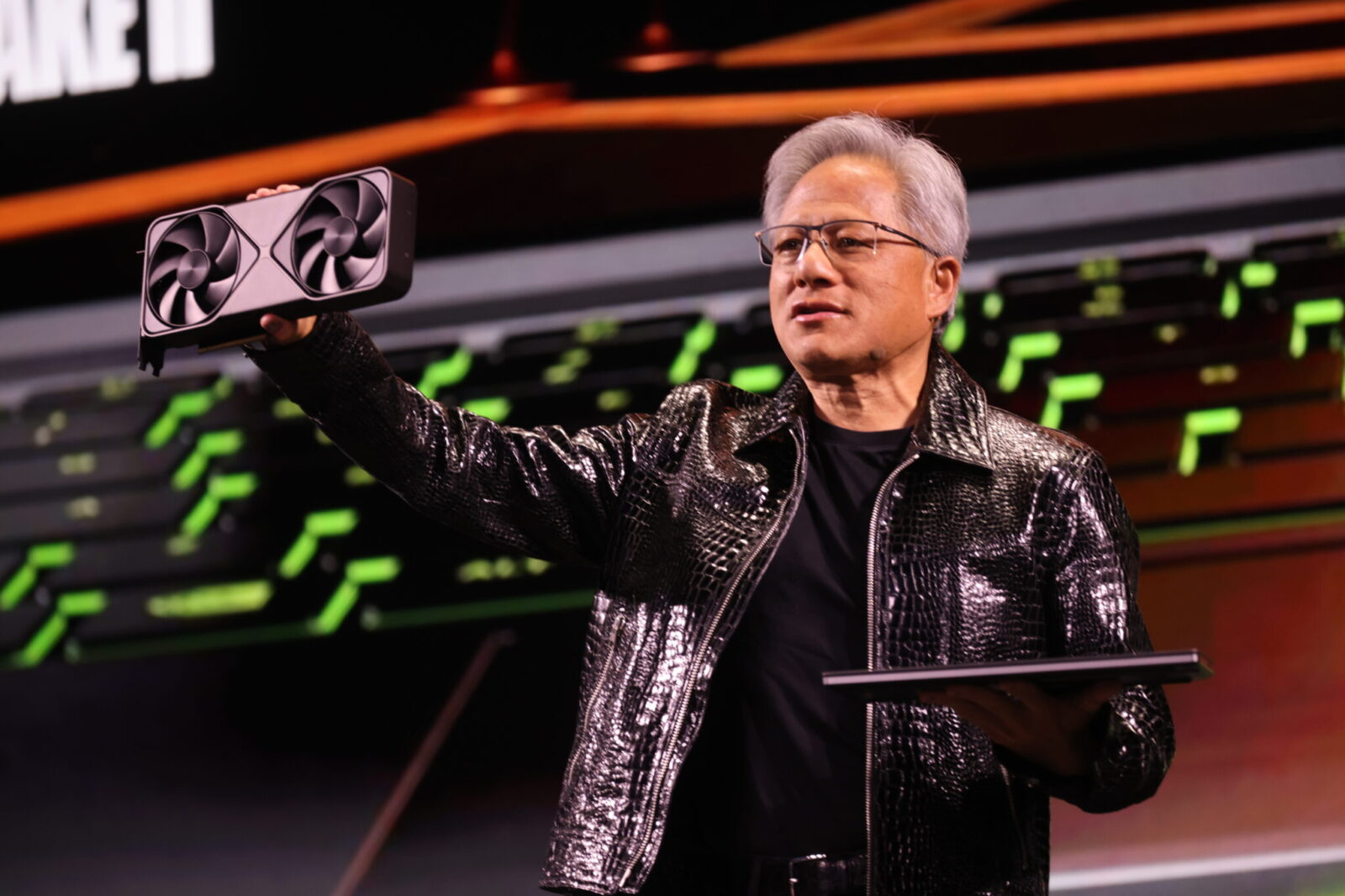
New York – Nvidia co-founder Jensen Huang has returned as chief executive of the US technology giant following a dramatic boardroom reversal reportedly driven by pressure from President Donald Trump, less than two weeks after stepping down amid revelations about alleged extramarital relationships and concerns involving national security.
The decision, announced on Monday, followed strong support for Huang from Trump, prominent technology executives, investors and thousands of supporters who had called for his reinstatement.
His return triggered an immediate rally on Wall Street, with Nvidia shares climbing 31.5 per cent, adding nearly US$1 trillion to the company’s market value and restoring its position as the world’s second most valuable publicly listed company behind Apple.
However, the share price recovery did not completely reverse the losses recorded following Huang’s departure on November 12.
The board’s decision has raised questions about corporate governance and its independence, particularly because Chairman Harvey Jones had reportedly ruled out Huang’s return less than a week earlier, arguing that his personal conduct was inconsistent with the company’s code of conduct.
The reversal came while investigations into the allegations surrounding Huang remain incomplete.
Nvidia said the board had considered input from the US government and was confident that “Huang’s reinstatement poses no national security risk”. Trump also supported that position during an interview with CNBC.
Huang, 63, welcomed the decision, saying he was honoured to return to the company he co-founded more than three decades ago.
“I can’t wait to get back to work,” he said.
He subsequently arrived at Nvidia’s headquarters in Santa Clara, California, where employees gathered to welcome him. Business Insider reported that Huang told those present he intended to “be a better CEO the second time around”.
Trump’s intervention sparks controversy
Trump played a significant role in the efforts to bring Huang back, openly acknowledging his involvement in the negotiations surrounding the reinstatement.
“I believe my intervention was very important to get Jensen Huang back,” Trump told CNBC.
The US president also defended the technology executive against the allegations, describing him as a genius and saying he had done nothing wrong.
Trump’s involvement has attracted scrutiny because of his financial interests in Nvidia. A Reuters review of his 2025 annual financial disclosure and 2026 share trading disclosures found that he holds between US$11 million and US$55 million in Nvidia stock.
The company’s 31.5 per cent share price increase on Monday could have increased Trump’s net worth by as much as US$17 million.
A White House spokesperson said Trump’s stock and bond portfolio was independently managed by third-party financial institutions, adding that neither the president nor members of his family could direct or influence investment decisions.
The controversy has nevertheless prompted questions about the relationship between presidential intervention, private financial interests and decisions involving strategically important technology companies.
James St. Aubin, chief investment officer at Ocean Park Asset Management, said Huang’s return raised concerns about corporate accountability.
“Jensen’s return is not a total shock, but it does send a troubling message about the state of corporate governance in America,” he said.
He added that influential executives could face different standards when their companies and leadership positions were considered too important to lose.
Huang would still need to address difficult questions from US lawmakers, St. Aubin said.
The reinstatement has also attracted criticism across party lines in Washington, with legislators calling for Congress to advance the Chip Security Act, proposed legislation intended to prevent advanced semiconductors legally exported by American companies from being diverted to China, where certain sales are restricted.
US Senate Minority Leader Chuck Schumer accused Trump of “putting his own financial interests … before our national security”.
Republican Senator Pete Ricketts of Nebraska also questioned the implications of the decision, saying Huang’s return “doesn’t absolve Nvidia of answering for national security concerns and unaccounted-for chips.”
Where Nvidia makes money
US is the chip giant’s biggest market by revenue
Allegations remain under investigation
Huang’s resignation followed revelations about alleged intimate relationships involving at least two Nvidia employees, as well as allegations concerning Alice Huang, a Chinese businesswoman accused of having connections to Beijing.
Huang has acknowledged being unfaithful to his wife and apologised publicly, although he has not provided detailed public responses to the individual allegations.
China has denied the espionage allegations, while attempts by Reuters to reach Alice Huang were unsuccessful.
Nvidia’s board did not refer to the alleged relationships when announcing Huang’s reinstatement.
Steve Sosnick, chief strategist at Interactive Brokers, said the extent to which the Trump administration and shareholders influenced the decision might never become clear.
“There were definitely a lot of people who wanted him back. The extent that the administration intervened, the extent that shareholders intervened, it will be impossible to know,” he said.
“But it tells us to some extent that Jensen Huang was too big to be fired.”
A petition calling for Huang’s return attracted more than 180,000 signatures, reflecting the considerable support he enjoys among investors, employees and sections of the technology industry.
His departure had caused uncertainty across Silicon Valley and international technology markets, particularly in Asia, where Nvidia has extensive commercial relationships.
China market remains central to Nvidia’s future
The leadership crisis comes as Nvidia faces increasing scrutiny from Washington over the export of advanced artificial intelligence chips to China.
The US government has tightened licensing requirements for certain semiconductor shipments and overseas data centres serving Chinese companies. Lawmakers have also raised concerns about the possible diversion of restricted technology.
Huang has consistently advocated greater access to the Chinese market, which remains an important commercial opportunity for the company.
He has agreed to appear before the US Senate Banking Committee at a public hearing scheduled for December 3, where lawmakers are expected to question him about export controls and national security concerns.
Trump said he had urged Nvidia to continue reviewing its compliance with American export restrictions to ensure that national security requirements were being met.
Huang out, Huang back
Nvidia’s stock takes the scenic route (hover points for prices & events)
The president also disclosed that he had discussed Huang with Chinese President Xi Jinping during a visit to Shenzhen the previous week.
Reuters reported that Huang’s departure had already created uncertainty among Chinese customers, with some cancelling orders or delaying purchasing decisions. The disruption threatened billions of dollars in potential revenue for Nvidia.
Washington was also preparing to place Singapore-based semiconductor company Megaspeed on its trade blacklist on Monday. The company has been linked to an espionage investigation involving Nvidia, according to a person familiar with the matter who spoke to Reuters.
Nvidia’s board has established two committees to address the growing concerns. One is investigating whether foreign intelligence operations targeted Huang, while another is examining national security and compliance with export controls.
The company is also facing several other investigations involving suspected accounting irregularities, alleged chip smuggling and a shareholder lawsuit.
The lawsuit accuses Nvidia and Huang of misleading investors by concealing his alleged relationship with Alice Huang.
Huang’s influence over the artificial intelligence industry
Huang’s rapid return has demonstrated the extraordinary influence he exercises over Nvidia and the wider artificial intelligence industry.
His leadership extends beyond managing the world’s leading supplier of advanced AI processors. Over the years, he has developed relationships with governments, investors, technology companies, manufacturers and customers across several continents.
Nvidia’s chips have become essential to the global expansion of artificial intelligence infrastructure, with technology companies spending billions of dollars to acquire the processors needed to train and operate increasingly sophisticated AI systems.
Eric Schiffer, chairman of Los Angeles-based private equity firm Patriarch Organization, described Huang’s popularity among investors in striking terms.
“Jensen is bigger than Elvis for tech investors,” he said.
Huang’s influence is particularly visible across Asia, where he has frequently attracted crowds of admirers in cities such as Taipei and Seoul. Fans have approached him for autographs on books, posters and even their bodies.
His relationships with influential business leaders have also become a defining feature of his position in the industry.
Oracle chairman Larry Ellison previously described how technology executives had resorted to “begging Jensen for GPUs” as demand for Nvidia processors increased.
Huang has also supported the growth of AI start-ups by providing financial backing, helping companies secure customers and participating in fundraising discussions.
However, his investment strategy has attracted criticism from some Wall Street analysts, who questioned whether Nvidia’s use of its own cash to finance start-ups that subsequently purchase its chips created an unhealthy cycle of investment and revenue generation.
Huang has defended the practice, arguing that the company was supporting genuine demand for its technology.
His departure had raised concerns about the future of AI companies such as CoreWeave and Nebius, both of which depend on Nvidia’s technology and benefited from Monday’s market recovery.
Bill Gunderson, a partner at GCG Advisory Partners, described the market’s reaction as evidence of Huang’s central position in the industry.
“You can see how one man was so much the face of this industry. He leaves and the whole place goes to heck in a handbag. And all of a sudden, he’s back and everything is rebounding,” he said.
A powerful executive without special voting rights
Despite his influence, Huang does not possess the special voting shares that give some technology founders effective control over their companies.
He is Nvidia’s fifth-largest shareholder, holding approximately 3.6 per cent of the business.
His management approach is known for being highly hands-on, with Huang personally involving himself in operational decisions and overseeing approximately 60 direct reports, most of whom work in engineering.
These include specialists responsible for memory chips, networking, graphics processing and central processing units.
Speaking on a podcast in March, Huang explained his unconventional approach to corporate management.
“A lot of companies’ organization charts, they all look the same. And it doesn’t make any sense to me. The architecture of the company should reflect the environment in which it exists,” he said.
Founders and venture capitalists have also described how Huang becomes directly involved in the companies Nvidia invests in, sometimes helping them attract customers and joining fundraising calls to secure additional investors.
His reinstatement has therefore reignited debate about the concentration of corporate influence in the hands of individual executives, particularly within companies whose technology has become essential to major global industries.
Although lawmakers from both political parties have questioned the decision, Trump’s support and the market’s immediate reaction have demonstrated the extent to which Nvidia’s leadership remains closely associated with Huang.
Nada Kakabadse, a professor of corporate governance and ethics at Henley Business School in Britain, said the board would face a difficult task in maintaining oversight of an executive whose influence appears to extend beyond conventional corporate structures.
“When the CEO is too big to fire, the board’s job isn’t to fire him. It’s to fence him in,” she said.










Leave a comment