


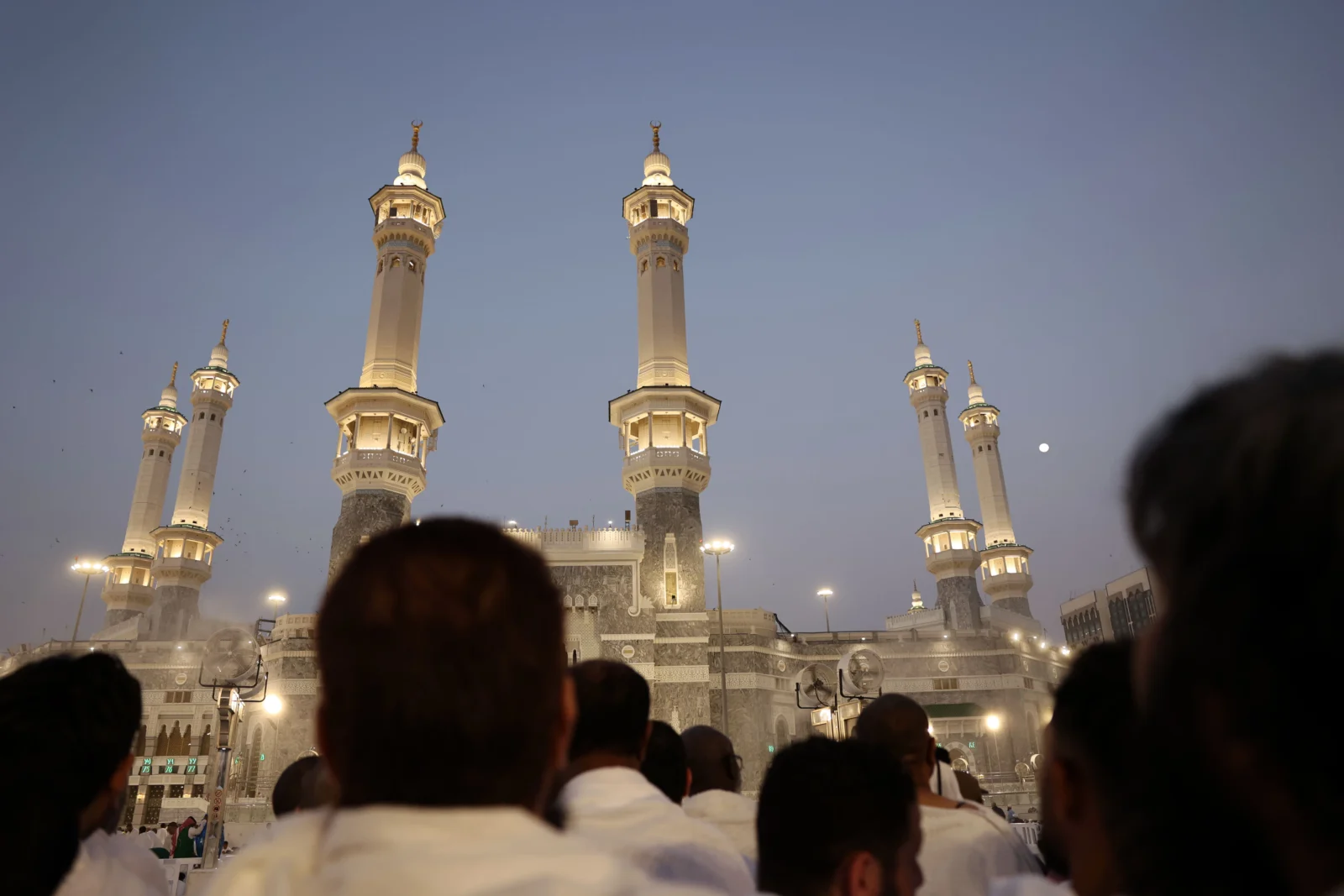
Johannesburg – Islam is on course to become the world’s largest religion by 2035, overtaking Christianity as the Muslim population continues to grow at a faster rate, according to projections by the Pew Research Center.
The study forecasts that the gap between the two religious groups will widen over the coming decades, with Muslims potentially reaching 3.64 billion globally by 2070, compared with an estimated 2.96 billion Christians, provided current demographic trends continue.
The findings form part of the Pew-Templeton Global Religious Futures Project, which examines changes in religious populations and their potential impact on societies worldwide.
The research assessed demographic information from 201 countries and territories, representing 99.98 per cent of the global population. It examined seven religious groups and affiliations, including Muslims, Christians, Jews, Hindus, Buddhists and people belonging to other religions or identifying with no religion.
Pew’s projections draw on census and survey information covering fertility, migration, mortality, age distribution and religious switching, referring to changes in the religious group in which individuals were raised.
According to the research, Christians represented approximately 29 per cent of the global population in 2020, while Muslims accounted for 26 per cent. However, the Muslim population is expected to increase by 80 per cent between 2020 and 2070, compared with 30 per cent growth among Christians.
This would raise the Muslim share of the world’s population to approximately 36 per cent by 2070, while Christianity is expected to retain a share broadly similar to its current proportion.
The projected growth of the world’s total population during the same period stands at 29 per cent, meaning Islam is expected to expand considerably faster than the overall global population.
Pew researchers have cautioned against interpreting the projections as evidence that Islam’s growth will necessarily come at Christianity’s expense.
“A misconception that could come out of our report is that somehow Muslim growth will happen at the expense of Christians, and that would be a wrong interpretation,” Conrad Hackett, a senior demographer at Pew and co-author of the study, told TIME.
“It’s definitely not in our data a zero sum competition where one group can only go up in size if the other goes down in size,” he said.
Hackett explained that both religious communities are expanding, although the Muslim population is growing at a considerably faster pace.
Fertility rates drive Muslim population growth
Higher fertility rates are identified as the principal factor behind Islam’s projected rise to the world’s largest religious group.
Pew’s findings show that Muslim women have an average of 3.1 children, the highest fertility rate among the religious groups examined. Christian women follow with an average of 2.5 children.
Gina Zurlo, a lecturer at Harvard Divinity School and editor of the World Christian Database, which monitors global religious demographics, told TIME that fertility differences account for a substantial part of the projected population changes.
“That’s almost the whole ball game right there,” Zurlo said.
The demographic shift is expected to be particularly significant in sub-Saharan Africa, a region projected to account for more than a quarter of the world’s population by 2070.
The region’s growing population, relatively high birth rates and increasing life expectancy are expected to contribute to the expansion of both Christianity and Islam, which together represent the overwhelming majority of its population.
Zurlo said the geographical movement of the world’s population towards developing regions was also changing the distribution of religious communities.
“The world’s population has shifted to the global South,” Zurlo said. “Therefore, world religion has shifted to the global South, so there’s just a population reality here that is happening that plays into the reality of Muslims growing larger than Christians.”
Pew estimates that more than half of the world’s Christian population will be living in sub-Saharan Africa by 2070. However, the Muslim population in the region is projected to grow at a faster rate.
The research also identifies differences in fertility rates between Muslim and non-Muslim women across the region.
Between 2020 and 2025, Muslim women in sub-Saharan Africa had an estimated fertility rate of 5.1 children, compared with four children among non-Muslim women.
Nigeria provides another illustration of the demographic differences. Pew estimates that Muslim women in the country have an average of 5.4 children, compared with 3.4 among Christian women.
The figures place Nigeria among the countries where fertility patterns could have a considerable influence on the future composition of religious populations.
Religious switching and population retention
Apart from fertility, migration and religious switching are expected to influence the distribution of religious communities over the next five decades.
Pew defines religious switching as a change between the religious group in which an individual was raised and the faith, or lack of religious affiliation, they identify with later in life.
The research found that natural population change, calculated by subtracting deaths from births, was the principal driver of growth among Muslims and Christians between 2020 and 2025.
However, Christianity experienced greater population losses through people leaving the religion than Islam.
Surveys conducted between 2008 and 2024 indicate that 99 per cent of people raised as Muslims continue to identify with Islam, compared with 85 per cent of those raised as Christians who retain their Christian identity.
If these trends persist, Pew projects that approximately 199 million people will leave Christianity by 2070, while 94 million are expected to join the faith. This would result in a net population loss of approximately 105 million through religious switching.
For Islam, the projected difference is considerably smaller. Approximately 23 million people are expected to leave the religion, while 16 million are projected to join, resulting in a net decline of around eight million.
The research also estimates that 9.2 million Muslims could become Christians, while nine million Christians could convert to Islam during the projection period.
Because these figures are nearly equal, religious conversion between the two faiths is not expected to significantly alter their respective global populations.
Pew also projects that Muslims could gain approximately 1.6 billion people through natural population change between 2020 and 2070, compared with 792 million among Christians.
Migration to reshape religious populations in Europe
International migration is another factor examined in the research, although it is not expected to significantly change the overall global numbers of Muslims and Christians.
Together, the two religious communities account for approximately 76 per cent of international migrants worldwide.
Hackett explained that migration largely changes where people live rather than the total number of people belonging to a particular religion globally.
“Until we colonize Mars or something un-anticipated happens, everybody stays on the Earth, so migration doesn’t really change the global numbers much,” he said.
He noted, however, that migration could substantially influence the religious composition of individual countries.
Europe is expected to experience one of the most notable changes. Without migration, the Muslim share of the region’s population is projected to increase by approximately six per cent by 2070. When migration is included, Muslims are expected to account for 13 per cent of Europe’s population.
Zurlo cautioned that migration does not necessarily translate into sustained high fertility rates among Muslim communities, particularly when families relocate to Western countries.
“When Muslims migrate to say Western countries, fertility rates drop,” she said.
She attributed the change partly to greater access to education and economic opportunities for women, factors associated with smaller family sizes.
“If Muslims are moving to places where it is acceptable and encouraged for women to have education, you are going to see birth rates drop,” Zurlo said.
Higher living costs in Western countries are also expected to influence family decisions, with the financial demands of raising children potentially limiting household sizes.
Pakistan projected to overtake Indonesia
The geographical distribution of religious communities is also expected to change significantly by 2070, with most Muslim population growth taking place in countries where Muslims already constitute the majority.
Pew estimates that Muslims will account for approximately 95 per cent of the population in the Middle East and North Africa by 2070.
Across the Asia-Pacific region, Muslims are also projected to surpass people who identify as religiously unaffiliated.
In 2020, Muslims constituted the majority religious group in 53 countries. The research projects that these countries will collectively gain an additional 1.2 billion Muslims by 2070, accounting for approximately 74 per cent of the anticipated growth in the global Muslim population.
Pakistan is expected to experience one of the largest increases, with its Muslim population projected to rise from 227 million in 2020 to 461 million by 2070.
This would make Pakistan the country with the world’s largest Muslim population, overtaking Indonesia, which currently holds that position.
Christian population growth is also expected to remain concentrated in countries where the religion already has a majority.
Pew identifies 120 countries in this category and projects that their combined Christian populations will increase by approximately 630 million people by 2070, representing 92 per cent of the expected global growth among Christians.
The research organisation cautioned that its projections are based on existing demographic patterns and are not intended to account for every possible development that could reshape religious identities.
Changes in socioeconomic conditions, natural disasters, wars and other unforeseen events could influence future population trends and religious affiliations.
The findings therefore present a demographic outlook based on current trends rather than a definitive prediction of the world’s religious landscape in 2070.












Leave a comment