


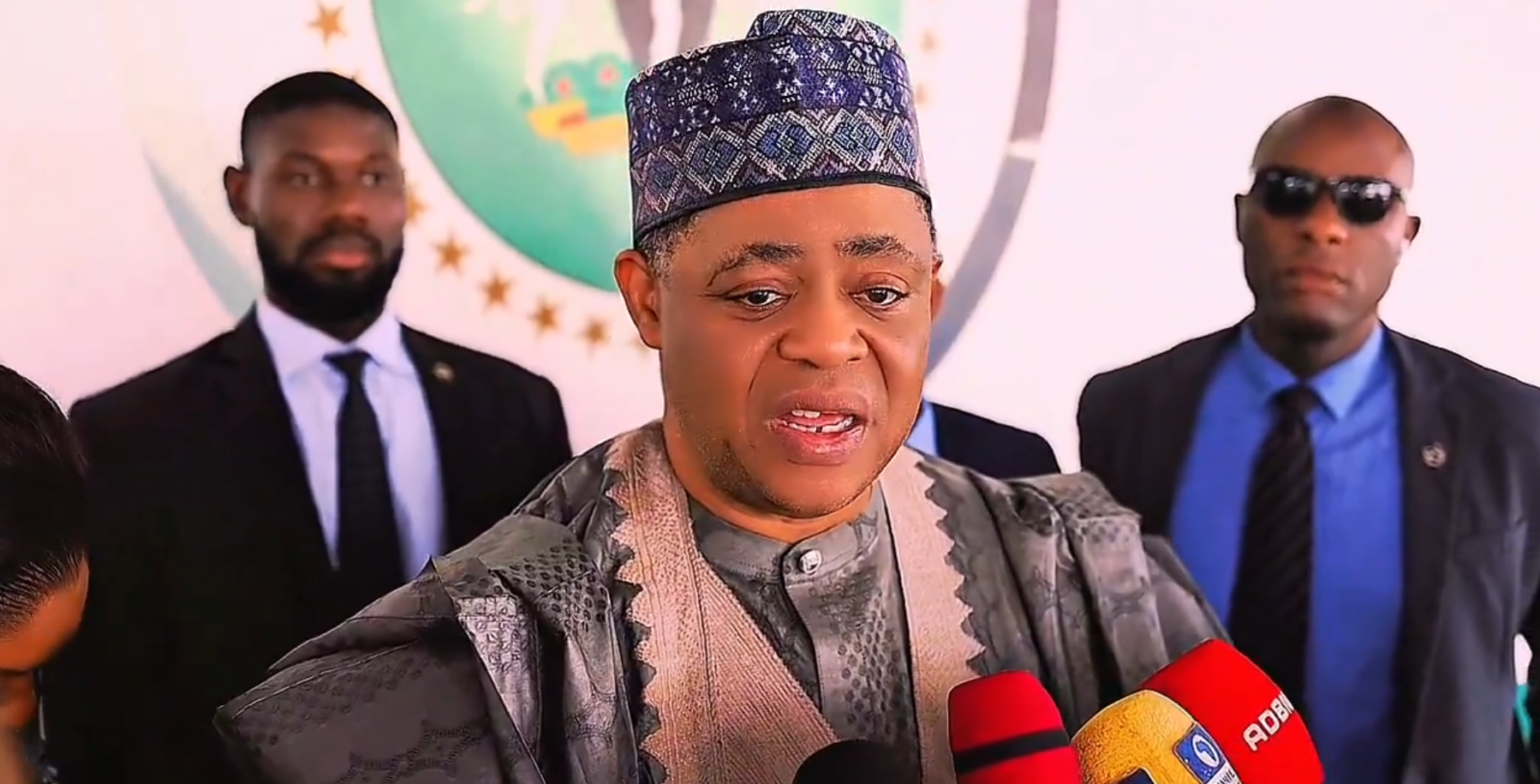
Abuja – Nigeria’s High Commissioner to South Africa, Femi Fani-Kayode, has dismissed reports that he has been recalled from his diplomatic posting, explaining that his return to Abuja was for routine consultations with the Ministry of Foreign Affairs, family engagements and preparations for his family to join him in South Africa.
Fani-Kayode made the clarification on Sunday, November 23, 2026, following speculation on social media that his temporary return to Nigeria was linked to disciplinary action or dissatisfaction with his handling of diplomatic relations with South Africa.
Speaking after meeting the Minister of State for Foreign Affairs, Ambassador Sola Enikanolaiye, in Abuja, the high commissioner said he had travelled to Nigeria to brief the ministry on developments in South Africa and receive guidance on the country’s diplomatic engagement.
“I’m glad to be back home. All be just for a short while,” Fani-Kayode said, explaining that consultations with the minister were part of the normal responsibilities of Nigerian diplomatic missions.
He said he had submitted a comprehensive report on his activities since assuming responsibility for Nigeria’s diplomatic mission in South Africa.
“That’s the main mission for coming here for briefing and for debriefing, and a good discussion with the relevant officer who is in charge,” he said.
Addressing claims that he had been recalled, Fani-Kayode dismissed the reports as misinformation, questioning why he would be holding cordial discussions with the minister if his government had withdrawn him from the posting.
“If I’ve been recalled, I don’t think I’ll be standing here with a smile on my face. I don’t think I’ll have a wonderful meeting with the minister,” he said.
He also rejected suggestions that he had been reprimanded following his engagements with South African authorities, describing the claims as unfounded.
According to Fani-Kayode, his visit to Abuja was also an opportunity to see his family, take a short break after an extended period in South Africa and make arrangements for them to relocate with him.
He explained that his initial deployment schedule had involved spending only a few days in South Africa before returning to Nigeria. However, he was subsequently asked to remain in the country to complete outstanding diplomatic procedures.
The high commissioner said he intended to return to South Africa and continue the work already being undertaken by the diplomatic mission, its staff and the consul-general.
115 Nigerians killed in four years
Beyond dismissing the recall reports, Fani-Kayode used the opportunity to draw attention to the security challenges facing Nigerians living in South Africa, disclosing that approximately 115 Nigerians had been killed in the country over the past four years.
He said 30 of those deaths involved members of the South African security forces, including police officers, while no convictions had been secured in connection with the killings.
The high commissioner said the situation required sustained diplomatic engagement with the South African government, arguing that protecting Nigerian citizens was a central responsibility of his office.
“Not one person has been convicted. Not one person for the killings that have taken place. And 30 of those killings in those four years were done by South African security forces, members of SA Police,” he said.
Fani-Kayode expressed concern over incidents involving groups of South Africans allegedly targeting Nigerian-owned businesses and communities, particularly in parts of Johannesburg.
He referred to what he described as the ‘Little Lagos’ case, where groups had reportedly questioned Nigerians’ right to live and conduct business in certain areas.
He said statements calling for Nigerians to be barred from entering South Africa, marrying South African women or engaging in relationships with South African citizens had created fear among Nigerian communities.
The diplomat, however, cautioned against treating such sentiments as representative of the entire South African population, saying he believed they were held by a minority.
He maintained that the majority of South Africans did not share such attitudes, but warned that the ability of individuals to make hostile statements without facing consequences remained a serious concern for Nigeria.
Fani-Kayode also criticised the description of Nigerians as drug dealers by a South African government minister, arguing that such generalisations failed to recognise the contributions of Nigerians working across different sectors.
He said Nigerians in South Africa included doctors, lawyers, academics, intellectuals and university lecturers who had established themselves professionally and contributed to the country’s economy and society.
“There are many, many hard working, honest decent Nigerians, doctors, lawyers, intellectuals, academics, people lecturing in the university over there. They are doing so well and I’ve been there for many many years,” he said.
“You can’t describe such people as criminals and and drug dealers.”
He said he would continue raising the Nigerian government’s concerns through diplomatic channels while maintaining constructive relations with South African authorities.
Calls for stronger Nigeria-South Africa relations
Fani-Kayode said his approach to diplomacy was based on the belief that Nigeria and South Africa had a responsibility to work together for the benefit of the wider African continent.
He argued that the relationship between the two countries carried significant implications for Africa’s political, economic and diplomatic future.
“I believe strongly that if South Africa and Nigeria do not come together, it would affect the destiny of the whole of the African continent,” he said.
The high commissioner said he had consistently advocated closer cooperation between the two countries, including during his engagements before taking up his current diplomatic position.
He also referred to his recent meeting with South African authorities, including the Department of International Relations and Cooperation (DIRCO), dismissing reports that the discussions had resulted in a reprimand.
According to him, the meeting was cordial, with both sides given an opportunity to present their concerns.
He said his intention was to maintain open communication with South African officials, resolve outstanding issues and prevent tensions from damaging relations between the two countries.
Fani-Kayode also praised the support he had received from Nigerian community organisations in South Africa, particularly the Nigerian Citizens Association South Africa (NICASA) and the Nigerian Union South Africa (NUSA).
He said the organisations had supported his efforts to represent Nigerians and address their concerns, describing their cooperation as exceptional.
The diplomat added that he had received considerable backing from Nigerians both within South Africa and at home for speaking publicly about the treatment of Nigerian citizens.
“Anywhere the dignity of Nigeria is in any way on my mind, I will not shy away from expressing my views and standing for the green, white, green. And I make no apology for it,” he said.
Nigerian investors encouraged to expand operations
Responding to questions about the Nigerian business community in South Africa, Fani-Kayode disclosed that Nigerian nationals had established substantial investments across several sectors of the South African economy.
He said many Nigerian investors had continued to expand their businesses because of the country’s infrastructure, economic opportunities and relatively conducive operating environment.
“There are so many Nigerians that have massive, massive investments in that country. In all sectors, and they’re doing so well,” he said.
He described South Africa as a major investment destination within the Global South, pointing to its infrastructure development and business environment as factors attracting Nigerian entrepreneurs.
Fani-Kayode encouraged Nigerian business owners to maintain their investments and continue contributing to economic activity in South Africa.
However, he urged successful members of the Nigerian business community to extend assistance to compatriots experiencing financial difficulties and other challenges.
He said the Nigerian government had previously intervened during periods of xenophobic and anti-foreigner hostility, including the repatriation of approximately 1,500 Nigerians from South Africa.
According to the high commissioner, the Federal Government financed five repatriation flights to facilitate the return of Nigerians who no longer felt safe remaining in the country.
He claimed Nigeria was the only African government to have directly funded such operations, while citizens from other countries relied on private sector support for their repatriation arrangements.
Fani-Kayode said Nigeria would continue encouraging investment in both directions, urging Nigerian entrepreneurs to explore opportunities in South Africa while inviting South African businesses to invest in Nigeria.
“We’ll encourage investors, we’ll encourage Nigerians to come to South Africa to invest and we’ll encourage South Africans to come to our own country to invest,” he said.
“That’s what it’s all about. Come together, work together, trade with one another, love one another and like I said before, we’ll love you by force even if you don’t like us.”
Praises Tinubu and Ramaphosa’s diplomatic support
Fani-Kayode also credited Nigerian President Bola Tinubu and South African President Cyril Ramaphosa with supporting stronger relations between the two countries.
He said the Nigerian president had provided his diplomatic mission with the necessary backing and encouraged efforts to improve bilateral cooperation.
According to him, Tinubu’s commitment to Pan-Africanism and stronger relations between African countries provided an important foundation for Nigeria’s engagement with South Africa.
He said both governments had an interest in ensuring that disagreements over the treatment of citizens did not undermine broader diplomatic and economic cooperation.
The high commissioner maintained that Nigeria would continue pursuing constructive relations with South Africa despite the concerns surrounding the safety and treatment of its citizens.
“We will stand to ensure that that page is built. No matter what they do to us, we will do our very best to carry them along as the big brother on the African continent,” he said.
Fani-Kayode’s return to Abuja comes after his recent presentation of credentials to South African President Cyril Ramaphosa, formally taking up his responsibilities as Nigeria’s high commissioner to South Africa.
He is expected to return to his diplomatic assignment following consultations with the Ministry of Foreign Affairs and arrangements for his family to join him.







Leave a comment