


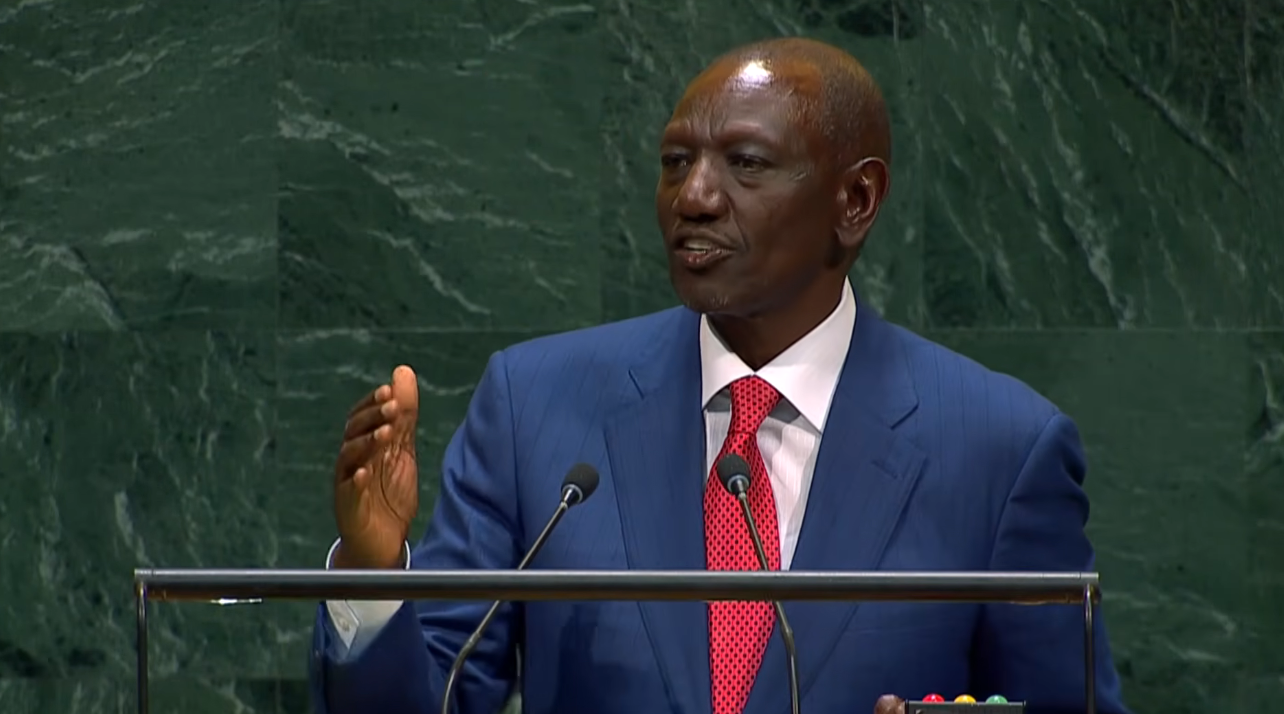
New York – Kenyan President William Ruto has called for sweeping reforms to the international system, arguing that the United Nations and global financial institutions must better reflect the realities of the world in 2026.
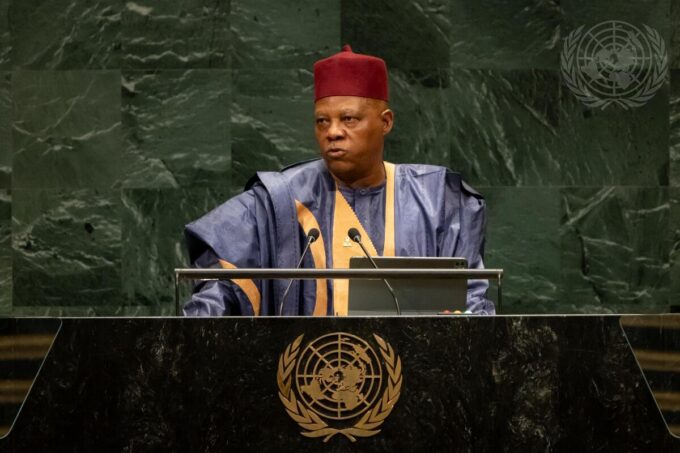
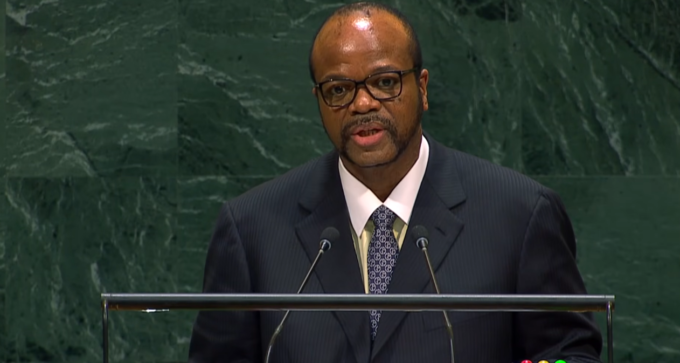
Ruto made the call on Wednesday, September 23, 2026, while addressing the General Debate of the 81st United Nations General Assembly in New York, where world leaders are meeting under the theme, “Better together: 81 years and more for peace, development and human rights”.
The Kenyan president used his address to reflect on the UN’s achievements since its establishment in 1945, while arguing that the organisation now faces a widening gap between the principles of sovereign equality and the structures governing international peace, security and development.
Ruto recalled that Kenya joined the United Nations on December 16, 1963, four days after gaining independence, with the same sovereign rights as other member states.
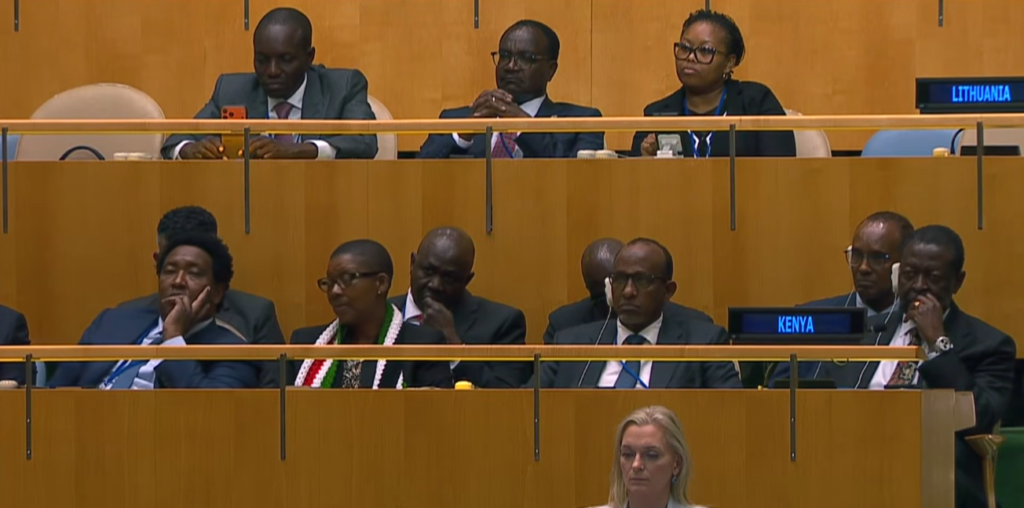
He said the UN had played a significant role in changing the international system, particularly through decolonisation and peacekeeping.
“When the United Nations was founded, some 750 million people lived under colonial rule,” Ruto said.
He noted that only four African countries were represented at the San Francisco conference that established the UN, while much of the continent remained under colonial rule.
According to Ruto, decolonisation later transformed the international system by replacing colonial rule with self determination and allowing newly independent countries to participate as sovereign members of the UN.
He also pointed to the organisation’s role in peacebuilding, citing its support for Namibia’s independence, Cambodia’s transition from conflict, the disarmament of combatants in Sierra Leone and Liberia, and Timor Leste’s emergence as a sovereign state.
More than two million peacekeepers have served under the UN flag, he said, while the wider UN system has contributed to efforts to eradicate smallpox, expand vaccination, tackle hunger and disease, improve access to education and provide clean water and humanitarian assistance.
Ruto also cited the decline in deaths among children under five since 2000 as evidence of progress.
“These achievements matter,” he said. “They changed borders, ended wars, defeated disease, and transformed lives.”
He nevertheless warned that the international security system was under severe pressure as conflicts increased across several regions.
Ruto referred to 65 state based armed conflicts recorded during the previous year, describing the figure as the highest level documented in decades of global conflict data. He said 13 of those conflicts had reached the scale of war and that nearly a quarter of a million people had been killed in organised violence.
He also said interstate conflicts had doubled for the second consecutive year, while one sided violence against civilians had reached levels not seen since 1994, the year of the genocide in Rwanda.
“From Europe to the Middle East, from Sahel to the Horn of Africa, civilians are paying the ultimate price,” he said.
Ruto said wars were destroying cities, displacing families, deepening hunger and disrupting supply chains, with the effects extending beyond conflict zones through higher prices for food, fuel and essential goods.
“Children inherit wars they did not begin and cannot understand,” he said.
He argued that the UN Charter was created not simply to document conflicts or provide humanitarian assistance after diplomacy had failed, but to prevent conflict, defend peace and make collective security effective.
According to Ruto, peace and development are closely connected, with instability often disrupting schools, hospitals, families and economies.
Africa’s place in global security
A central part of Ruto’s address was his criticism of the structure of the UN Security Council.
He pointed to the fact that all 193 UN member states have equal votes in the General Assembly, while five permanent members hold permanent seats and veto powers on the Security Council.
“Every nation in this hall has one vote. Every nation is sovereign and equal under the charter. Yet on the gravest question of war and peace, five nations possess a permanent power that the other 188 do not,” Ruto said.
He argued that the current arrangement reflected the world of 1945 rather than the international system of today.
Africa, with 54 member states and more than a quarter of the General Assembly, has no permanent representation on the Security Council despite being frequently affected by decisions made by the body.
“We are frequently the subject of its decisions. Permanently discussed yet permanently excluded,” Ruto said.
He said the reform debate should address the representation of Africa and other regions while also considering membership, the veto, the council’s size, working methods and its relationship with the General Assembly.
Ruto noted that negotiations on Security Council reform had continued for 17 years after being moved into intergovernmental negotiations in 2008.
He referred to the Pact for the Future, in which member states agreed that addressing the historical injustice against Africa should be a priority in Security Council reform.
“We should not accept that reform is impossible because it is difficult,” he said.
Ruto also pointed to the 1963 expansion of the Security Council from 11 to 15 members as evidence that the organisation had changed its institutional structure before.
“What was possible then, ladies and gentlemen, is possible today,” he said.
He called for equitable and permanent representation for Africa and other deserving regions, including the rights and privileges associated with permanent membership.
Kenya raises debt concerns
Ruto linked the question of political representation to the structure of international finance, arguing that developing countries face significant barriers in accessing capital needed for development.
He said global public debt reached $12 trillion in 2024, while developing countries accounted for less than one third of that debt but paid about $1 trillion in interest during the same year.
Ruto said 46 developing countries now spend more on debt interest than on classrooms and medicine.
“Behind these numbers lies a simple reality. The hospital competes with a creditor. The classroom competes with debt service. And too often the creditor debt service is paid first,” he said.
He said 251 million children and young people remain out of school, with many others entering classrooms without adequate teachers, books, meals and facilities.
“When debt service displaces investment in education, we are not merely balancing budgets. We are transferring the cost of today’s financial burden to the next generation of citizens,” Ruto said.
The Kenyan president also outlined his government’s spending on education.
He said Kenya had invested an additional $5.3 billion in education over the previous four years, recruited 100,000 additional teachers and constructed more than 23,000 classrooms.
The country is also developing another 1,600 laboratories while expanding support for universities and technical institutions, according to Ruto.
“We do this because education is not consumption. It is the infrastructure of opportunity, productivity and national transformation that supports global advancement,” he said.
He said developing countries were also paying higher interest rates than developed economies, with recent borrowing costs averaging between two and four times higher.
Ruto raised concerns about sovereign credit ratings, saying assessments of risk influence the interest countries pay and the amount of finance available to them.
He cited UNDP estimates that subjectivities in credit ratings had cost African countries about $75 billion through excessive interest and forgone lending.
“Risk, ladies and gentlemen, must be measured, but it must also be measured fairly,” he said.
He called for reforms to the international financial architecture that would increase the availability and reduce the cost of capital for developing economies.
Ruto said multilateral development banks should lend more and for longer periods, while mobilising private capital through guarantees and risk sharing mechanisms.
He also called for greater access to long term and local currency financing to enable developing countries to fund major infrastructure projects without relying excessively on expensive short term borrowing.
At the same time, he said governments had responsibilities of their own, including prudent debt management, stronger institutions, credible project preparation, deeper domestic capital markets, respect for contracts and stronger action against corruption.
“A fairer international system requires responsibility on both sides,” Ruto said. “Reform abroad cannot substitute for accountability at home.”
Ruto pitches Africa’s economic potential
Ruto presented Africa as a potential contributor to global food security, clean energy, resilient supply chains and economic growth.
He pointed to the continent’s mineral resources, agricultural potential, renewable energy resources and young population, alongside a market of more than 1.5 billion people increasingly connected through the African Continental Free Trade Area.
“These are not merely African assets. Properly developed, they are part of the answer to the world’s search for food security, clean energy, resilient supply chains, and a new source of growth,” he said.
Ruto argued that African resources should support industrialisation and local value addition rather than remain focused primarily on extraction.
“Africa’s resources must become the beginning of African industry, not the end of Africa’s contribution to the value chain,” he said.
He pointed to developments in cocoa processing and cotton value chains as examples of efforts to move beyond exporting raw materials.
Ruto also said Africa’s clean energy transition should not become another extractive cycle.
He said the African Continental Free Trade Area should develop into a platform through which African countries produce more of the goods they currently import.
Kenya, he said, intends to participate in that transformation.
Ruto announced that Kenya expected to break ground within a week on an East African refinery in Lamu, which he said would have the capacity to produce 700,000 barrels of oil a day at an estimated investment of about $16 billion.
“Its significance extends beyond one project or one country. It represents the Africa we seek to build. Adding value at home, creating jobs for our people, and building industries capable of serving continents and global markets,” he said.
He said the transformation would require both foreign and domestic financing, including tapping into more than $4 trillion in domestic capital held through African pension funds, insurance assets, sovereign wealth funds, banks and other institutions.
Ruto said the challenge was to mobilise more of that capital for productive investment while creating credible projects, safeguards and financial instruments capable of attracting long term investors.
Africa seeks greater influence
Ruto said Africa’s position in global decision making was not only a question of finance but also one of political influence.
The continent’s 54 countries account for nearly one in every five people globally, he said, yet African influence over institutions governing international finance remains disproportionately small.
“We cannot carry substantial obligations under a system while remaining marginal in shaping its rules,” he said.
Ruto argued that African countries should have a greater role in decisions affecting the acquisition and management of debt.
“If Africa has a stake in the burden of debt, Africa must have a share in the decisions on how that debt is acquired,” he said.
He rejected the idea that the continent was seeking preferential treatment.
“This is not a plea for special treatment. It is a proposition for shared prosperity,” Ruto said.
He argued that a more industrialised Africa would expand global demand, a more food secure Africa would strengthen global stability and a better connected continent would help diversify international supply chains.
He also said an Africa capable of financing more of its own development would become a stronger partner for the rest of the world.
Kenya backs wider global reform
Ruto returned to the broader question of whether international institutions created decades ago remain suited to current global realities.
He said the same reform challenge applied to the UN Security Council and the international financial system.
“Whether in the security council or in the international financial system, institutions built for another age are being asked to govern a completely different world that we live in today,” he said.
He said restoring confidence in multilateral institutions would require institutional reform rather than simply defending existing structures.
Ruto also addressed UN Secretary General António Guterres as he approaches the end of his tenure, thanking him for his advocacy on international financial reform, greater African representation and a stronger voice for the Global South.
He said Guterres had reminded the international community that dignity, equality and representation were principles rather than favours.
Ruto called for the reforms discussed by the UN to move from negotiations into implementation.
He said the international community should not wait for another major crisis before addressing weaknesses that were already visible within the multilateral system.
“We must not ask our children to inherit wars that we can prevent or debts that we can make sustainable, inequalities we can correct, and institutions we know no longer reflect the world we live in,” he said.
Ruto concluded by calling for consistent application of international rules, institutional transformation and meaningful participation by all countries.
“Let ours be the generation that completes the unfinished work of San Francisco,” he said.
He called for sovereign equality to become a practical reality, international law to be applied consistently, capital to support development and cooperation to take precedence over division.
“Not a United Nations of some nations, not a system in which power determines whose voice matter, but a United Nations worthy of its name, where every nation has a voice, every people have a stake, and every child has a future,” Ruto said.
“That is the United Nations Kenya believes in. That is multilateralism Africa is ready to build. And that is the promise of our generation that we must keep.”




Leave a comment