


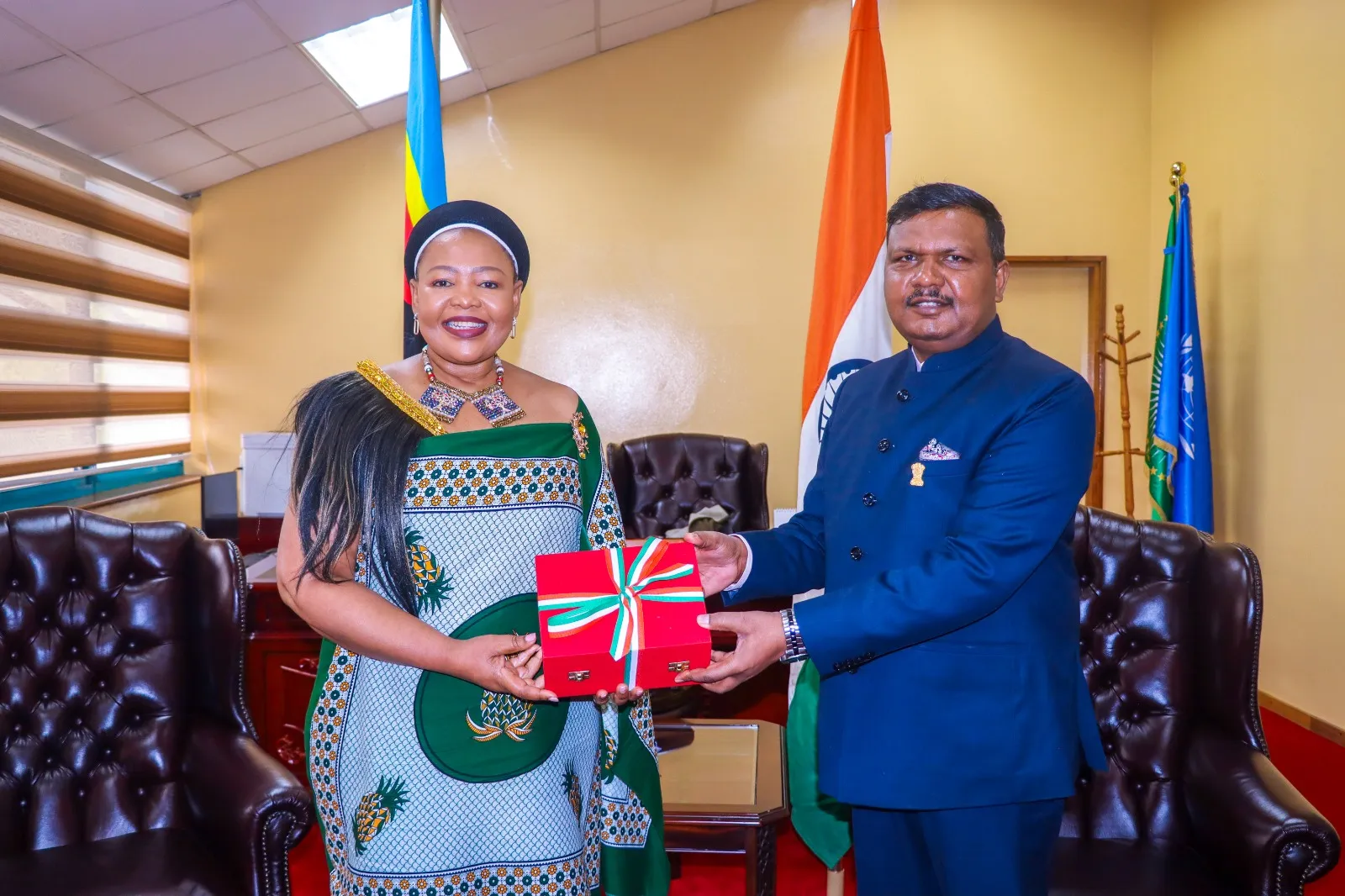
MBABANE, Eswatini, 25 November 2026 – Senator Pholile Shakantu has welcomed India’s decision to increase training opportunities for emaSwati under its Indian Technical and Economic Cooperation (ITEC) programme, describing the expansion as a significant boost to skills development and institutional capacity in Eswatini.
Under the revised allocations, Eswatini will receive 70 civilian training places annually, while opportunities for defence personnel have increased to 36.
The announcement was made by India’s High Commissioner to Eswatini, Anand Prakash, during the 62nd ITEC Day celebrations held in Mbabane on 20 November 2026.
Senator Shakantu said the expanded allocations would give more emaSwati access to specialised training, international professional exposure and knowledge that could be applied to national development initiatives.
She described the programme as an important pillar of bilateral cooperation, particularly in building human capital and improving the capabilities of public institutions.
“The investment in the skills and knowledge of our people is an investment in the future of Eswatini. These opportunities allow our professionals to gain international exposure, acquire new competencies and return home with knowledge that can contribute meaningfully to our country’s development,” Senator Shakantu said.
Since India established its resident diplomatic mission in Mbabane in 2019, more than 700 emaSwati drawn from government departments, semi-government institutions and the private sector have benefited from training opportunities through the ITEC programme.
Shakantu said the growing number of beneficiaries represented a valuable resource for the country as Eswatini works to strengthen public administration, improve service delivery and advance its development priorities.
She also welcomed India’s financial support for successful applicants, noting that the programme provides fully funded training covering international travel, tuition fees, accommodation and living allowances.
The senator commended High Commissioner Prakash and officials at the High Commission of India in Mbabane for their continued contribution to strengthening relations between the two countries, particularly through initiatives focused on professional development and institutional capacity building.
Looking beyond the current training arrangements, Shakantu identified several areas where India and Eswatini could expand their cooperation, including artificial intelligence, cybersecurity, digital transformation, renewable energy, agriculture, healthcare, public administration and vocational skills development.
She said these sectors were increasingly important to Eswatini’s development agenda and offered opportunities to prepare professionals, particularly young people, for the demands of a rapidly changing global economy.
The growing importance of digital technologies and emerging industries, she noted, made international skills partnerships increasingly relevant as countries seek to develop expertise and build competitive workforces.
Shakantu encouraged eligible emaSwati, including public servants and professionals working across different sectors, to take advantage of the increased training allocations.
She urged beneficiaries to use the knowledge and experience gained through the programme to improve their workplaces, strengthen institutions and contribute to their communities.
The senator said the India-Eswatini relationship demonstrated the importance of international partnerships founded on mutual respect, shared development objectives and investment in human capital.
“Eswatini values its longstanding friendship with India. Partnerships that create opportunities for our people, strengthen our institutions and support the transfer of knowledge are essential to our national development. We look forward to seeing this cooperation grow and deliver even greater benefits for both countries,” Senator Shakantu said.












Leave a comment