


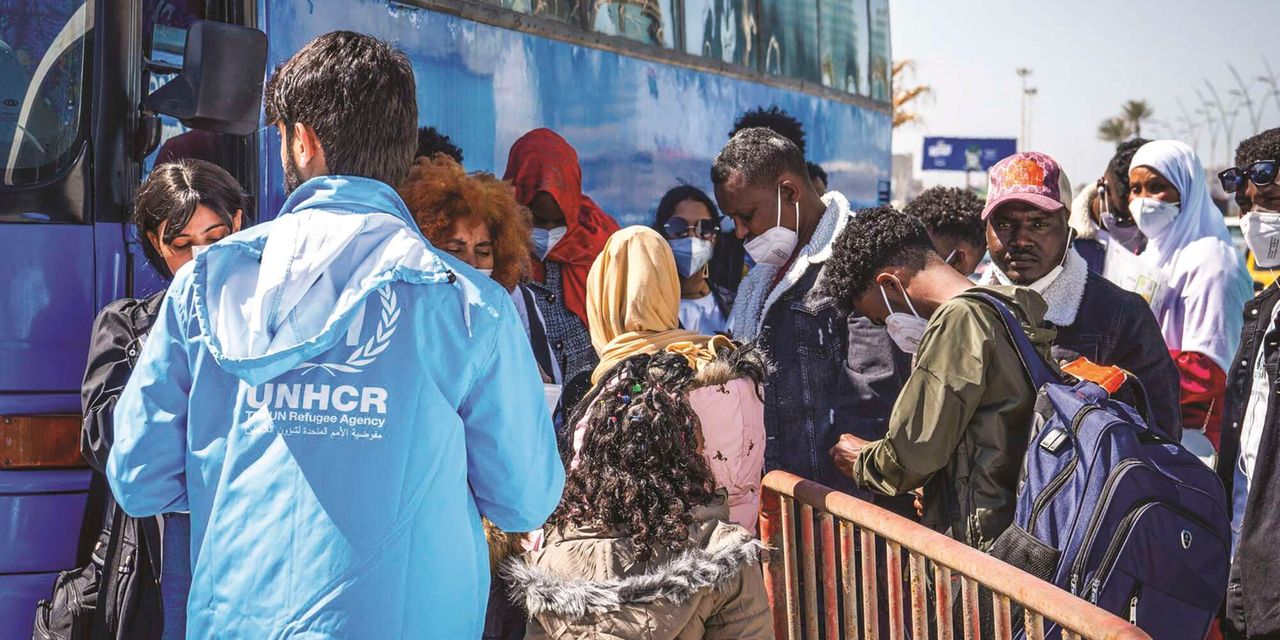
Kigali – Five European countries have agreed to establish a migrant deportation centre in Rwanda in 2027, in a move aimed at increasing the removal of people who have exhausted their legal options to remain in Europe.
Germany, Denmark, Austria, Greece and the Netherlands are expected to participate in the initiative, which will operate under the name “return hub”. The governments announced the agreement through separate statements, outlining plans to transfer migrants who are staying illegally in their territories and are subject to deportation.
The proposed arrangement will offer an alternative for people who cannot be returned to their countries of origin. Those transferred to Rwanda will have the option of settling in the country or returning to their home nations.
Unlike the controversial migration agreement previously pursued by the United Kingdom, the European initiative will target individuals whose legal avenues to remain in the participating countries have been exhausted. The former British government had proposed sending asylum seekers to Rwanda for their claims to be processed, but legal challenges prevented the arrangement from becoming operational. The agreement was eventually abandoned by the Labour government after taking office in 2024.
The British government has not completely ruled out participating in the new arrangement. Downing Street said it would monitor the initiative “with interest”.
However, the proposal has already attracted criticism from Spain, with Prime Minister Pedro Sánchez questioning its humanitarian implications.
“I don’t see any future or humanity in that. It’s not the solution,” Sánchez told Spanish broadcaster Telecinco, according to the AFP news agency.
The five European governments maintain that the arrangement complies with European Union and international law, although human rights organisations have raised concerns about the potential impact on the rights and welfare of migrants.
The agreement follows recent reforms to EU migration rules that provide for the establishment of return hubs outside the bloc, giving member states additional options for dealing with people who do not qualify to remain in their territories.
Speaking at a joint press conference in Vienna on Monday, Austrian Chancellor Christian Stocker said the participating countries wanted to ease pressure on European asylum systems while disrupting human trafficking networks responsible for organising dangerous journeys across the Mediterranean.
The Dutch government said the first phase would be limited to “only return single men”. It added that the Netherlands would concentrate on individuals originating from countries within the same geographical region as Rwanda.
Under the proposed arrangement, migrants who settle in Rwanda will receive residence rights and access to education, healthcare, employment opportunities and the country’s legal system.
Rwandan Interior Minister Vincent Biruta said Kigali was prepared to work with its European partners to establish what he described as a “safe, legal and dignified solution for migrants”.
Biruta also pointed to the need to address economic inequalities between countries, saying the partners would work towards “correcting the global imbalance in economic opportunities”, which he identified as a “key driver of irregular migration”.
Diplomatic sources cited by AFP indicated that the arrangement would initially operate as a pilot programme, with accommodation for approximately 100 people. Each of the five participating European countries could potentially transfer around 20 migrants during the initial phase.
The United Nations’ International Organisation for Migration (IOM) could also provide supporting assistance under the initiative.
An IOM spokesperson said the organisation had extensive experience assisting migrants in transit situations, including difficult humanitarian environments.
“IOM has a long history of providing assistance to migrants in situations of transit, including in complex contexts,” the spokesperson said, adding that discussions were under way with some EU countries “on plans for the establishment of return hubs or similar mechanisms”.
The agreement comes as migration remains a major political issue across Europe, with several countries approaching elections and governments facing growing pressure to demonstrate control over irregular migration.
Concerns about national security, economic difficulties and dissatisfaction with governing parties have contributed to increasingly restrictive political positions on migration.
However, Rwanda’s involvement has raised questions among international human rights organisations, particularly regarding the country’s human rights record and its role in regional security developments.
Human Rights Watch senior Africa researcher Clementine de Montjoye warned that Rwanda’s selection as the host country should be treated with concern, citing what she described as its “well-established record of repression of dissent, arbitrary detention, ill-treatment in detention” and support for armed rebels in neighbouring Democratic Republic of Congo.
“Paying Kigali to host a deportation programme would not only cause suffering and harm to those deported, it would finance and provide political leverage to a government responsible for serious human rights abuses at home and abroad.”
The European Union Agency for Fundamental Rights has also raised concerns about the standards expected of countries hosting deportation facilities.
The independent agency said any third country participating in a return hub arrangement must “respect fundamental rights”, including protections against transferring individuals to countries where they could face serious persecution.
It further stated that unaccompanied children should not be transferred to such facilities. The Dutch government has confirmed that children travelling without guardians will not be included in the programme.
Meanwhile, figures from the European Border and Coast Guard Agency indicate that irregular migration into the European Union has declined compared with the previous year.
Almost 110,000 irregular border crossings were detected during the first 10 months of 2026, representing a 29 per cent decrease from the corresponding period in 2025.
In October alone, authorities recorded approximately 18,100 irregular crossings, around six per cent fewer than in October 2025. However, the figure represented a 22 per cent increase compared with September.
The agency attributed much of the monthly increase to a significant rise in arrivals along the Western African migration route towards Spain’s Canary Islands.
















Leave a comment