


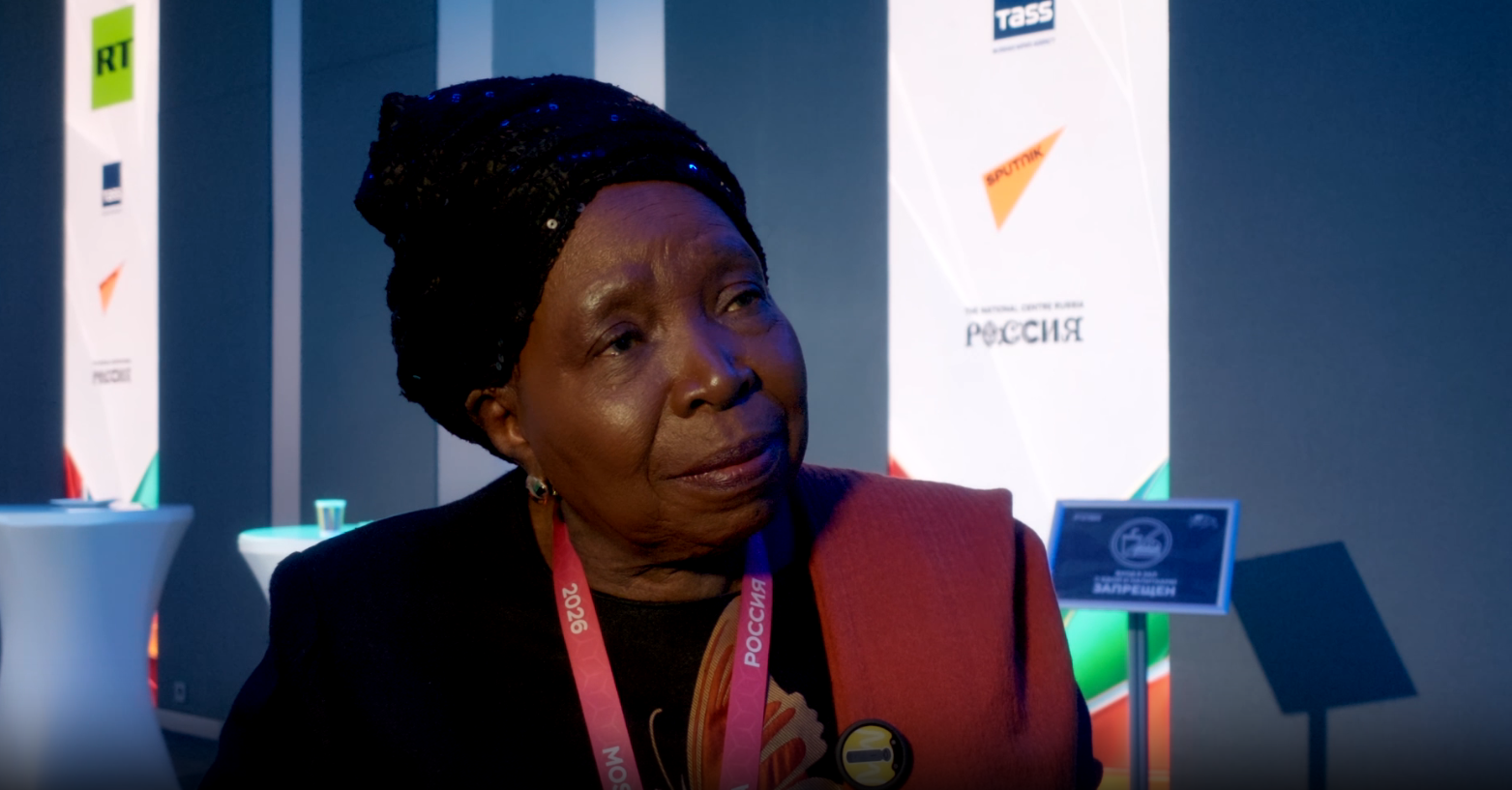
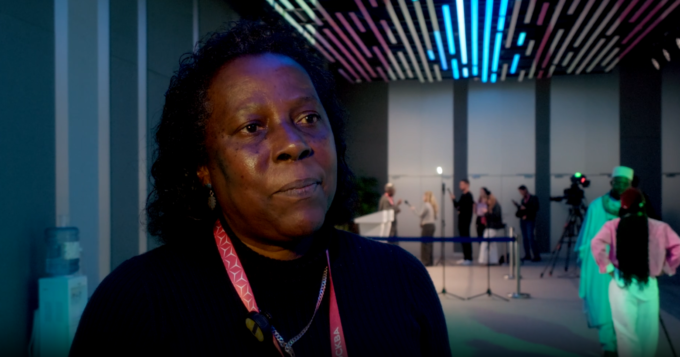
MOSCOW, Russia: Former African Union Commission chairperson Dr Nkosazana Dlamini-Zuma has called on African countries to unite behind a common agenda when engaging Russia, saying the continent must negotiate partnerships that deliver tangible benefits for its people.
Speaking to Adekunle Owolabi, Editor of The African Daily, on the sidelines of the third Russia-Africa Summit in Moscow, Dlamini-Zuma said African leaders needed to approach international partnerships with a clear understanding of what they wanted to achieve and how cooperation could advance the continent’s development.
The former AU Commission chairperson, who has extensive experience in continental affairs and international diplomacy, also called for greater investment in young people, improved skills development and stronger food sovereignty.
Her remarks came as African leaders and representatives gathered in Moscow to discuss cooperation between Russia and African countries.
Skills development for Africa’s youth
Asked about a question she had raised during a media session on whether Russia had the capacity to help train Africans for the modern economy, Dlamini-Zuma said the issue was linked to the African Union’s Agenda 2063 and its vision for the continent’s future.
She noted that young people constitute a significant share of Africa’s population and will continue to shape its economic and social development in the coming decades.
“Well, if you look at what agenda 2063 says, the youth Are the majority in our continent and they are going to be like that going forward. So they need to be skilled. In agenda 2063 we talk about a skills revolution. So a skills revolution means every young person should be skilled.”
Dlamini-Zuma said cooperation with Russia should include opportunities to equip young Africans with the skills needed to participate in a changing global economy.
“And so the question was can this partnership also help in that in giving young people skills for the modern economy.”
Africa must speak with one voice
Asked what African leaders should seek to achieve at the summit, Dlamini-Zuma said the continent needed a unified position before entering negotiations with international partners.
She argued that Africa should not simply respond to proposals presented by Russia or other global powers, but should also articulate its own expectations and priorities.
“Well, first, what should they bring? Before they take. One, I think Africa must speak in one voice. Because if they speak one in one voice, then there’s one message and everybody knows what Africa wants.”
She warned that differing positions among African countries could create confusion and weaken their ability to secure agreements that serve shared interests.
“But if we speak in different voices, it gets confusing. So we must speak in one voice, say what kind of partnership would like to have with Russia. It must’t just be Russia saying what they want from us. It must be two way. We must say what we think this partnership should be like. And they can say what they think and we discuss and we agree.”
Dlamini-Zuma said discussions should produce a clear understanding of what each side would contribute and the benefits expected from the relationship.
“And what we when we go back, we must know what we are going to do with Russia and what the mutual benefits are going to be.”
Africa must take charge of its future
Dlamini-Zuma also addressed the growing expectations surrounding Africa’s future, particularly its expanding population and potential to contribute to global food production.
She said the continent needed to strengthen regional integration, maintain peace and pursue development that created prosperity for its people.
“Well, the first thing as I said, we must be united. Because We must be an integrated Africa. We must be a peaceful Africa because where there’s no peace, there’s no development.”
She added that peace and economic progress were closely connected, arguing that lasting stability depended on improvements in people’s living conditions.
“But equally, if there’s no development, you can’t sustain peace. So it’s important to have development as well, prosperity. And that prosperity must be driven by us, especially young people, women. Of course, men are already there.”
Dlamini-Zuma said African countries needed to establish a clear vision of the continent they wanted to build and take responsibility for achieving it.
“So, that’s what is important to understand the Africa we want and to work towards that Africa that we want. And to understand that the Africa we want will only come from our own efforts. Nobody is going to come and develop our continent. We can develop it. But we have everything.”
She pointed to Africa’s demographic prospects as a major opportunity, noting projections that one in four people worldwide could be African by 2050.
“We have people The majority of people by 2050 they say one in four of the global population will be African. That’s a big advantage. Two, it’s a young population. It’s a big advantage. But we also have 60% of available arable land. So we can grow food. We’ve got sunshine. We’ve got water. We’ve got people.”
She said the continent’s land, water, sunlight and human resources could support greater agricultural production and reduce dependence on imported food.
“So Let’s have food sovereign. Let’s grow our own food. Sankara said, “Who feeds you, controls you.” So, we don’t want to be controlled. We want to feed ourselves. We need to, as I say, use our resources to do the rest. So, we can do it. We just need a mindset change that says we can do it.”




Leave a comment