


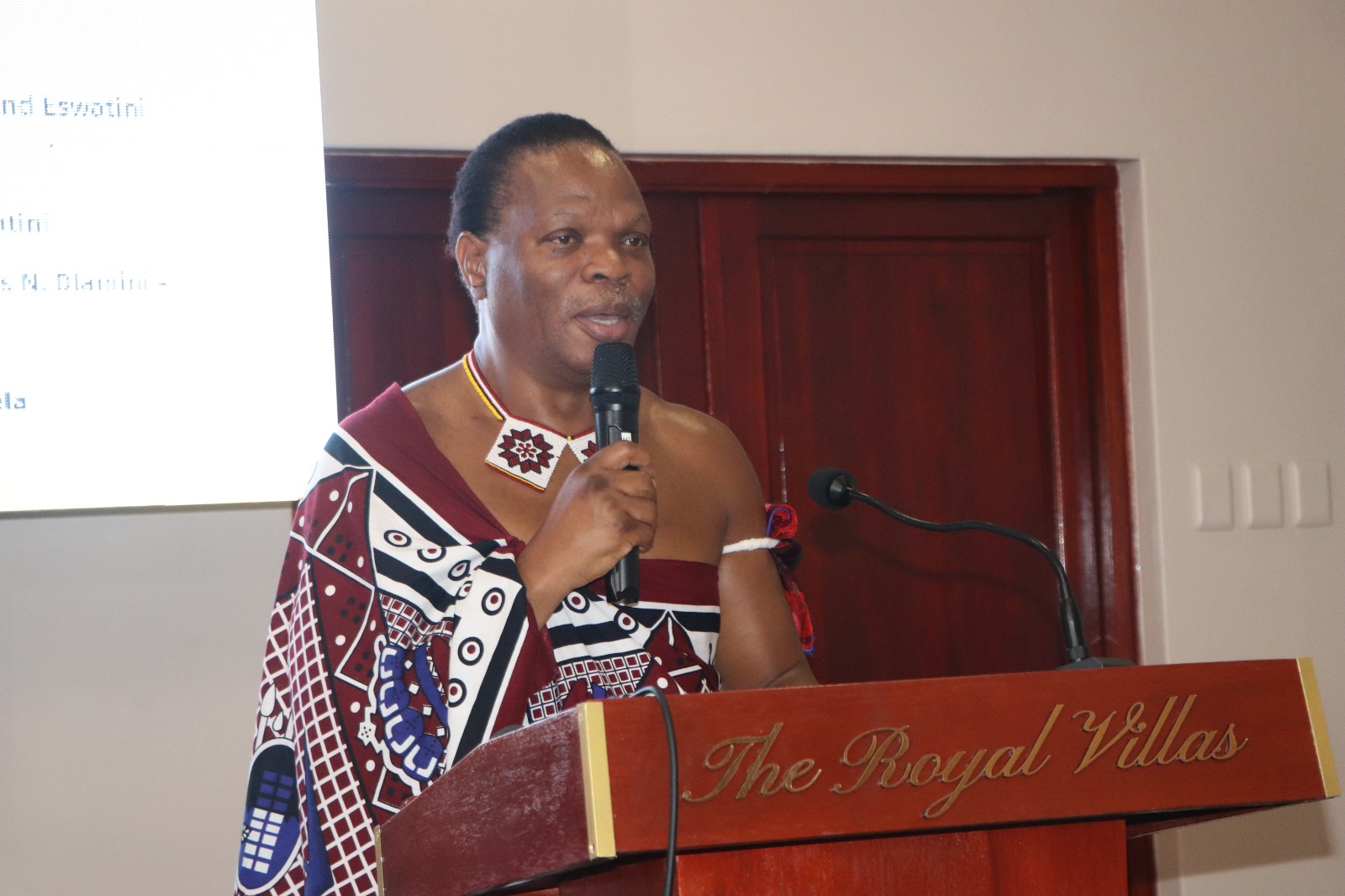
The Mines and Minerals Act of 2011 is undergoing a comprehensive review as part of Eswatini’s efforts to attract more investment into the mining sector, according to the Minister of Natural Resources and Energy, Prince Lonkhokhela.
Addressing delegates on Thursday at the Sharma House in Ezulwini during the second day of the Eswatini Investment Conference, the minister said government was taking deliberate steps to create a more investor-friendly framework in both the mining and energy sectors.
Prince Lonkhokhela said energy remains central to the country’s economic development plans, particularly in driving industrialisation and employment. He pointed to ongoing projects such as the Maguga Expansion, which is expected to contribute an additional 10 megawatts to the national grid during peak hours once operational.
The Maguga Expansion project, he said, has already completed a feasibility study and is now at the contract award stage for an EPC (engineering, procurement and construction) contractor. The project is expected to cost around E450 million, or approximately USD 25 million. Other energy initiatives in the pipeline include the Lower Maguga and Ngwemphisi Hydro Power feasibility studies, as well as plans for small hydro power plants.
To support long-term energy investment, Prince Lonkhokhela said the government has put in place several regulatory tools aligned with the Eswatini Energy Policy. These include a wheeling framework that allows third-party access to the transmission and distribution network under the Southern African Power Pool (SAPP) standards, and the Small-Scale Embedded Generation Framework, which manages electricity supplied to the national grid by customers.
Additional regulatory instruments include a grid code that ensures technical compliance for grid connection and safe operations, and Energy Storage Guidelines that set the requirements for integrating storage systems to bolster renewable energy and grid stability.
The ministry has also introduced a mini-grid and off-grid regulatory framework to manage licensing, tariffs and pricing, aimed at expanding energy access in remote areas and helping the country achieve Sustainable Development Goal Seven—universal access to reliable and modern energy.
Prince Lonkhokhela said both mining and energy were key sectors with potential to significantly improve Eswatini’s economic landscape and generate employment. He invited investors to explore opportunities within these sectors, stating that the country was open for business.














Leave a comment