


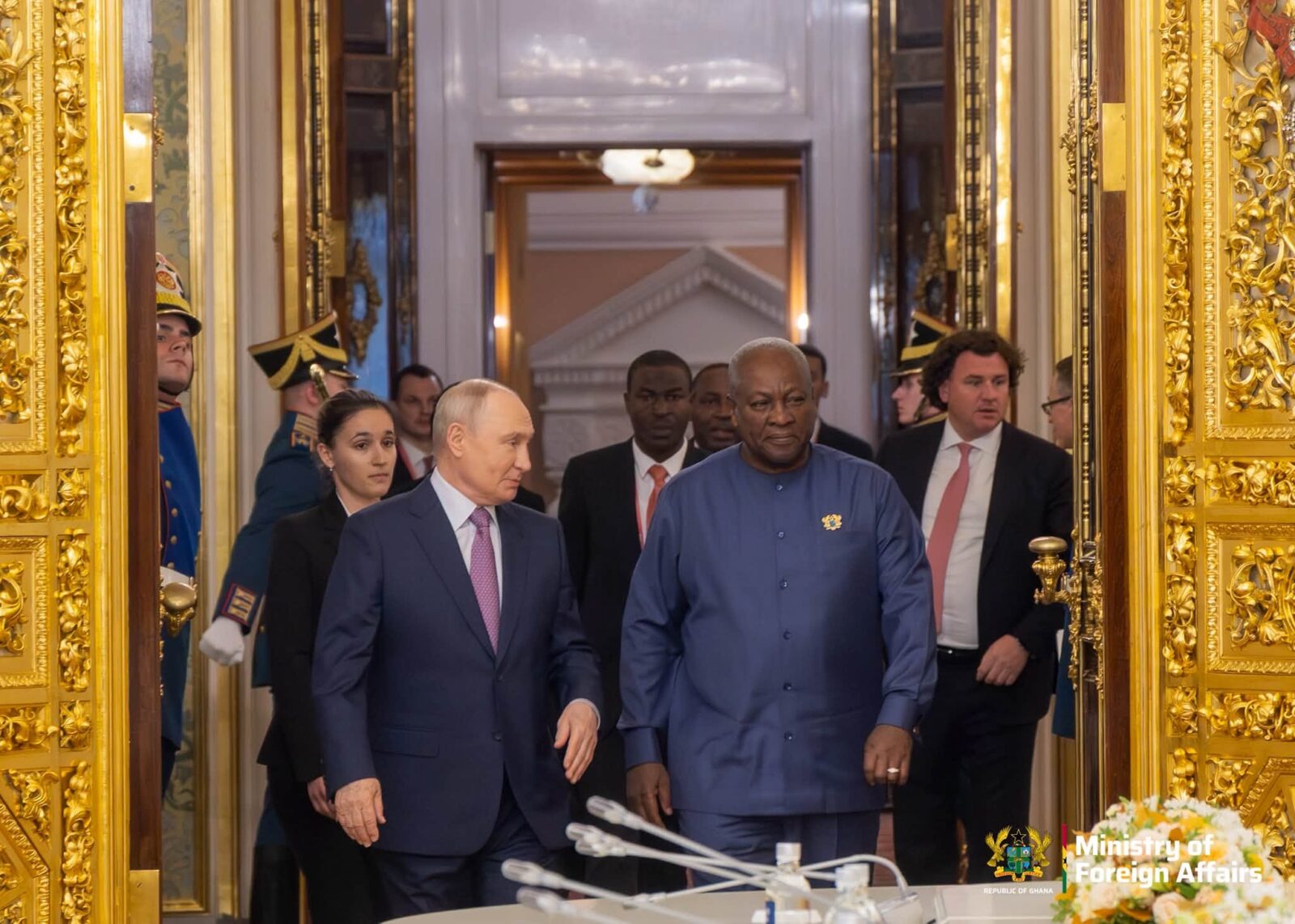
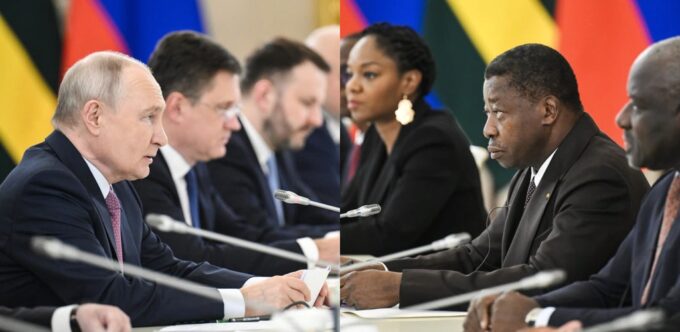
MOSCOW, Russia: Ghana has secured Russia’s commitment to collaborate on the development of a 2,000-megawatt nuclear power plant, alongside new agreements covering defence, agriculture, education and military cooperation, following high-level talks between the two countries during the Russia-Africa Summit.
Ghanaian President John Dramani Mahama secured the commitments during direct discussions with Russian President Vladimir Putin, according to Ghana’s Minister of Foreign Affairs, Samuel Okudzeto Ablakwa, who announced the outcomes on Saturday.
The proposed nuclear power facility is intended to strengthen Ghana’s energy security and provide the electricity capacity needed to support industrial expansion. The agreement also revives an ambition associated with Ghana’s first president, Osagyefo Dr Kwame Nkrumah, who initiated preparatory work towards a nuclear power programme before his government was overthrown in the military coup of February 28, 1966.
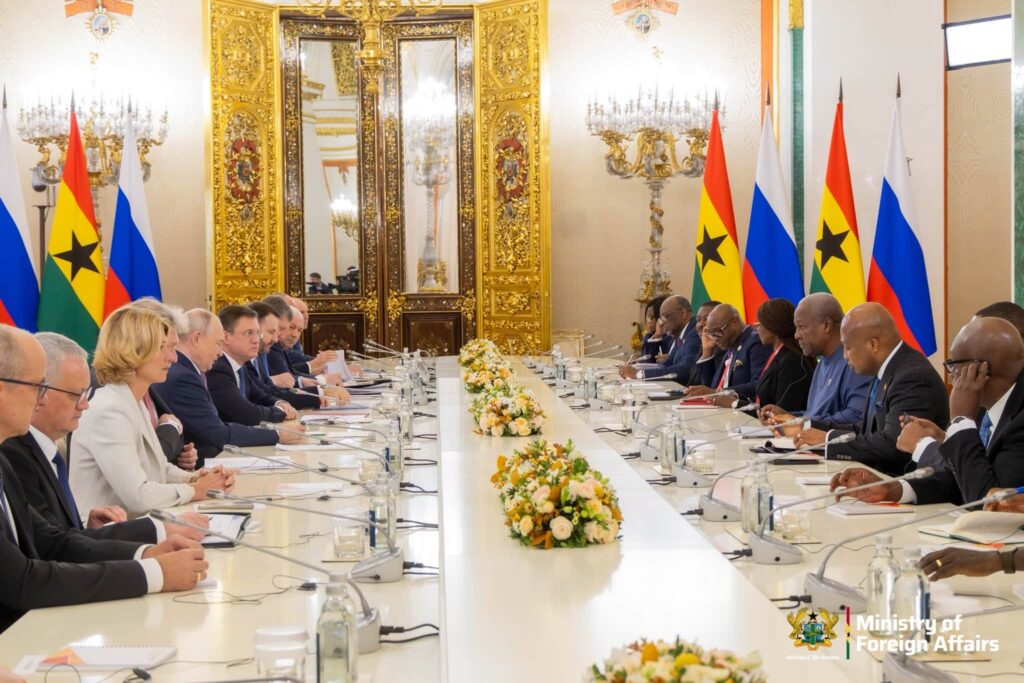
Ablakwa described the outcome of the summit as a significant diplomatic achievement for Ghana, pointing to the range of commitments secured through Mahama’s engagement with the Russian leadership.
The nuclear agreement comes a day after Russia’s state-owned nuclear energy corporation, Rosatom, disclosed that it was holding discussions with four African countries, including Ghana, over the development of large-scale nuclear power projects.
The latest development reflects growing interest among African governments in nuclear energy as a potential source of reliable electricity to meet rising demand, support industrialisation and reduce pressure on existing power generation systems.
Beyond energy cooperation, Ghana and Russia have agreed to strengthen their defence relationship through a new pact that will facilitate the acquisition of strategic military equipment and assets for the Ghana Armed Forces.
The agreement is expected to expand military cooperation between the two countries, with Accra seeking to improve the operational capabilities of its armed forces.
Another major outcome concerns the ongoing Russia-Ukraine war. According to Ablakwa, Mahama raised concerns about the participation of Ghanaian nationals in the conflict, prompting Putin to declare that Ghanaians would no longer be permitted to take part in the war.
The Russian position covers participation through irregular recruitment arrangements as well as voluntary enlistment.
The issue has attracted attention among African governments following reports of foreign nationals, including Africans, being recruited into Russia’s military operations in Ukraine.
Agriculture also featured prominently in the discussions, with both governments agreeing to expand cooperation to increase grain production and improve access to fertilisers.
The partnership is expected to support Ghana’s agricultural productivity and contribute to efforts to strengthen food security through improved agricultural inputs and technical cooperation.
Education was another area covered by the discussions, with Russia agreeing to increase scholarship opportunities for Ghanaian students seeking higher education at Russian institutions.
Ablakwa said Ghana currently ranks second among African countries in terms of the number of students studying in Russia, making educational cooperation an important component of the bilateral relationship.
The two governments also agreed to revive their Permanent Joint Commission for Cooperation (PJCC), a bilateral mechanism intended to coordinate relations across several areas of mutual interest.
Moscow is prepared to host the next meeting of the commission in the coming weeks, according to the Ghanaian foreign minister.
Ghana and Russia have maintained formal diplomatic relations since 1958, shortly after Ghana gained independence from British colonial rule in 1957.







Leave a comment