


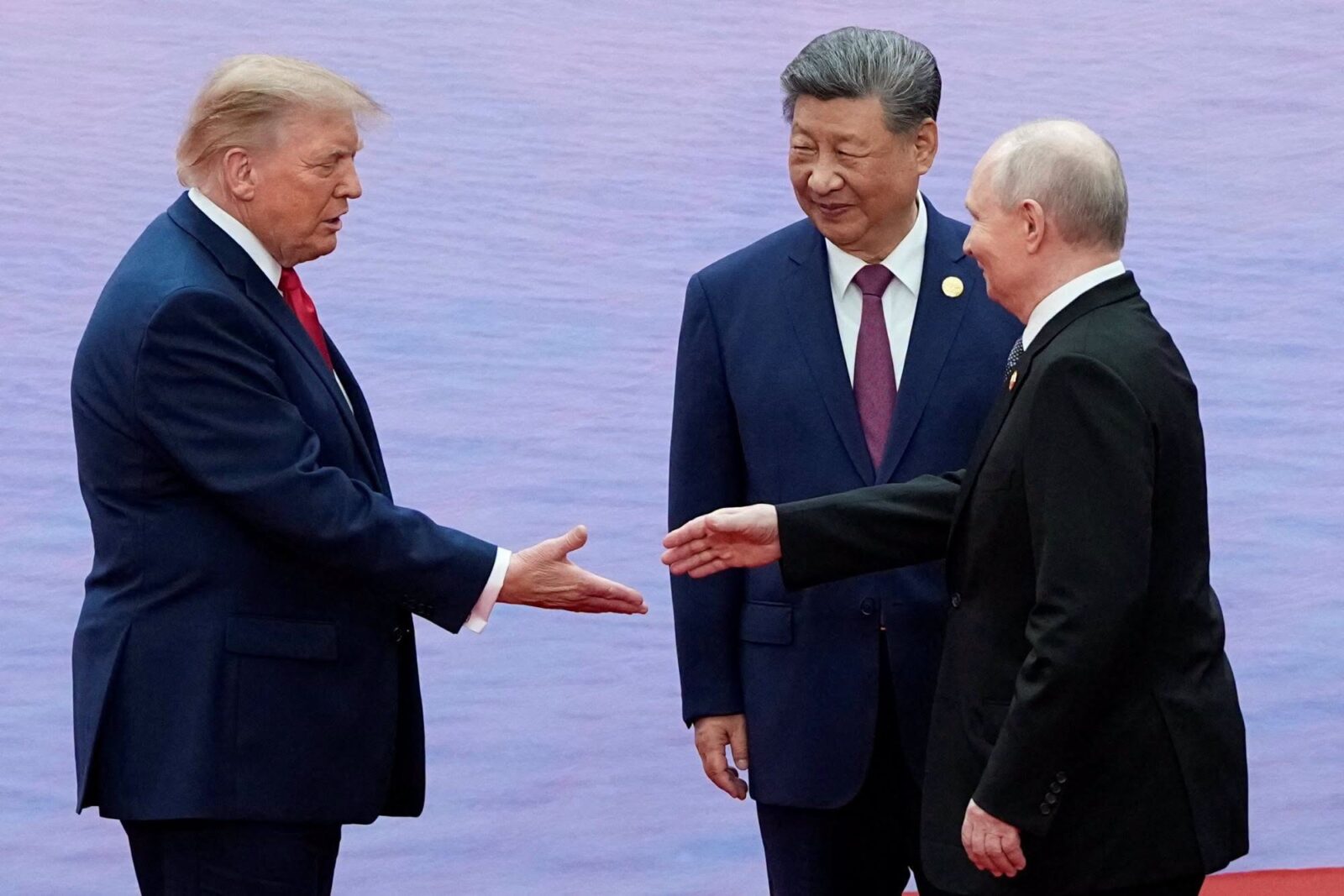
SHENZHEN, China, November 18, 2026 – Chinese President Xi Jinping and Russian President Vladimir Putin have criticised Western trade protectionism, economic sanctions and unilateral restrictions, as US President Donald Trump arrived in China for a high stakes diplomatic engagement involving the three world leaders.
Xi welcomed Trump at the airport in Shenzhen on Wednesday, marking the first time since becoming China’s president that he has personally received a visiting foreign leader at an airport.
The gesture reciprocated Trump’s reception of Xi at Joint Base Andrews in September during their previous meeting, reflecting efforts by both governments to maintain diplomatic engagement despite ongoing disagreements over trade, technology and international security.
Trump’s arrival followed separate addresses by Xi and Putin ahead of the Asia-Pacific Economic Cooperation (APEC) summit in Shenzhen, China’s southern technology and manufacturing hub.
The three leaders are expected to hold a trilateral meeting on Thursday on the sidelines of the summit, with discussions potentially covering Russia’s war in Ukraine, the US military campaign in Iran, international trade, artificial intelligence, nuclear weapons and other geopolitical tensions.
At the airport, Xi and Trump briefly embraced and exchanged greetings before proceeding to their respective motorcades.
According to China’s state news agency Xinhua, Xi said: “China is a country of etiquette and has a tradition of reciprocating courtesy.”
He added that he looked forward to discussions on China-US relations, cooperation in the Asia-Pacific region and the broader international situation.
Trump also described his previous engagements with Xi positively, saying every meeting with the Chinese leader had been “very pleasant”, Xinhua reported.
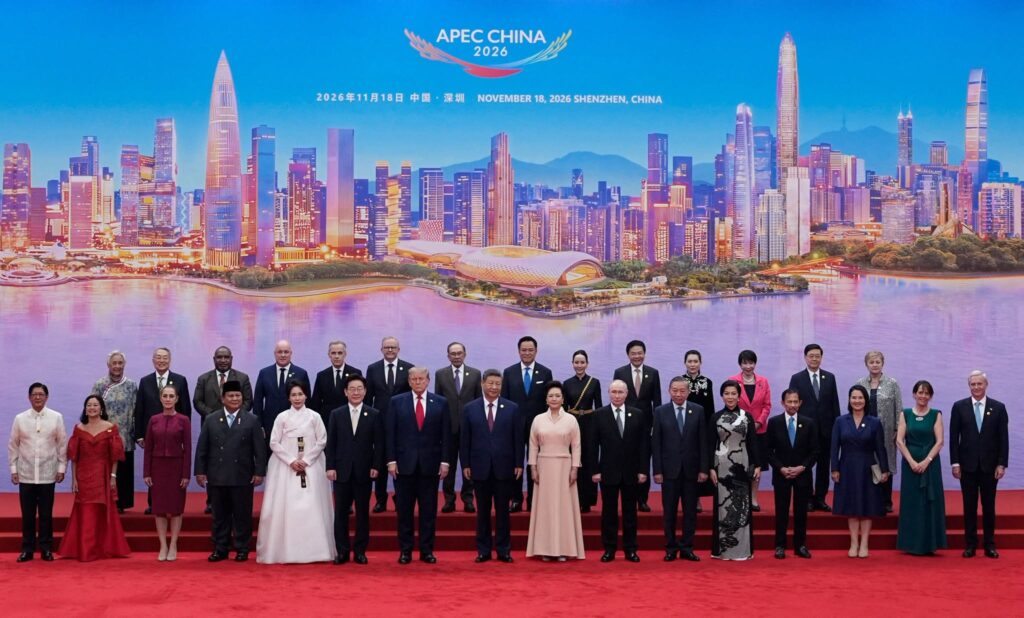
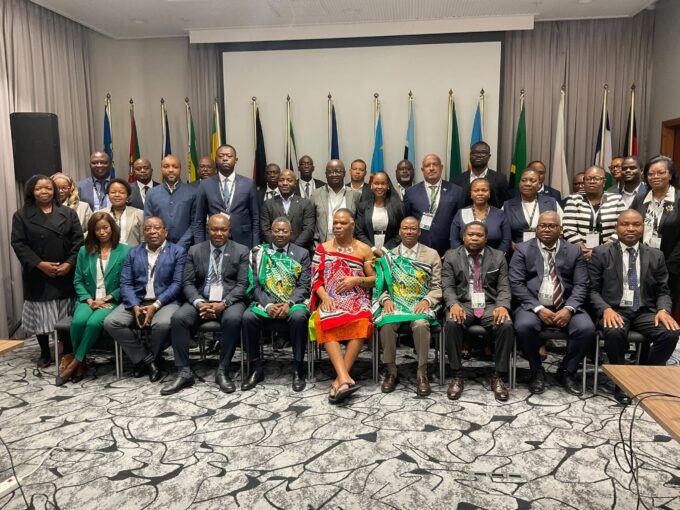
The two presidents subsequently joined Putin and other international leaders at the APEC summit venue for handshakes, an official group photograph and a banquet.
The planned trilateral engagement has attracted international attention, with some observers comparing it to the 1945 Yalta Conference, where the United States, Britain and the Soviet Union discussed the post-World War Two international order and the division of influence among major powers.
The comparison has raised concerns in some European and Asian capitals that the world’s most powerful military states could reach agreements affecting smaller countries without adequately considering their interests.
Xi courts Global South support amid trade tensions
Xi’s address to business executives came against the backdrop of renewed trade tensions between Washington and Beijing, following the US announcement of additional restrictions on China’s access to advanced artificial intelligence chips produced by companies including American semiconductor giant Nvidia.
The restrictions threaten to complicate an already fragile trade truce between the two economic powers, with Beijing warning that it would respond to Washington’s latest measures.
Addressing the business gathering, Xi called for stronger international cooperation through established multilateral institutions and defended China’s position on global trade.
“We must firmly uphold the rules-based multilateral trading system with the World Trade Organization at its core, support free and open trade and investment,” he said.
His comments come as Western trading partners increasingly question China’s economic policies, particularly its annual trade surpluses, which have exceeded $1 trillion.
The United States, European Union and other economies have raised concerns about China’s manufacturing subsidies and industrial policies, arguing that they give Chinese companies an advantage over international competitors while placing pressure on domestic industries and employment.
Beijing, however, maintains that its economic development model remains appropriate for a country still working towards the living standards of the world’s wealthiest economies.
China also argues that continued investment in manufacturing, industrial capacity and emerging technologies is necessary to sustain its economic growth.
Xi said his government would maintain investment in the country’s industrial sector and technological development while reducing tariffs and opening up additional opportunities for international businesses to access the Chinese market.
He also pledged that China would resist protectionism and unilateral economic measures.
The message could find support among developing economies, particularly countries in Africa, Asia and Latin America that have repeatedly called for a more inclusive international trading system.
George Chen, partner and chair of digital practice at The Asia Group, said Xi’s remarks were likely to appeal to developing nations.
“Message is likely to resonate with many Global South countries and reinforces Beijing’s effort to contrast its technology strategy with that of Washington,” Chen said.
China has increasingly sought to position itself as a partner for developing economies through trade, infrastructure investment, technology cooperation and diplomatic engagement.
For African countries seeking greater access to international markets, investment and advanced technologies, the competing economic approaches of Washington and Beijing remain significant to their development prospects.
Trump’s visit to Asia is his first since his Republican Party suffered defeats in the midterm elections earlier this month.
His administration is also facing additional scrutiny over allegations involving Nvidia founder Jensen Huang and a suspected Chinese spy, adding another dimension to the already complicated relationship between Washington and Beijing.
Putin attacks Western sanctions
Putin’s address at the APEC gathering followed Xi’s speech and focused heavily on the changing international economic order, with particular criticism directed at Western countries that have imposed sanctions on Russia following its invasion of Ukraine.
The Russian president described Western powers as “former hegemons” and accused European countries of experiencing a “humiliating decline”.
His comments came after Ukraine crippled the strategically important Kerch road bridge connecting Crimea to Russia, dealing another setback to Moscow’s four-year-old military campaign.
Putin argued that Western sanctions and economic restrictions had failed to achieve their intended objectives against the Russian economy.
“Experience has shown that the traditional tools of economic dominance and de facto coercion have largely run their course, having lost much of their intimidating power,” he said.
“While sanctions, tariffs, and export restrictions may still exert a certain deterrent effect, they are incapable of halting growth—let alone crushing the economies of competitors.”
The Russian leader’s remarks reflected Moscow’s continued opposition to Western economic pressure, which has targeted key sectors of its economy, including energy, banking, finance and international trade.
Russia has increasingly strengthened economic and diplomatic engagement with countries outside the Western alliance, particularly within the Global South, as it seeks alternative markets and international partnerships.
Putin described the current international environment as “turbulent”, but argued that disagreements between major powers could be addressed through direct diplomatic engagement.
“I therefore expect big potential benefit from the upcoming trilateral meeting,” he said.
The Kremlin had earlier dismissed comparisons between the proposed meeting and the historic Yalta Conference as “games of political scientists”, although it acknowledged that the discussions could have far-reaching implications for international affairs.
China has also described the planned trilateral engagement as an opportunity to advance global peace.
Japan’s Takaichi receives no formal welcome
While Trump and other international leaders received official airport welcomes, Japanese Prime Minister Sanae Takaichi arrived in China without a welcoming ceremony.
Her visit takes place amid deteriorating relations between Beijing and Tokyo, following remarks she made a year ago suggesting that Japan could deploy its military if Chinese action against Taiwan also threatened Japanese territory.
China strongly objected to her position, further deepening diplomatic tensions between the neighbouring countries.
The situation has become more complicated following reports on Tuesday that Taiwan and Japan had detected Russian aircraft entering their respective airspace.
Leaders from Australia, Canada, South Korea and other participating countries were welcomed by traditional performers and military personnel carrying rifles, making the absence of a similar reception for Takaichi particularly noticeable.
Trump strengthens Philippines defence ties
Beyond China, Trump’s Asian diplomatic engagements have also included discussions on regional security and military cooperation.
During his visit to Manila, the US president pledged to deepen defence cooperation with the Philippines as tensions between Manila and Beijing continue over disputed territories and maritime features in the South China Sea.
The United States has maintained security commitments to the Philippines, a longstanding regional ally, as concerns grow over China’s expanding military and maritime activities in the disputed waters.
Trump had also previously floated the possibility of meeting North Korean leader Kim Jong Un during his China visit, although no such engagement has been confirmed.
The prospect of a trilateral meeting involving Xi, Putin and Trump has consequently attracted attention well beyond the Asia-Pacific region, particularly as the three countries remain central to international discussions on trade, security, technology and the future balance of global power.







Leave a comment