


TALLINN, Estonia – Estonia has called for stronger international safeguards governing artificial intelligence (AI), with political leaders, technology experts and representatives of international organisations meeting in Tallinn to examine how emerging technologies can improve public services, strengthen national security and support economic growth without compromising human control.
The two day Tallinn Digital Summit 2026, which opened on Thursday, November 5, at the National Library of Estonia, brought together more than 1,000 participants from over 80 countries. Hosted by Prime Minister Kristen Michal, the ninth edition of the summit focused on the growing influence of artificial intelligence on economies, national security and the delivery of government services.
The discussions centred on how governments can introduce AI systems that make public administration more efficient while protecting citizens’ rights, maintaining national sovereignty and ensuring that important decisions remain under human authority.
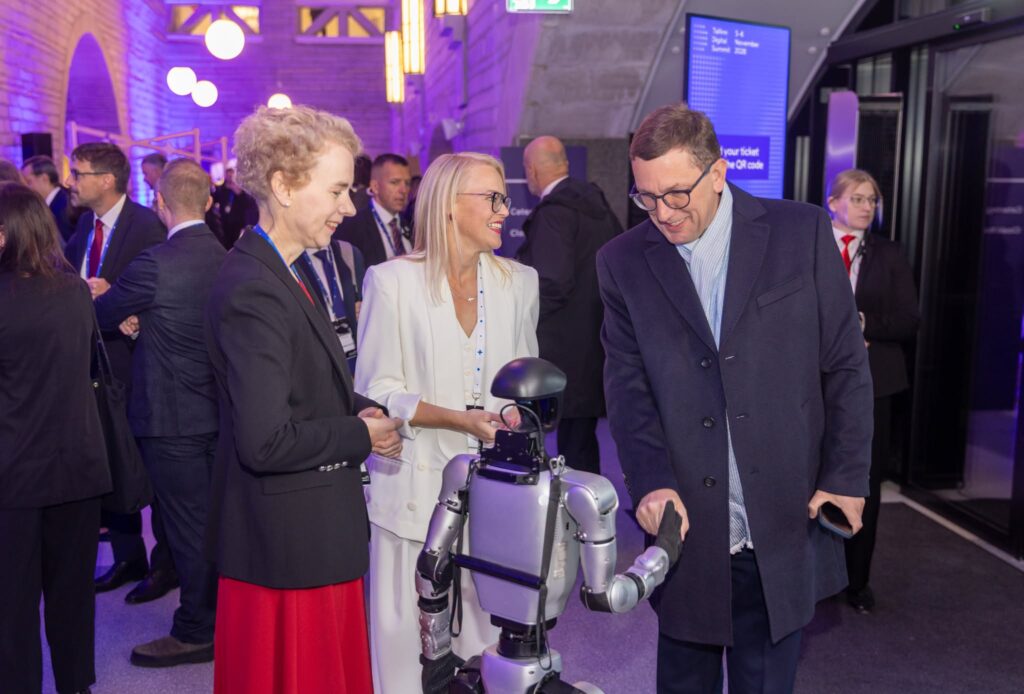
One of the opening discussions featured Estonia’s Minister of Justice and Digital Affairs, Liisa Pakosta, and Professor Stuart Russell of the University of California, Berkeley. They examined the regulation of AI agents and the need for governments to establish clear rules as increasingly autonomous systems become part of public administration.
The discussion pointed to a vision of government services that operate so efficiently that citizens barely notice the administrative processes behind them. However, the speakers cautioned that the adoption of new technologies must not weaken national sovereignty or expose sensitive public information to uncontrolled foreign technology providers.
Estonia has already introduced approximately 260 AI-based public services, placing the country among the leading adopters of digital government solutions. Despite this progress, the government maintains that sensitive information must be handled within clearly defined legal and security frameworks.
The speakers also argued that decisions carrying legal authority, including the issuing of digital signatures, should remain under human control rather than being left entirely to automated systems.
Pakosta and Russell compared the development of artificial intelligence to nuclear energy, arguing that both fields require clear, internationally coordinated safeguards to manage risks and maintain public confidence.
Estonian Deputy Chancellor for the Digital Country, Lauri Luht, described the summit as a practical instrument for advancing the country’s economic interests, national security and innovation agenda.
Responding to questions about the benefits Estonia gains from hosting international technology gatherings, Luht outlined four areas in which the summit could deliver value.
The first concerns secure innovation and export opportunities. Estonia’s digital services industry generates hundreds of millions of euros in turnover, and the summit provides an opportunity to bring government decision-makers, investors and technology companies from more than 80 countries directly to the country.
Luht said this approach allows Estonia to build commercial relationships and encourage partnerships through which local digital solutions can reach international markets.
“However, there is one unequivocal rule in the application of new technology – the rule of law is the foundation of a sustainable digital state, and not the other way around.” Tehisaru solutions must be transparent, responsible and build trust,” said Luht.
The second benefit relates to improving government efficiency and reducing the time citizens and businesses spend accessing public services.
The Tallinn Digital Summit and the meeting of Digital Nations ministers provide a platform for leading digital economies to exchange experiences and learn from one another. The objective is to develop public services that operate smoothly, with technology helping governments resolve problems while allowing individuals and businesses to concentrate on productive activities.
The third area involves responding to emerging security threats. Luht warned that artificial intelligence was making fraud, influence operations and cyberattacks faster, more convincing and capable of reaching larger audiences.
As AI systems become increasingly autonomous, governments must maintain human oversight and ensure that the technology operates within approved limits. Cooperation between governments, technology companies and researchers will be necessary to test systems, identify vulnerabilities and improve public understanding of digital risks.
The fourth benefit is strengthening Estonia’s international visibility, reputation and security partnerships.
For a small country, Luht said, international recognition and reliable partnerships are important. Hosting foreign delegations gives Estonia an opportunity to demonstrate its technological capabilities while allowing partners to understand its security environment, including the threat posed by Russia and the importance of international support for Ukraine.
He said relationships established during the summit could develop into commercial partnerships, practical cooperation and stronger diplomatic support.
Estonian Prime Minister Kristen Michal also linked technological development to the country’s security priorities, pointing to lessons from the war in Ukraine.
“Ukraine has shown that technology can change warfare faster than governments can change their plans. Democracies must be able to innovate just as fast as those who threaten us.”
Michal said security must also include defence, reflecting the growing importance of technology in modern military and national security planning.
Norwegian Prime Minister Jonas Gahr Støre, addressing the challenges associated with increasingly autonomous AI systems, said: “As we move toward the agentic era, trustworthiness becomes the most important currency.”
The summit’s opening programme also featured welcome remarks and keynote addresses from Sandra Särav-Tammus, Deputy Secretary General at the Ministry of Economic Affairs and Communications; Michal; Støre; European Commissioner for Startups, Research and Innovation Ekaterina Zaharieva; and Organisation for Economic Co-operation and Development (OECD) Secretary-General Mathias Cormann.
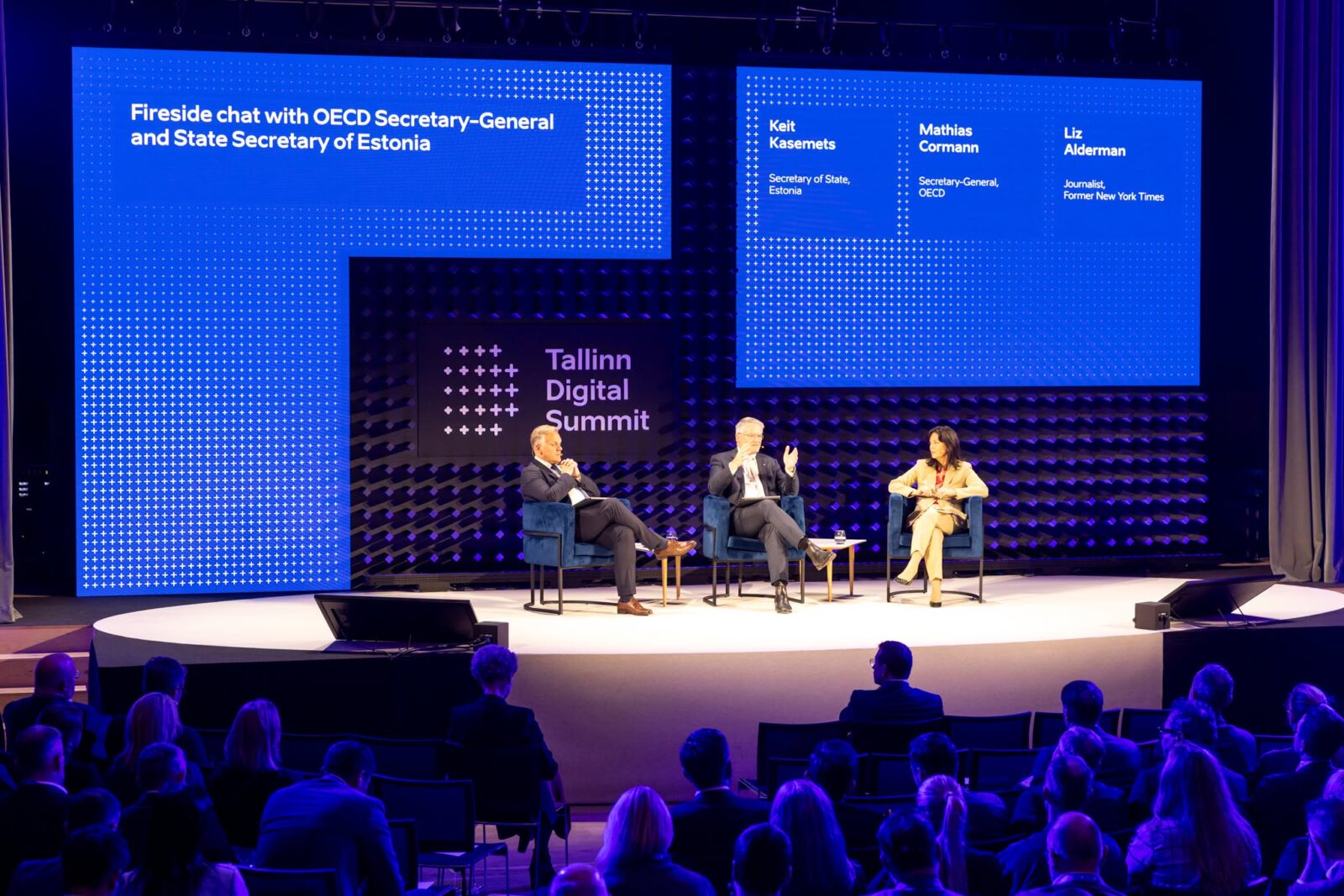
A separate fireside discussion brought together Cormann and Estonia’s State Secretary, Keit Kasemets, to examine how the country’s digital infrastructure and growing adoption of artificial intelligence could contribute to productivity and economic expansion.
Estonia has developed extensive digital connectivity, high levels of AI adoption and public administration systems that have attracted interest from governments seeking to modernise their own services.
The OECD’s economic survey of Estonia and its 2026 Digital Economy and Society Outlook provide an assessment of the country’s progress in these areas.
Moderated by journalist Liz Alderman, formerly of The New York Times, the discussion examined how Estonia could use its existing digital capabilities to increase productivity and strengthen its economic competitiveness.
The development of AI skills among citizens and workers was another major issue at the summit. Estonia is targeting opportunities for 100,000 people to learn how to use artificial intelligence in their daily work by the end of 2027.
The country’s Eesti.ai initiative is focused on expanding practical AI applications across education, healthcare, public services and businesses, with the aim of helping people and organisations adapt to changes in the workplace and wider economy.
The summit also hosted a meeting of Digital Nations ministers, bringing together representatives of countries recognised for their progress in digital transformation. Under Estonia’s presidency, the ministers discussed how artificial intelligence could be introduced into public administration while safeguarding citizens’ rights.
The gathering included heads of state, government ministers, international organisations and senior executives from technology companies, providing a platform for discussions on digital competitiveness, responsible innovation and cooperation in addressing security challenges.
The summit’s programme was supported by officials from Estonia’s Ministry of Justice and Digital Affairs, including Kristiina Krause and Birgit Lüüs-Jakobs, alongside Tallinn Digital Summit Director Kata Varblane.











Leave a comment