


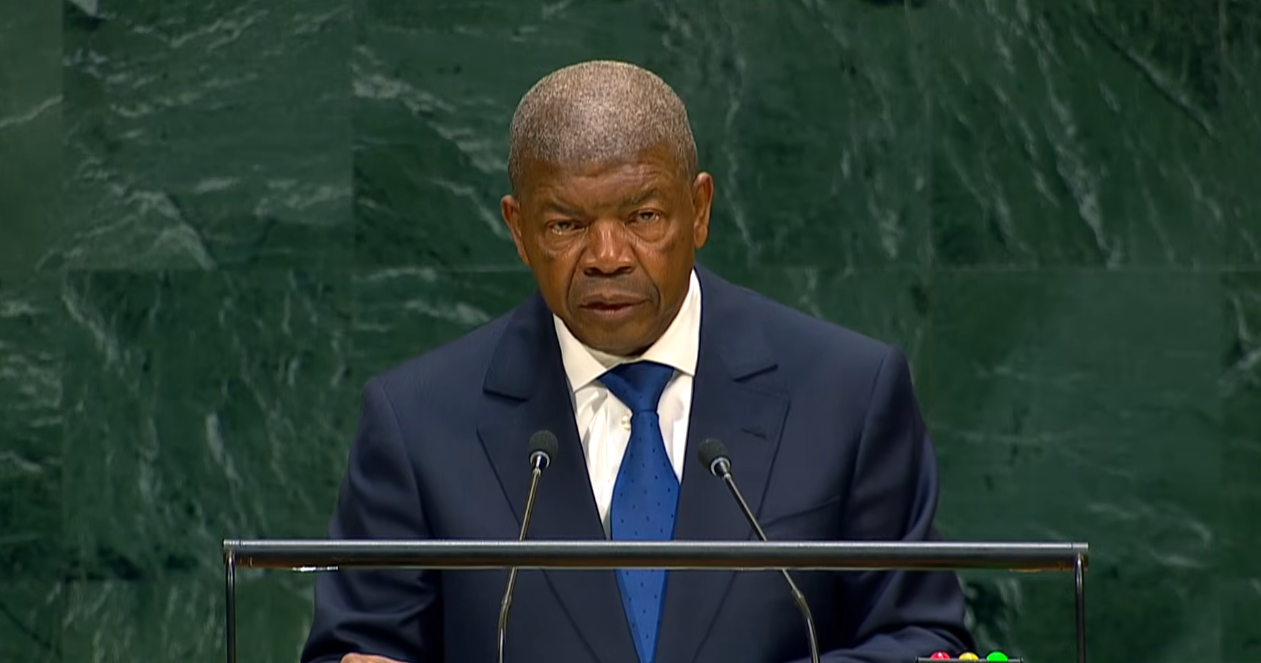
NEW YORK, United States, September 23, 2026 — Angolan President João Manuel Gonçalves Lourenço has called for a stronger African role in global decision making, while urging the United Nations to restore its central role in resolving conflicts and addressing growing international instability.
Lourenço made the call while addressing the General Debate of the 81st session of the United Nations General Assembly in New York, where he spoke about conflicts in Africa and other parts of the world, reform of the UN Security Council, international financing, climate change, technology and the need for diplomacy.
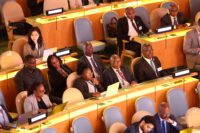
The 81st General Assembly General Debate is taking place at UN Headquarters in New York from September 22 to 28, bringing together heads of state, government leaders and senior representatives of the 193 UN member states.
Lourenço said the world was moving dangerously close to a wider global conflict and called for greater commitment to dialogue, international law and peaceful settlement of disputes.
He also condemned terrorism in all its forms, noting that the threat remains active in several countries, particularly in Africa.
“we note with deep concern that the world has taken a course that brings it alarmingly to close to a global conflict,” Lourenço said.
Angola promotes African solutions
Lourenço used the address to present Angola’s role in efforts to promote peace and conflict resolution across Africa.
He referred to the 21st Extraordinary Summit of African Union Heads of State and Government on strengthening conflict prevention and resolution mechanisms in Africa, held in Luanda.
According to Lourenço, the meeting created prospects for addressing some of the challenges affecting peace and stability on the continent.
He also pointed to the third edition of the Call for Peace and the End to Wars and Respect for International Law initiative, held in Luanda in July in partnership with the United Nations Alliance of Civilizations.
Angola is also scheduled to host the Pan African Forum for the Culture of Peace and Non Violence in October.
“My country takes seriously the issues relating to peace and resolution, conflict through dialogue, respect for gnomes governing international relations and defense of international law, sparing no efforts to bringing the conflicting parties closer and build consensus in Africa,” Lourenço said.
He said Angola remained available to contribute to efforts aimed at resolving conflicts on the continent and described the country’s approach as being based on finding realistic and sustainable solutions through the principle of African solutions to African conflicts.
Lourenço also called for effective implementation of UN Security Council Resolution 2719, which provides a framework for sustainable financing of African Union led peace support operations authorised by the Security Council.
He said strengthening Africa’s ability to prevent and resolve conflicts would also contribute to international peace and security.
Angola marks 50 years at the UN
The Angolan president said this year’s General Assembly was particularly significant for his country as Angola marks 50 years since joining the United Nations as a full member.
Angola was admitted to the UN in December 1976, following its independence in 1975.
Lourenço recalled the country’s difficult path towards peace, including the impact of Cold War rivalries and Angola’s prolonged internal conflict, which ended in 2002.
He said the country’s history had provided lessons that continue to influence Angola’s efforts to promote peace, reconciliation and understanding.
As part of the 50th anniversary commemorations, Angola has held ceremonies honouring political leaders involved in the national liberation struggle and representatives of different sections of civil society.
A monument dedicated to victims of Angola’s political conflict from independence until the achievement of peace in April 2002 is also expected to be inaugurated in October.
Lourenço criticises global conflicts
The Angolan president said international tensions were being aggravated by what he described as the growing use of force, intimidation and unilateral action by some countries.
He referred to conflicts and tensions in Europe, the Middle East, the Persian Gulf and Africa, as well as rising tensions in the Asia Pacific region.
Lourenço said there were no encouraging indications of near term peace agreements in the Russia Ukraine war, the Israeli Palestinian conflict and conflicts in the Persian Gulf.
He also condemned what he described as the killing and suffering of civilians, including women, children, elderly people, patients, health workers, journalists and humanitarian workers.
He criticised restrictions on access to essential supplies such as food, water and medicine and called for international action over the displacement of Palestinians and the expansion of Israeli settlements in the West Bank.
Lourenço warned that the use of military force to dominate countries and regions was creating risks for the international system.
He also raised concerns about the effects of conflicts on global food and energy security, particularly disruptions to maritime navigation through strategic waterways and their impact on international supply chains.
The Angolan leader called for deeper reflection within the United Nations, describing the organisation as the global institution with the legitimacy to bring countries together in search of solutions to international conflicts.
Angola calls for end to Cuba embargo
Lourenço also called for an end to the United States embargo against Cuba.
He said Angola was concerned about the conditions facing the Cuban population and argued that Cuba did not pose a military or security threat to other countries.
“Cuba is not a terrorist state. It neither produces nor possesses nuclear weapons, chemical or material weapons that could constitute an eminent or real threat to the national security of other countries including the neighboring countries,” he said.
Lourenço also recalled Cuba’s role in southern Africa, saying the country had contributed to the struggle against apartheid in South Africa and had subsequently become a signatory to the New York Accords of December 22, 1988.
He described the embargo as inhumane and unfair and said it violated international law.
Security Council reform
A major part of Lourenço’s address focused on reform of the UN Security Council.
He said the involvement of some permanent members of the council in major conflicts had raised concerns about the credibility and effectiveness of the current global governance system.
Lourenço argued that the international order should become more representative and democratic and should reflect changes that have taken place since the end of the Second World War.
He called for Africa, Latin America and Asia to receive permanent representation on the Security Council, including the powers attached to permanent membership.
“The voice of Africans must be heard in all circumstances at all times in strategic decision making processes on issues of peace, global security, financing for development as well as climate issues and global governance of artificial intelligence,” he said.
The call comes as African countries continue to press for permanent representation on the Security Council as part of wider proposals for reform of the international system.
Debt, climate and technology
Lourenço linked peace and development, saying African countries need better access to financing if they are to accelerate implementation of the 2030 Agenda for Sustainable Development.
He called for affordable financing, debt relief, technology transfer, capacity building and greater involvement by international financial institutions.
He said the cost of servicing debt was consuming resources that African countries could otherwise direct towards health, education, infrastructure and development.
“This situation obviously limits productive investment, deepens inequalities and economic disparities and threatens economic and social stability,” Lourenço said.
He called for reform of the international financial architecture to make it more equitable and responsive to developing countries.
Climate change was another major concern raised by the Angolan leader. He said African countries were facing severe droughts, floods, desertification, food insecurity and displacement.
Lourenço called for predictable and affordable additional climate finance without increasing the debt burden of developing countries.
He also pointed to artificial intelligence and digital technology as potential tools for improving education, healthcare, agriculture, public services, scientific research and economic productivity.
He said the Global Digital Compact could create opportunities to bridge the digital divide, expand digital public infrastructure, improve training and innovation, strengthen cybersecurity and support more inclusive governance of artificial intelligence.
Lourenço called for stronger North South and triangular cooperation so that the digital revolution could become an instrument for inclusion, sovereignty and development rather than a source of dependence and inequality.
Angola backs diplomacy
As the General Assembly considers the appointment of the next UN Secretary General, Lourenço said the person selected would need independence, integrity, competence and courage to build consensus, uphold the UN Charter, prevent conflicts, lead reforms and help address the organisation’s financial difficulties.
Angola also reiterated its commitment to the United Nations and international law.
“Only within the framework of the United Nations can we make progress in seeking peaceful solutions to the conflict ravaging the world within a framework in which macaterism serves as the mechanism for bringing together ideas, political wills and initiatives conducive to global peace,” Lourenço said.
He said today’s political leaders would ultimately be judged by their ability to replace confrontation with dialogue, competition with cooperation, exclusion with solidarity and military force with international law.
Lourenço ended his address with a call for diplomacy to take precedence over military confrontation.
“No weapon is more powerful than diplomacy since all others are used only to destroy lives, infrastructures, dreams and life plans. Whereas diplomacy is the only weapon that exists to unite, repair, build, and save lives, peoples, nations, and humanity itself.”




Leave a comment