


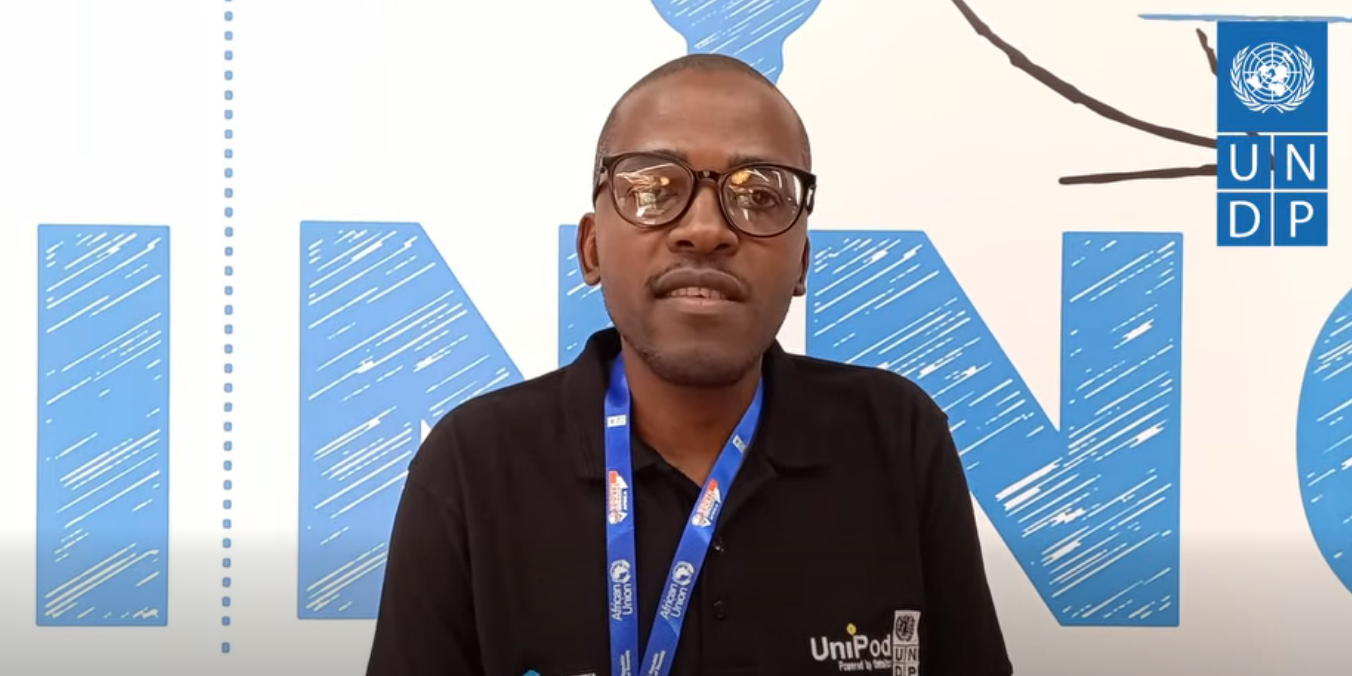
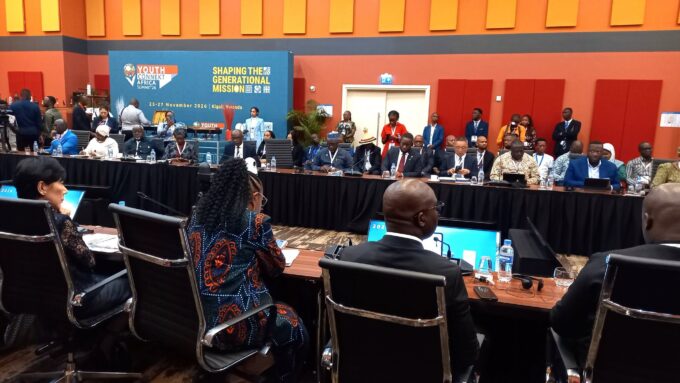
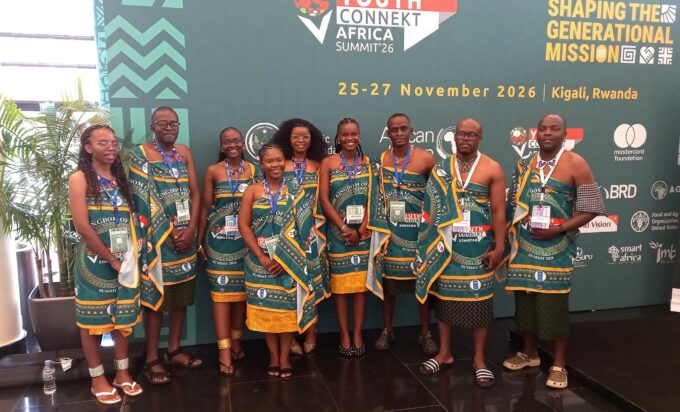
KIGALI, Rwanda: A young innovator from Eswatini is looking to use newly acquired artificial intelligence skills to expand digital education and entrepreneurship opportunities for young people, women and persons with disabilities when he returns home from the 2026 YouthConnekt Africa Summit in Rwanda.
Siphiwo Pele Lushaba, operator of the Macetjeni Innovation Hub, is part of the Eswatini delegation attending the summit in Kigali, where he recently participated in a two day Generative AI Masterclass facilitated by the University of Rwanda UniPod.
The training introduced participants to practical ways of applying artificial intelligence in business development, digital marketing and entrepreneurship, including how emerging technologies can help businesses grow while reducing the resources required to operate them.
Lushaba said the knowledge gained during the masterclass would strengthen his work at the Macetjeni Innovation Hub, where he is involved in helping communities access digital skills and innovation opportunities.
The hub was established through a partnership involving the Ministry of Commerce, Industry and Trade, the Ministry of Information, Communications and Technology, the Eswatini Communications Commission (ESCCOM), the Small Enterprises Development Company (SEDCO) and the United Nations Development Programme (UNDP).
Its work focuses on reducing the digital divide between rural and urban communities by equipping young people, women and persons with disabilities with digital and innovation skills.
Speaking in an interview during his visit to Rwanda, Lushaba described the training as an opportunity to acquire practical knowledge that could be transferred to entrepreneurs and young innovators in Eswatini.
“My name is Sifiso Hlatshwayo, and I’m from the Kingdom of Eswatini. I’m the current operator in Mat Teni Innovation Hub, where we are trying to bridge the digital divide between rural areas and urban areas, where we are empowering and training young people, women, and persons even with disabilities with digital skills as well as innovative skills. I am in Rwanda together with the Eswatini delegation, where we are attending the Africa Youth uh Africa Youth Connect Summit 2026.”
He explained that the masterclass took place before the main summit and provided participants with an introduction to generative artificial intelligence through the University of Rwanda’s UniPod.
The training covered different stages of business development, from turning an initial idea into a business proposition to using AI tools to improve an already established enterprise.
Among the subjects covered were developing a business value proposition, marketing products and services online, using WhatsApp as a business promotion tool and creating websites with limited assistance from professional developers.
Lushaba said the lessons would be particularly useful in expanding the training programmes already being offered at Macetjeni.
“So, what I’ve learned at the generative AI summit, I learned on a holistic a holistic way of uh running a business or starting a business from idea stage or even if a business is already running and uh using artificial intelligence. We were taught on how to find the value value proposition.”
He added that the training demonstrated how entrepreneurs could use digital platforms to reach customers without requiring extensive technical knowledge or significant investment.
“We were taught on how to market uh your business online using digital um AI tools uh online platform level, where we were taught on how to use WhatsApp to to to to market your business, how WhatsApp can market your business with with minimal um input from you as a businessman. and we’re taught on how to develop websites with minimal or no developer insights.”
He said he intended to share the knowledge with young people in Eswatini, particularly those who are already being introduced to artificial intelligence and its applications.
“With these skills, I believe they will help help me when going back to Eswatini because I have already started teaching young people on artificial intelligence and the different tools of artificial intelligence. I will use the skills and the information I received here to to empower those young people.”
Beyond the training, Lushaba also sees the planned establishment of Eswatini’s first University Innovation Pod at the University of Eswatini (UNESWA) as an important development for the country’s innovation ecosystem.
The facility is being developed through a partnership involving UNESWA, ESCCOM and UNDP, with the intention of providing young people with access to infrastructure, equipment and technical support to develop their ideas.
Drawing from his experience at the University of Rwanda UniPod, Lushaba said the availability of specialised equipment, workshops and dedicated working spaces could help address some of the challenges facing aspiring innovators in Eswatini.
He believes many young people have ideas and the ambition to develop businesses but lack access to the facilities, guidance and resources needed to turn those ideas into viable projects.
“And if the the Unipod in Eswatini will really really benefit Eswatini because looking at the Unipod that we are in today, you can see that there’s different machineries, different um innovation or different places and offices and workshops where they can uh come and work on their innovation as well as improve what they are doing.”
He said the proposed facility could provide a shared environment where young entrepreneurs and innovators would no longer have to pursue their projects without adequate institutional support.
“So, with young people who have been in in silos in Eswatini in terms of coming up with ideas and and not getting the assistance or getting the infrastructure where they can nurture and build their skills. With the Unipod coming to Eswatini or starting or being built in Eswatini, they will now have a home where they can and come and work on their on on their on their business or work on their innovation with the assistance and training from the Unipod institution in Eswatini.”










Leave a comment