


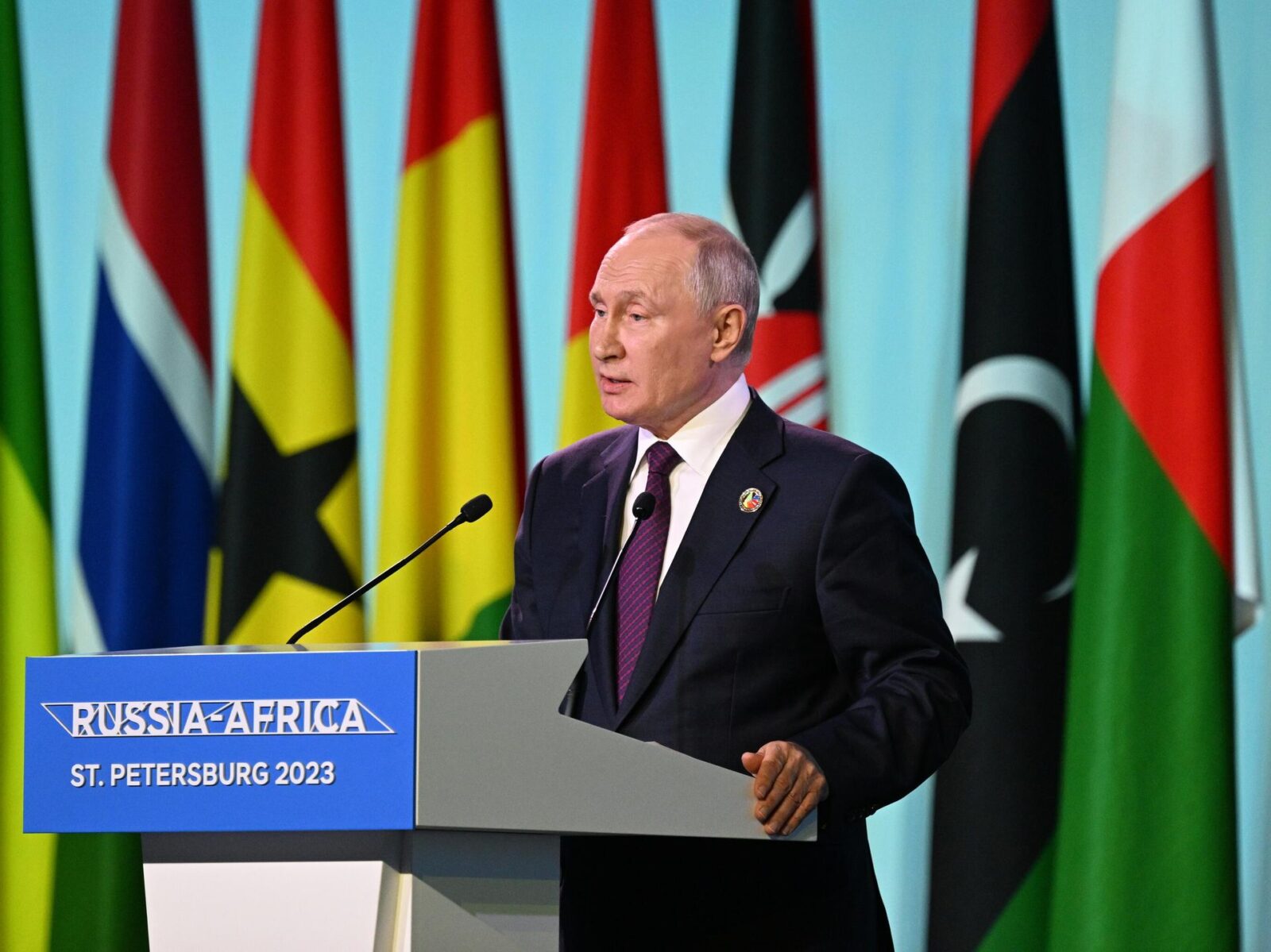
Moscow – Russian President Vladimir Putin will co-chair a key plenary session of the third Russia-Africa Summit in Moscow on 29 October, alongside Burundian President Évariste Ndayishimiye, who chairs the African Union (AU), as Russia prepares to host African leaders for talks on trade, investment, security and economic cooperation.
Russian Foreign Ministry spokesperson Maria Zakharova announced the programme on Wednesday, saying preparations for the 28 to 29 October gathering had entered their final phase, with most African delegations confirming their participation.
The summit is expected to bring together Russian officials, African heads of state and representatives of regional organisations to discuss cooperation in strategic sectors, including peaceful nuclear energy, food security, digitalisation, artificial intelligence and the development of independent payment systems.
“We have effectively reached the final phase of preparations. Work is being carried out in close cooperation with our African partners,” Zakharova said.
The meeting comes as Russia seeks to strengthen its economic and diplomatic relationships across the continent, with discussions expected to produce a substantial package of intergovernmental agreements and commercial contracts.
Trade and investment on the agenda
Putin is expected to hold bilateral meetings with African leaders and meet representatives of regional organisations on the sidelines of the summit.
Russian Foreign Minister Sergey Lavrov will host a working breakfast for his African counterparts on 28 October, providing an additional opportunity to discuss areas of common interest.
According to Zakharova, invitations have been extended to all African heads of state and leaders of regional organisations, while most delegations have already confirmed their attendance.
The agenda reflects Moscow’s interest in expanding cooperation beyond traditional political and security ties to include trade, investment, energy, agriculture and emerging technologies.
For African governments, the discussions are expected to provide an opportunity to engage Russia on economic partnerships and other areas of cooperation, although the outcome will depend on the agreements reached during the meetings.
Russia alleges pressure on African governments
Preparations for the summit have unfolded amid allegations from Russian officials that Western governments are attempting to discourage African countries from attending.
Last month, Zakharova accused Western governments of pressuring African states to boycott the gathering, describing the alleged interference as a continuation of colonial-era practices.
Lavrov also accused France of seeking to dissuade African leaders from participating. He warned that French President Emmanuel Macron would use a planned visit to Africa to exert pressure on governments over their attendance.
On Monday, Russian Foreign Ministry official Tatyana Dovgalenko alleged that Western countries were continuing to apply diplomatic pressure on African governments and had resorted to financial blackmail in an effort to prevent participation.
The allegations have not been independently established in the information provided. They form part of Moscow’s criticism of Western engagement with African governments over their international partnerships.
The summit will take place against a wider backdrop of competition among international powers for diplomatic influence, trade opportunities and strategic partnerships across Africa.
Attendance at previous summits
The third gathering follows two earlier Russia-Africa summits that brought together African governments at different levels of representation.
The inaugural summit, held in Sochi in 2019, attracted official delegations from all 54 African countries. Of those, 45 were represented by their heads of state or government.
The second summit, held in St Petersburg in 2023, drew official delegations from 48 African countries, with 27 represented by a head of state or the second-highest-ranking official.






Leave a comment