


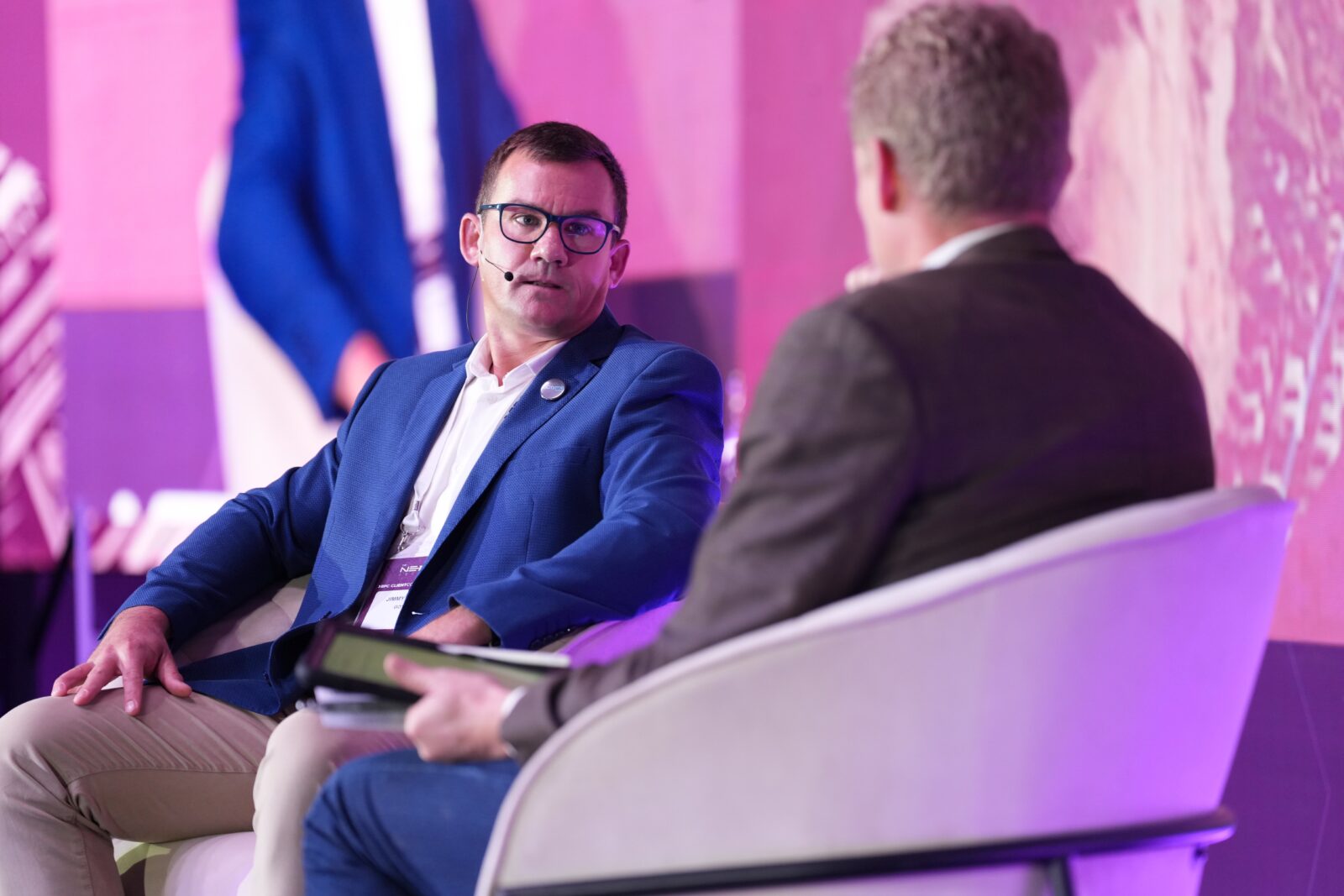
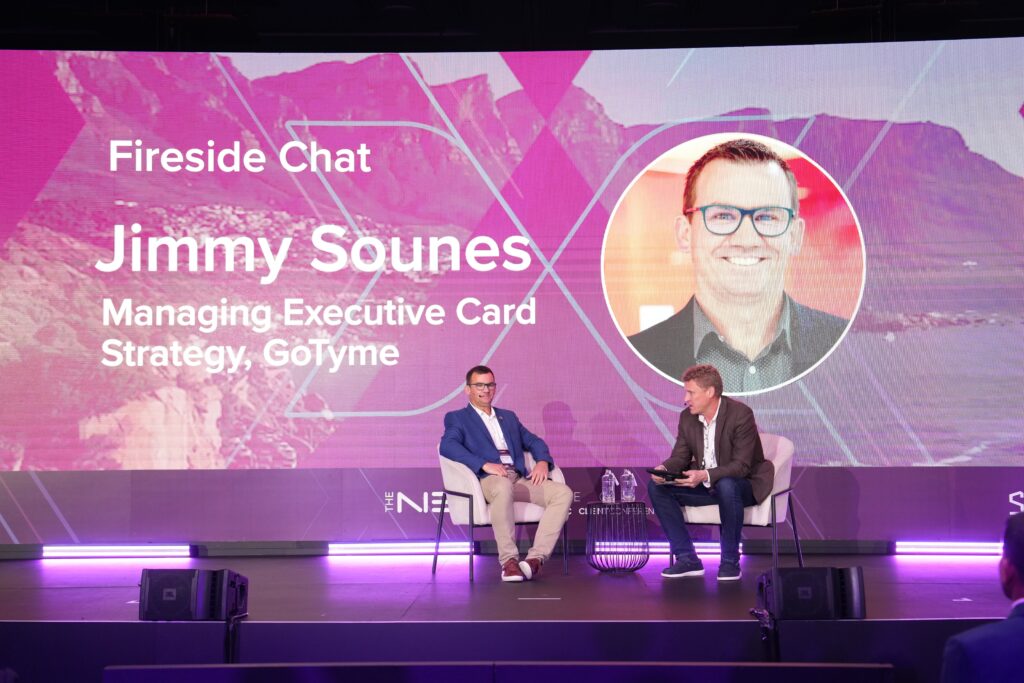
Cape Town, South Africa – High banking fees remain one of the biggest barriers to digital payments in South Africa, particularly for lower income consumers who feel even the smallest transaction charge, according to GoTyme Bank’s Managing Executive for Card Strategy, Jimmy Sounes.
Sounes was speaking in a fireside chat with Colin Iles, Founder of Iles Media, at the BPC Client Conference held under the theme “The Next Decade” at the Westin Hotel in Cape Town on Wednesday, 21 October 2026.
He said banks needed to make digital payments cheaper and easier to access if they wanted more South Africans to move away from cash.
“Customers don’t want to pay fees, especially the lower-income customers who are so sensitive to cost,” he said.
A bank without branches
Sounes told delegates that GoTyme is nearly seven years old in South Africa and has about 13 million customers in the country, with around 12 million more in the Philippines, where the business is even younger.
The bank has no branches. Instead, it runs kiosks at about 1,000 locations, many of them in large shopping malls, where customers can open an account and print a bank card in about five minutes. Ambassadors stand alongside customers at the kiosks to answer questions, which Sounes said matters because people trust what they can see and feel. A GoTyme kiosk was set up in the conference foyer.
For now, accounts are open only to South Africans. Sounes said part of what drew him to the bank was its simplicity and its aim of treating every customer the same way, including paying 10% interest on savings regardless of the amount saved. He said founders Coenraad Jonker and Tjaart van der Walt set out to bring equality to South African banking, where those with more money traditionally earn more interest while those with little earn almost nothing.
The bank’s engineering and product teams are based in Hanoi, Vietnam, where features are built centrally before being rolled out in South Africa and the Philippines. Sounes said this hub model was working well and helped keep overheads down.
Retail partners benefit by drawing more foot traffic into their stores, he explained, while customers can still deposit cash through those outlets and withdraw from any bank’s ATM.
He said that when the bank launched, smartphone use was limited, especially at the lower end of the market, where many people still used basic feature phones. That is now changing, with more customers transacting through the app, while customers in the Philippines are almost entirely digital. The challenge, he said, is getting the bank’s entire customer base fully active.
The South African business was rebranded from TymeBank to GoTyme Bank in May this year to align with the Philippines operation, although many people still use the old name. Sounes said the bank is still adding about 150,000 customers a month in South Africa and between 300,000 and 400,000 a month in the Philippines, and that it became profitable this year for the first time.
Making money without fees
Iles pressed Sounes on how the bank could remain profitable after recent increases in Home Affairs charges for identity verification during customer onboarding, on top of card scheme fees.
Sounes said GoTyme charges no monthly account fees and is the only bank in the country that does not add foreign exchange markups or currency conversion fees on international card transactions, meaning customers pay only the amount charged abroad.
“We are not a bank for the poor. We are bank for everyone,” he said.
He said the bank could easily charge 13 million customers a few rand a month and be very profitable, as other banks are, but chose not to. The answer, he said, lies in low margins, high volumes and the centralised model. He also stressed reliability, describing a failed card payment in a long shop queue as a bad experience the bank works hard to avoid, and thanked the BPC team for its support.
Fighting fraud together
Asked how the bank stops fraudsters from using its kiosks to open accounts for money mules, Sounes said fraud is an industry wide problem, drawing on the 14 years he spent at the country’s biggest bank before joining GoTyme. He said the bank relies on AI models and a dedicated fraud team to spot suspicious accounts.
He called for closer collaboration between banks, saying fraud should never be treated as a competitive advantage because the same criminals target GoTyme, Standard Bank and Absa alike. Sharing information and shutting down mule accounts quickly, he said, makes the crime less profitable. “For them it’s also a margin game,” he said.

Foreign nationals
Responding to a question from Adekunle Owolabi, Editor of The African Daily, about whether the bank would open accounts for legally documented foreign nationals who live, work and contribute to South Africa’s economy, Sounes said this was part of the bank’s plans, probably within the next six months.
He also pointed to the large informal economy in townships, saying there was value to unlock there and a chance to reduce reliance on cash. He said regulators were discussing digital identity and payment infrastructure, but he did not expect major changes soon.
Why cash still rules
Sounes, who grew up in a small South African town where his parents had little money, recalled that no bank would grant him a student loan for university. He said he felt very blessed to now hold a senior role in banking.
Many South Africans, he said, still believe cash is free, safe and instantly available, while distrusting banks. Grant recipients often withdraw their full payments as soon as they arrive and keep the money at home because it gives them a sense of control. He said he could not blame them, since R100 left in an account at many banks could be eaten away by fees within a few months. “And that’s wrong,” he said.
He added that small shops in his hometown still add a surcharge when customers pay by card, even for small purchases, which pushes people back to cash.
Asked about PayShap, South Africa’s instant account to account payment scheme, Sounes said adoption had been held back by banks’ pricing. GoTyme, he said, is the only bank in the country offering instant payments of up to R5,000 free of charge. He recalled recently making a R1 transfer at another bank and being charged a R2 fee.
Lower income customers, he warned, are so sensitive to cost that a charge of just R5 can prompt angry calls to the call centre and even threats to burn down the bank.
Even so, Sounes cautioned against expecting a cashless society any time soon, pointing to minibus taxis that accept only cash from millions of daily commuters.
“Will cash disappear completely in our country in the next 10 years? I don’t think so,” he said.
He said the industry should first focus on moving people from cash to cards before expecting them to adopt newer methods such as PayShap, which he described as a completely new concept for many consumers.
“What we need to do as a bank, as an industry, is try and get the cash people into the card first,” he said.
He added that he believed the South African Reserve Bank would increase pressure on banks to drive adoption and lower costs. Sounes also said GoTyme is partnering with Sanlam to offer personal loans to its customers.
Becoming the card of choice
Asked how the bank keeps attracting customers, Sounes said account openings at its kiosks have grown sharply compared with two, three and four years ago, helped by free personalised cards printed on the spot. The goal, he said, is to win customers who make GoTyme their main bank rather than opening an account just for the card.
“We want to be top quality. We want to be the card of choice,” he said.













Leave a comment