


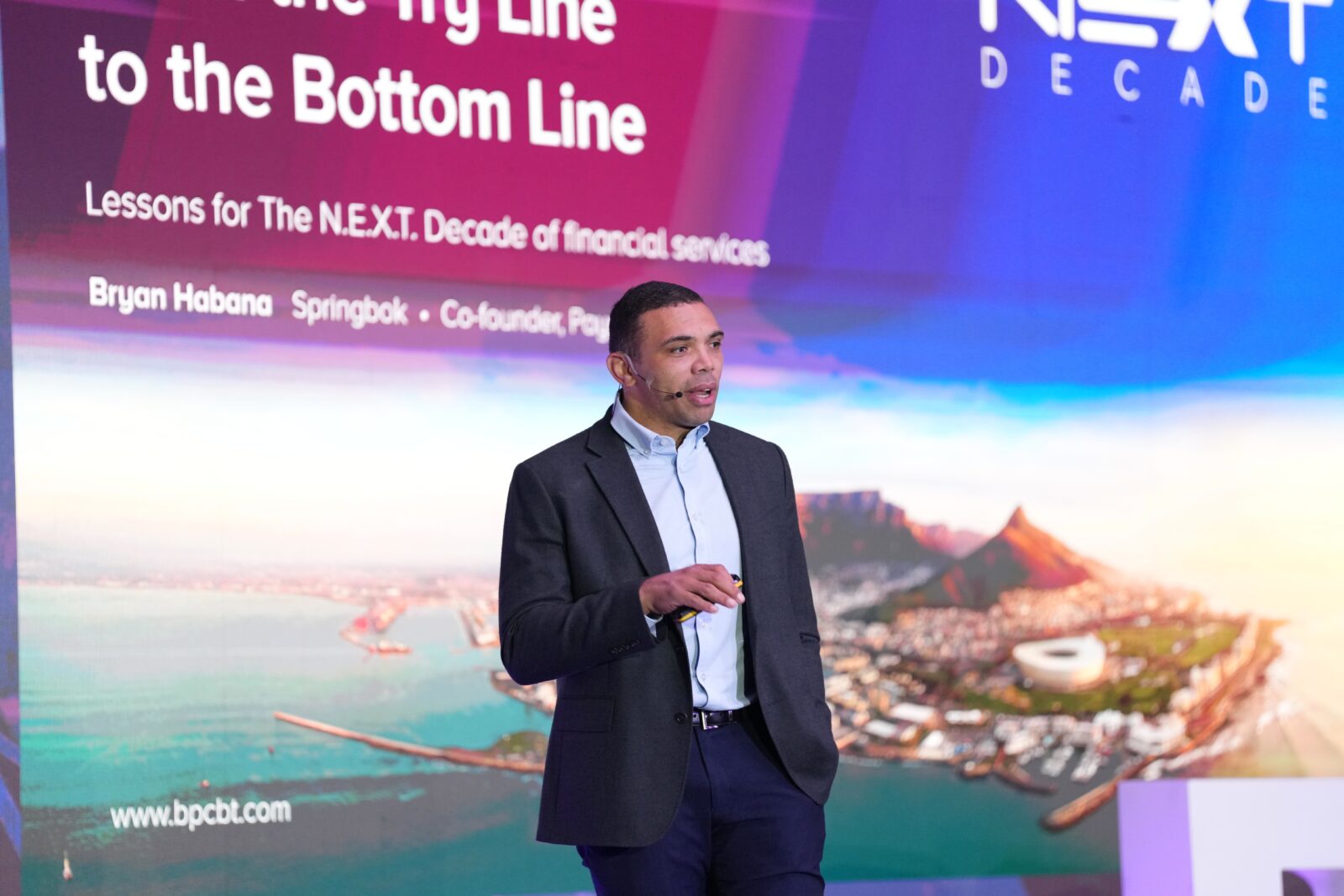
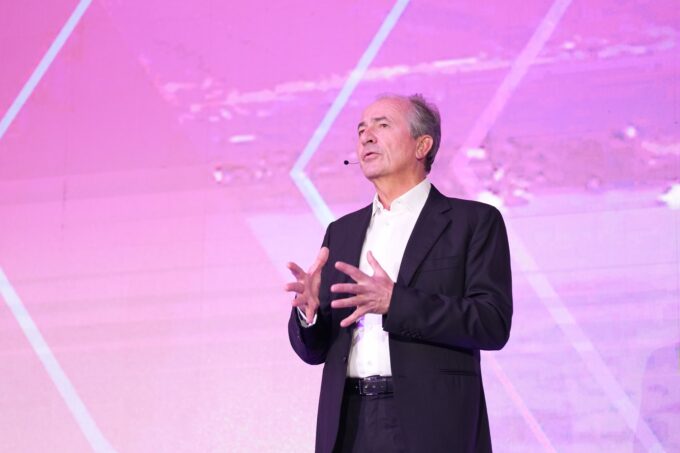
Cape Town – Springbok legend Bryan Habana has warned that people who fail to learn how to use AI, rather than AI itself, will be the ones who lose their jobs, as he urged financial services leaders to keep unlearning and relearning in a world moving faster than anyone imagined.
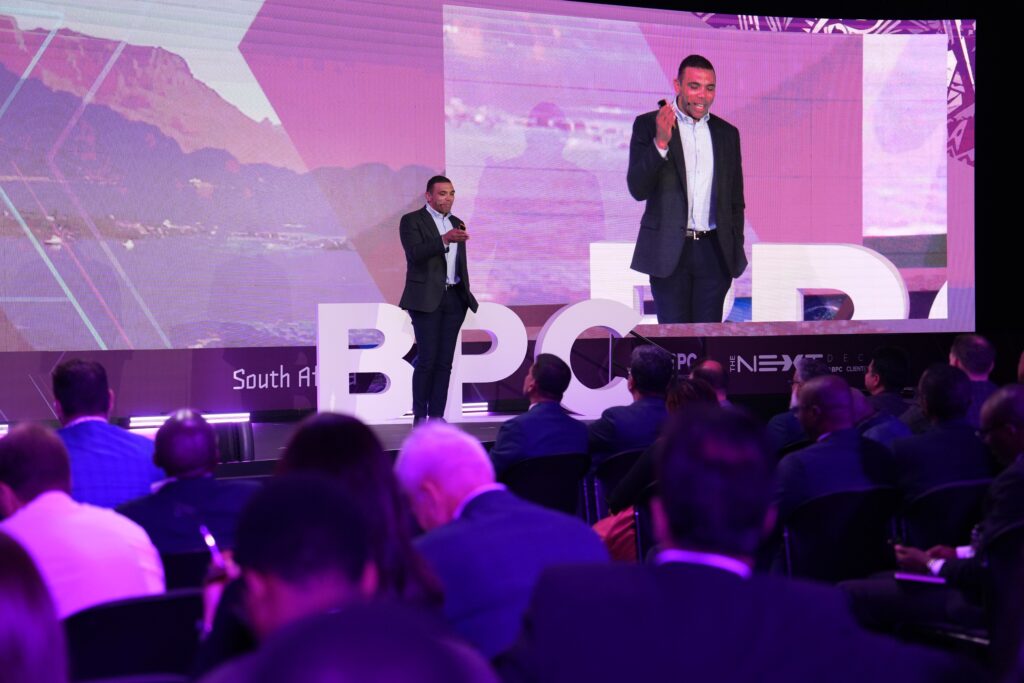
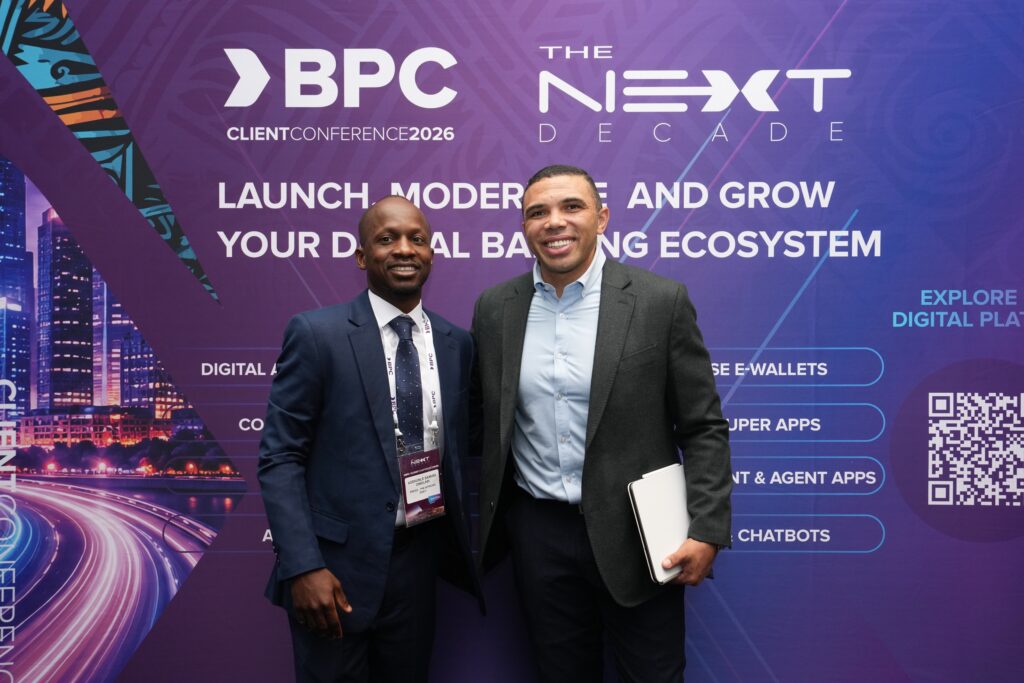
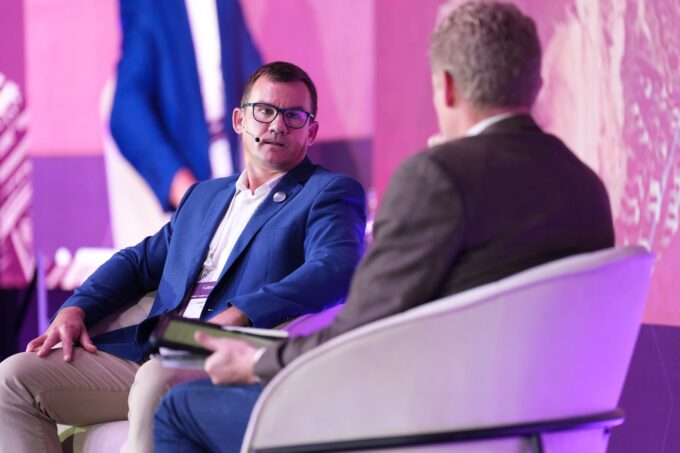
Habana, the former South African wing who is now co-founder and Chief Client Officer of Paymenow, a South African fintech platform offering earned wage access and financial wellness tools, addressed delegates at the BPC Client Conference at the Westin Hotel in Cape Town on Wednesday, 21 October 2026.
He thanked BPC for the invitation and joked that walking into a room filled with so much intellectual capital felt very different from a rugby change room.
From Manchester United dreams to Ellis Park
Born in 1983 and named after Manchester United players Bryan Robson and Gary Bailey, Habana said he left primary school in 1995 hoping to become South Africa’s next export to the English Premier League.
That changed on 24 June 1995, when he watched the Springboks win the Rugby World Cup final at Ellis Park, with Nelson Mandela celebrating alongside the crowd and a Boeing 747 flying over the stadium. He described Mandela as a statesman who understood how sport could change minds and move the country forward at a deeply divided time, a year after South Africa’s first democratic elections, even though the Springbok jersey had long been a symbol of discrimination for most of the population.
The following year he played his first ever game of rugby, for the under 14 E side at King Edward VII School.
Habana told delegates that a boy playing first team school rugby in his final year has a 0.00058% chance of becoming a Springbok, and that since the first South African touring side in 1896, only 972 players have represented the country.
Eight years after that first game, he scored a try with his first touch of the ball on his Springbok debut in 2004. He went on to play 124 Tests and score a record 67 tries for South Africa, well ahead of the next best tally of 38. In 2007, the peak of his career, he won the Rugby World Cup and was named World Rugby Player of the Year.
He retired in 2018, recalling a saying that professional athletes die twice, once physically and once when they say goodbye to the sport they love.
Five non negotiables
Drawing on 15 to 20 years in a high performance environment, Habana listed what he called non negotiables for success in sport, business, arts or culture: discipline, sacrifice, a strong work ethic and commitment, and resilience and perseverance.
He challenged the idea of balance as a route to excellence. “If you’re going to be balanced, in my opinion, you can be average at most things,” he said, arguing that splitting attention equally across three areas of life leaves a person only partly dedicated to each.
The problem Paymenow set out to solve
Habana said he learnt the importance of resilience “the hard way” after co-founding Paymenow in 2019, inspired by a concept that was doing well in the United Kingdom and the United States.
He explained that millions of workers in South Africa and across Africa live on cash day to day, needing cash around 44 times a month just to travel to and from work on public transport, yet are paid only once a month. The most financially excluded, he said, were also the most preyed upon by loan sharks and unsecured lenders, trapped in cycles of short term debt.
Paymenow went live in January 2020, started by four founders working from a garage, with no idea that Covid would arrive two and a half months later. He noted that only one in 20 startups survive, a reality the team had to face head on.
The company built its model around incentivising financial literacy, which he compared to what Vitality does for physical health, selling employers on improving workers’ financial decision making and moving staff from a need for debt to a saving mindset.
In March 2020, the platform processed 61 transactions worth about R18,000. By September 2026, Habana said, it was processing more than 1.6 million transactions worth about R317 million. The company has since gone cross border into Namibia and Zambia, where he said it had to learn how people actually transact, including through their mobile phones, and how interoperability works in each market.
Collaboration and the pace of change
Looking at the delegates BPC had gathered, Habana said his team sport background taught him that going it alone gets you far but takes much longer, while learning collaboratively from the mistakes of others lets organisations move at the speed demanded by AI and other technological advances.
He recalled waiting as a child for the hoverboard from Back to the Future, and pointed to Elon Musk’s unveiling of a flying car a week earlier as proof of how quickly the world is changing, joking that some African taxi drivers would not do well behind the wheel of a Tesla Roadster.
He said South Africa’s four big banks won trust early but remain heavily legacy driven and have been slower to digitise. “If you’re not agile enough to move forward into operability with other organizations, other platforms, you just get left in the past,” he said.
On fraud prevention, Habana described AI as a frightening development because of models doing things people do not fully understand, and said proven technology platforms act as a defensive line that helps institutions earn trust. He likened it to missing a tackle in rugby, where one individual error can cost the whole team.
He told delegates that experience wins, noting that the most experienced squad lifted the Rugby World Cup in 2007, 2011, 2015, 2019 and 2023. At the same time, he said, organisations must be willing to fail. “If you’re going to fail, fail fast, but learn faster,” he said.
Reflecting on his own transition, he admitted that eight years ago he did not know how to build a PowerPoint presentation or a budget spreadsheet. “In the next decade, no one’s going to wait for forward momentum,” he said.
He closed his address with advice from 2007 World Cup winning captain John Smit, who asked the team once or twice a week whether the person looking back at them in the mirror each night was “an improved version of the person you looked at the day before.”
Rivals, slumps and selection
In a question and answer session that followed, Habana said he was grateful never to have faced Jonah Lomu, whose record he equalled at the 2007 World Cup in France. His biggest frustration, he said, was All Blacks captain Richie McCaw, who led New Zealand to back to back titles in 2011 and 2015 and whose name topped every Monday video analysis session. While paying respect to current Springbok captain Siya Kolisi as an inspirational leader, Habana described McCaw as the greatest complete player he came up against.
Asked about a try drought during 2010 and 2011, he called it the toughest period of his career, saying he was dealing with personal matters he could not share publicly and had let earlier success inflate his arrogance. He credited a circle of honest people around him, and a lesson from his Bulls coach during the 2007 Super Rugby title run: “if you want to be number one, train like you’re number two.”
He recalled telling then Springbok coach Peter de Villiers that he did not think he should play one weekend. “Well, Firstly, that’s not your decision to make,” the coach replied, adding that it would be easier to start him and replace him before half time than to drop him and bring him back. Habana said the best coach he ever played under “was the one that selected me.”
Handling defeat
Habana admitted he was a terrible loser, recalling a 49 nil defeat to Australia in 2006 and the shock loss to Japan in the opening game of the 2015 World Cup. He said he learnt only later in his career to focus on the process behind a loss rather than the emotion of it.
He described breaking down in tears after announcing his retirement in 2018 while living in the south of France, only to hear his young son laughing with his pregnant wife as he opened the front door. In that moment, he said, he realised rugby was only a small part of his life.
Learning to lead in business
On moving from sport into business, Habana said he had to unlearn the habits of a male change room, where showing emotion could be read as weakness, to lead a team made up mostly of women and to communicate in new ways.
“I don’t believe AI is going to be the reason people start losing their jobs. I believe people not knowing or learning how to use AI is going to be the reason people start losing their jobs,” he said. He also admitted he is probably the worst salesman in his own organisation, though perhaps the best at getting a foot in the door.
Asked how leaders should support underperforming team members, he said he dislikes companies putting their values on a wall, because leaders must understand individual circumstances. In a company of about 80 people, he said, some staff rely on public transport and survive on R300 to R500 a day, facing very different pressures from executives. He told how, in Paymenow’s first year, he wanted to dismiss an employee who was disrespectful to colleagues, only for the company’s attorney to send him an eight page disciplinary process. The episode taught him to accept that he did not know everything and to bring in specialists.
What will separate real fintech innovators
Asked by The African Daily what will distinguish fintech businesses that genuinely solve financial problems from those that simply digitise existing services, Habana said success comes down to people who understand what is happening “at the coal face” rather than building products based on their own experiences.
He said the fintechs that succeed are those willing to fail fast, that build for scale from the start and that execute quickly with a value proposition solving a real use case. He criticised the money raised and lost on inflated valuations driven by storytelling, and said agility would also set winners apart from legacy institutions.
Luck, cheetahs and computer science
Asked how he spots the right opportunities, Habana cited golfer Gary Player, who turns 91 this year, and his belief that the harder you work, the luckier you get. Habana added that you do not always decide your own luck, since he trained hard but never selected himself, and said recognising and then acting on opportunity is a skill in itself.
On his famous 2007 race against a cheetah, he said the stunt was done to raise awareness of the fight to save the species. He revealed that he was never actually South Africa’s fastest player, naming Tonderai Chavhanga as quicker by a few milliseconds, and said the greatest privilege sport gave him was the ability to give people hope.
Explaining why he retired when he did, Habana said his body told him, after he missed his final season with a knee problem. He said he was due for an MRI scan after the conference. He spent five years playing in France before the move into business.
His shift into fintech, he said, was rooted in a long love of technology, having studied computer science at university before rugby took him in another direction. He said Paymenow had taken his impact further than rugby ever did, recalling that people have told him the platform saved their lives.
Purpose before profit
Session host Colin praised Paymenow for offering many services to blue collar workers at no extra charge and for a tiered bronze and silver system that limits how much workers can draw down on early wage payments until they complete financial learning, decisions he said came at a cost despite private equity backing.
Habana said the company’s key advantage was building technology 10 times better and faster, but also 10 to 15 times cheaper, so that it could scale across corporate South Africa. He warned of a “race to zero” in payments pricing and said purpose driven companies such as Patagonia tend to win.
Paymenow’s goal over the next 10 years, he said, is to free 10 million employees from the debt trap using financial technology, an ambition he described as audacious.
Closing the session, Colin joked with delegates that anyone wanting to take the Paymenow model to their own market should call him, before describing Habana as the most determined, disciplined and focused person he had ever met.











Leave a comment