


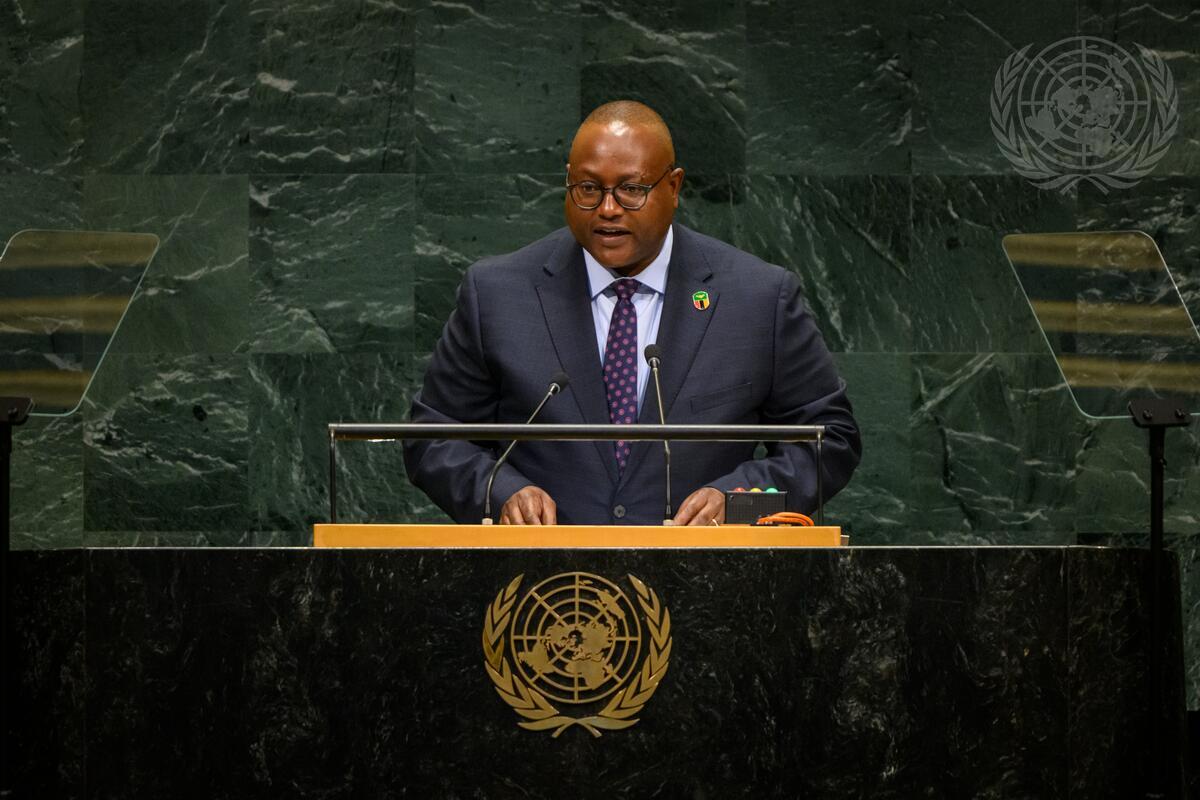
NEW YORK, 26 September 2026 — Zambia has presented itself as a peaceful and stable country open to investment and international partnerships, while calling for stronger climate finance, greater development financing and reforms to global institutions.
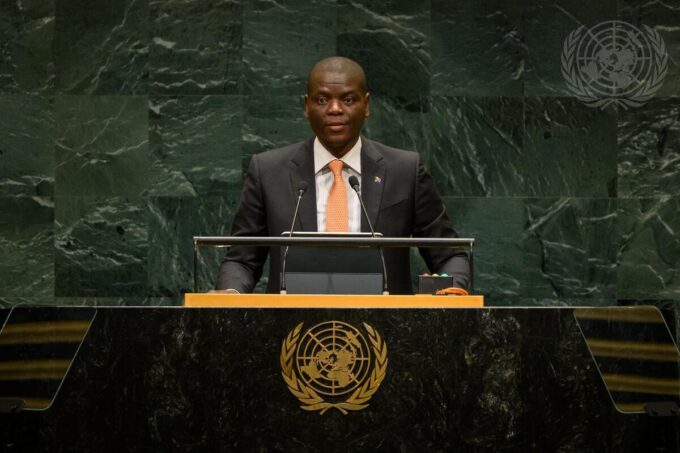
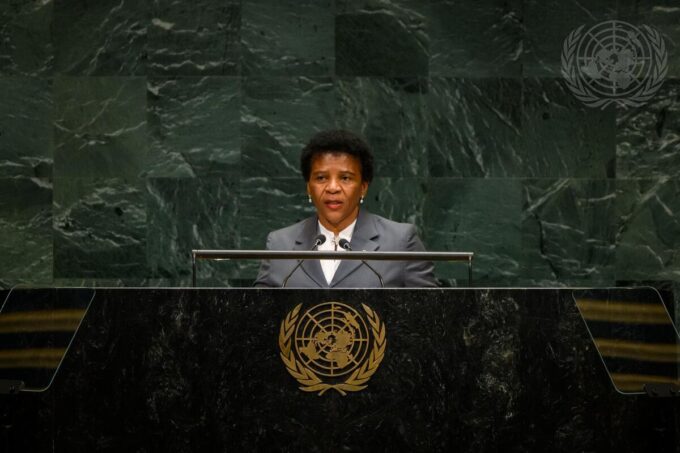
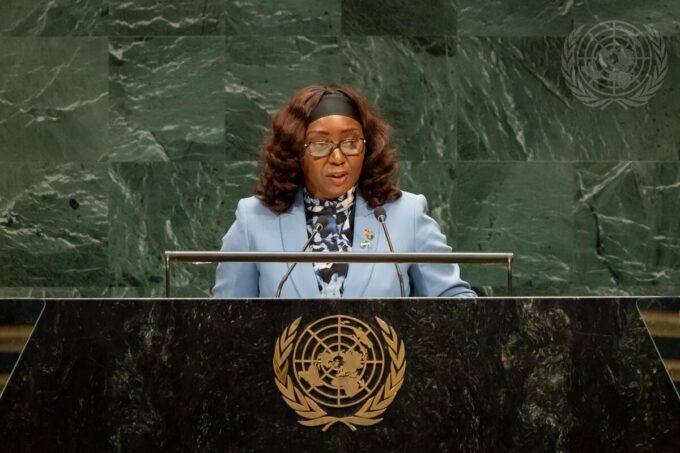
Zambia’s Minister for Foreign Affairs and International Cooperation, Mulambo Hamakuni Haimbe, made the remarks while addressing the 81st session of the United Nations General Assembly in New York.
Haimbe said Zambia’s recent general elections demonstrated that political differences could be managed through constitutional and legal institutions without destabilising the country.
“Our democratic process should never be mistaken for conflict or instability,” he said.
He said Zambia remained committed to peace, democracy and constitutional governance and had taken steps to ensure political disputes did not degenerate into violence, armed mobilisation, insurgency or militia activity.
The minister invited cooperating partners, development institutions, investors and the private sector to deepen their engagement with Zambia.
“Our message is clear Zambia is at peace. Zambia is open for partnership and Zambia is ready to grow,” Haimbe said.
Investment and economic transformation
Haimbe said Zambia was seeking partnerships, investment, innovation, technology, skills and sustained development cooperation to unlock its economic potential.
The country is positioning itself as a destination for investment and trade in mining, critical minerals, agriculture, agro processing, manufacturing, energy infrastructure, tourism and digital services.
The government wants to move beyond exporting raw materials and primary commodities towards value addition, industrialisation, job creation and technology transfer.
“We welcome investments that creates jobs, develops skills and builds sustainable value chains,” he said.
He also invited investors to produce, trade and grow with Zambia as the country seeks to expand its development partnerships.
Climate finance
Climate change was another major focus of Zambia’s address, with Haimbe saying droughts, floods and changing weather patterns were already affecting agriculture, food security, water availability, energy generation and livelihoods.
He said Zambia and other developing countries could not finance the climate transition alone and called for greater international support.
“Those who have contributed least to climate change must not be left to bear its greatest costs,” he said.
Zambia called for predictable, accessible and affordable climate finance, technology transfers and increased investment in adaptation and resilience.
The country said its farmers needed climate resilient agriculture, while communities and cities required resilient infrastructure. It also called for diversified energy systems and greater protection of water sources, forests and ecosystems.
Water security was identified as an important part of climate resilience and sustainable development.
Zambia is participating in preparations for the 2026 United Nations Water Conference and, together with Finland, is co chairing the Dialogue on Water for Cooperation initiative, which focuses on transboundary and international water cooperation.
Africa’s young population
Haimbe described Africa’s youthful population as a major economic opportunity, noting demographic projections that one in every four young people globally will be African by 2050.
He said young Africans needed quality education, relevant skills, access to technology, entrepreneurship opportunities and decent employment.
Zambia reported increased domestic budget allocations to health, rising from about 7 per cent to more than 10 per cent, which it said had enabled the recruitment of health workers, expansion and modernisation of health infrastructure and improved availability of essential medical supplies.
The country also called for faster progress on the Pathogen Access and Benefit Sharing Annex under the World Health Organization Pandemic Agreement, alongside stronger access to technology and preparedness capabilities for future health threats.
Zambia is also working to build capacity for local vaccine manufacturing.
Education and women’s empowerment
The Zambian government said it had expanded access to education through the Free Education Act and strengthened its school feeding programme.
Haimbe said the measures were intended to enable more children to remain in school without school fees or hunger becoming barriers to learning.
Zambia is also pursuing greater gender equality and economic empowerment for women and girls through education, skills development, entrepreneurship, financial inclusion and leadership opportunities.
The minister said Parliament now provides for proportional representation of women, young people and persons with disabilities.
Zambia is also working to reduce child and early forced marriage by keeping girls in school and addressing social and economic factors that increase their vulnerability.
Haimbe said child marriage prevalence had fallen from 29 per cent to 23.9 per cent over four years, which he attributed to legal reforms, free education, school entry and re entry policies, multisectoral support programmes and economic interventions including the expanded Constituency Development Fund.
Financing the SDGs
Zambia said progress towards the Sustainable Development Goals remained uneven because developing countries continued to face major financing constraints.
Haimbe said high borrowing costs, limited fiscal space and debt servicing obligations were restricting Zambia’s ability to invest in climate action, healthcare, education, infrastructure and other development priorities.
“Sustainable development cannot be achieved without addressing the persistent financing gap facing developing countries,” he said.
Zambia called for greater access to affordable, long term development finance, increased climate finance, particularly for adaptation and resilience, and innovative financing mechanisms capable of mobilising private investment.
The minister said development should ultimately be measured through practical improvements in people’s lives, including access to quality education, healthcare, water, sanitation, electricity, roads, markets and finance for small businesses.
Call for UN reform
Zambia also backed reform of the United Nations, particularly the Security Council, including permanent African representation.
Haimbe said UN institutions needed to reflect current geopolitical, economic and demographic realities and supported reforms that would give developing countries a greater voice in global economic and financial governance.
“Zambia therefore supports meaningful UN reform, particularly of the Security Council, including permanent African representation in line with the consensus and the sector declaration,” he said.
Zambia also welcomed the UN 80 initiative as an opportunity to strengthen multilateralism and build a more effective, efficient and equitable United Nations.
The country reiterated its support for dialogue, diplomacy and peaceful dispute resolution under the UN Charter and international law, as well as African led solutions and stronger cooperation between the United Nations, African Union and regional organisations on conflict prevention, peacebuilding and collective security.
Haimbe said Zambia remained committed to peace, democracy, multilateralism and sustainable development, arguing that restoring trust required delivery, sustainable development required genuine international partnerships and managing transformation required inclusion.



Leave a comment