


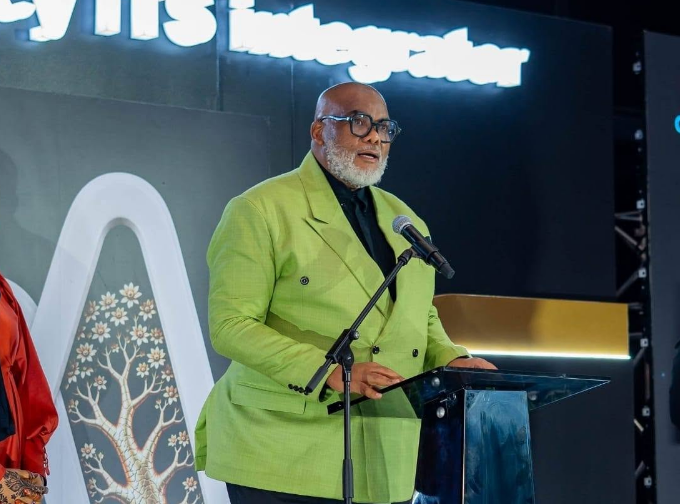
LAGOS, Nigeria: South Africa’s outgoing Consul-General in Lagos, Professor Bobby J. Moroe, has described his nine-year diplomatic assignment in Nigeria as the most demanding yet rewarding period of his professional life, saying he will return home with lasting friendships, valuable experiences and a deeper appreciation of the relationship between the two African countries.
Moroe, whose diplomatic tour of duty ends on 16 December 2026, made the remarks in an extensive interview with The African Daily, reflecting on his time in Nigeria, the achievements of his assignment, the challenges he encountered and the opportunities available to strengthen cooperation between Africa’s two largest economies.
Describing his experience, Moroe said Nigeria had become much more than a country where he was posted, recalling the warmth, hospitality and personal relationships that shaped his nine years in the West African nation.
“Professionally, it was the most demanding yet most rewarding assignment of my life. Personally, it was a love story I will never forget to remember,” he said.
Moroe recalled arriving in Nigeria with a suitcase and a diplomatic mission but preparing to leave with a deep sense of gratitude and personal attachment to the country.
“I came to Nigeria with a suitcase and a mission. I am returning home with a full heart and gratitude. Nigeria did not just host me, it held me in its laughter, in its prayers, in its homes.”
He said his understanding of diplomacy changed considerably during his assignment, particularly through engagements beyond government offices and formal diplomatic meetings.
“Professionally, I learned that diplomacy is not done only in boardrooms. It is done in markets, in churches, in mosques, in universities, and around a table with pepper soup,” he said.
The outgoing diplomat also spoke about the personal relationships he developed, including the affectionate names Nigerians gave him during his stay. While some children called him “Uncle Bobby”, others referred to him as “Oga on Top” and “Oga Yellow”.
He said the experience had made him a better man, father and African.
Trade, investment and consular services
Reflecting on his achievements as Consul-General, Moroe said his approach to measuring diplomatic success extended beyond the number of agreements signed, placing considerable importance on relationships and partnerships established during his tenure.
He identified the strengthening of trade and investment discussions between South Africa and Nigeria as one of the major accomplishments of his assignment.
According to him, the diplomatic mission worked to bring businesses from both countries together, encouraging them to explore partnerships rather than view one another solely as competitors.
He also pointed to efforts to strengthen relations with the Nigeria-South Africa Chamber of Commerce, describing the organisation as an important partner in advancing the strategic objectives of bilateral cooperation.
Another area he identified was consular assistance, particularly efforts to ensure that South Africans living in Nigeria received protection and that Nigerians seeking legitimate business, educational and travel opportunities in South Africa were treated with dignity.
Moroe also raised concerns about the treatment of some South African women and children living in Nigeria, calling for stronger cooperation between the two governments to address cases involving alleged abuse and violations of their rights.
“There is also an urgent need for us to protect South African women and children who suffer the most dehumanising abuse by their partners,” he said.
He cited the alleged confiscation of passports, evictions from family homes, unlawful custody of children and physical assaults as serious concerns requiring attention from both governments.
Moroe further identified people-to-people engagement as one of the most important aspects of his diplomatic work, particularly through cultural exchanges, education, youth entrepreneurship and community initiatives.
He singled out the annual South Africa Week celebrations, held in April to commemorate the country’s freedom, as the mission’s flagship programme for promoting cultural understanding and closer relations between the two populations.
“If one South African business now trusts a Nigerian partner, and one Nigerian student now sees South Africa as a second home, then my work was not in vain,” he said.
From diplomatic formality to closer relations
Assessing the evolution of relations between South Africa and Nigeria during his nine years in Lagos, Moroe described a shift towards more direct engagement and stronger connections between citizens, businesses and institutions.
“It has evolved from formality to family,” he said.
He recalled that bilateral relations were frequently discussed through economic indicators and official communiques when he arrived, while conversations about visa arrangements were often difficult to initiate.
He believes the relationship has since developed towards greater recognition of the practical benefits of easier movement, business partnerships and cultural exchanges.
Moroe pointed to opportunities involving joint ventures, music and film production, partnerships between financial technology entrepreneurs in Lagos and Johannesburg, and the expansion of Nigerian banks in South Africa alongside South African companies operating in Nigeria.
He said diplomatic engagement had gradually moved from suspicion towards sustained dialogue, while trade relations were increasingly creating opportunities for cooperation between businesses.
“In diplomacy, we moved from suspicion to steady dialogue. In trade, from competition to complementarity. In people-to-people engagement, from stereotypes to genuine friendship.”
However, he cautioned against allowing political disagreements and public controversies to undermine the progress made between the two countries.
“We still have work to do, but the posture has changed. We are learning to cuddle, not to confront. To embrace, not to exclude. There is no time for populism or street diplomacy.”
Nigeria’s cultural diversity left lasting memories
Among the experiences he said would remain with him were engagements with young Nigerian entrepreneurs, cultural festivals and opportunities to interact with communities across the country.
Moroe recalled conversations with young businesspeople who initially had little more than an idea and a laptop but subsequently developed businesses capable of employing other people.
He also mentioned the Calabar Carnival and the Durbar festival in Kano as memorable experiences that allowed him to appreciate Nigeria’s cultural diversity.
His participation in the Africa International Film Festival (AFRIFF), CANNEX, Art X Lagos and the Lagos International Theatre Festival also provided opportunities to promote social cohesion through cultural engagement.
Beyond official events, he recalled the personal moments that helped him develop a strong attachment to Nigeria, including invitations to people’s homes and the hospitality extended to him by ordinary Nigerians.
“And the simplest moments: being invited into a home, offered jollof, and told, ‘Consul-General, you are one of us now.’ That is the highest honour a diplomat can receive. That is what Nigeria gave me.”
He said both joyful occasions and difficult moments had shaped his experience, adding that he would remember the people who stood with him during periods of celebration and grief.
Dialogue over retaliation
Moroe acknowledged that his diplomatic assignment was not without difficulties, recalling periods of tension, misunderstandings and negative public statements that threatened to strain relations between the two countries.
He said he relied on dialogue, patience and a commitment to reconciliation when dealing with difficult situations.
“I navigated them with one principle: Love for humanity never fails. That is the path I chose when it was easy to choose others.”
According to him, responding to provocation with retaliation could deepen divisions, while listening and demonstrating respect could help resolve disagreements.
“It is easy to retaliate. It is easy to be angry. It is harder, and better, to reconcile. I chose dialogue over retaliation, understanding over suspicion, and patience over provocation.”
He described listening as an essential part of diplomatic work, arguing that many disagreements could be resolved when people felt their concerns had been heard.
“Diplomacy is 90% listening and 10% speaking,” he said.
Ubuntu at the centre of his diplomatic philosophy
The outgoing Consul-General also explained how the African philosophy of Ubuntu influenced his approach to diplomatic service in Nigeria.
Referring to the expression “I am because you are”, Moroe said the philosophy shaped his understanding of his responsibilities and the relationships he sought to build with Nigerians and South Africans.
“Ubuntu is not a slogan for me. It is a way of life.”
He said his position as Consul-General was meaningful because of the people who placed their trust in him, adding that he did not regard Nigerians as outsiders or reserve his engagement exclusively for South Africans.
“It meant I did not see Nigerians as ‘foreigners’ and South Africans as ‘my people.’ I saw all of us as one human family.”
He explained that practising Ubuntu involved remaining accessible, responding to calls and being present during difficult periods rather than limiting diplomatic engagement to ceremonial occasions.
“Ubuntu is reconciliation in action. It says: Your dignity is my dignity. Your pain is my pain. Your success is my success.”
Diaspora communities as diplomatic bridges
Moroe described South Africans living in Nigeria and Nigerians residing in South Africa as central to maintaining relations between the two countries.
He said South Africans working across business, academia, religious institutions, culture and civil society had contributed to the country’s presence in Nigeria and supported the work of the diplomatic mission.
He also recognised the contribution of Nigerians living in South Africa and other parts of West Africa, particularly traders, students, artists, professionals and entrepreneurs who maintain connections across national borders.
“They are the heartbeat of this relationship,” he said.
According to Moroe, diplomatic agreements alone cannot establish the depth of cooperation needed between African countries without active participation from their citizens.
“Governments sign agreements, but communities build friendships.”
He cited marriages between South Africans and Nigerians, business partnerships, shared religious activities and families raising children together as examples of how relationships between ordinary citizens contribute to diplomatic cooperation.
Untapped opportunities in trade and investment
Looking towards the future, Moroe said considerable opportunities remained available for South Africa and Nigeria to expand their economic cooperation, particularly in manufacturing, renewable energy, tourism and technology.
In trade, he called for a shift away from dependence on raw material exports towards value-added manufacturing, identifying agro-processing, pharmaceuticals, automotive components and creative products as areas with potential for joint development.
On investment, he identified green energy, solar mini-grids, cold-chain logistics and affordable housing as sectors where businesses from both countries could establish partnerships.
He also proposed developing a tourism circuit connecting Cape Town, Lagos, Calabar and Durban, arguing that the countries could benefit from promoting their different attractions, cultures and heritage.
“Imagine a direct tourism circuit, Cape Town to Lagos to Calabar to Durban. Our beaches, our cultures, our heritage are complementary, not competitive.”
Technology was another area he identified as offering significant opportunities, particularly in financial technology, agricultural technology, health technology and education technology.
Moroe said entrepreneurs from both countries could combine their expertise to develop products and services for markets across Africa.
“A Nigerian coder and a South African designer can build a product for the whole continent.”
He called for the African Continental Free Trade Area (AfCFTA) to facilitate these partnerships by making cross-border business operations easier, less expensive and faster.
“The future is not South Africa or Nigeria. The future is South Africa and Nigeria, together, for Africa.”
Advice to African diplomats
As he prepares to conclude his assignment, Moroe offered three key recommendations to his successor and other African diplomats.
His first recommendation was for diplomats to develop genuine relationships with the people of their host countries rather than concentrating exclusively on the official responsibilities associated with their postings.
He encouraged diplomats to learn local languages, experience local cuisine and participate in important community occasions, including weddings and funerals.
“First, love the people, not just the posting. Learn the languages. Eat the food. Attend the weddings and the funerals. Be present.”
His second recommendation was to establish relationships with government officials, business leaders, journalists, young people and civil society organisations before disagreements or diplomatic crises emerge.
He said strong relationships built during peaceful periods could prove essential when tensions arise.
“Trust is built in peacetime and spent in crisis.”
His third recommendation was for African diplomats to pursue reconciliation rather than retaliation when confronted with criticism or provocation.
He urged them to respond with dignity, truth and compassion rather than allowing negative statements to determine their approach to diplomatic engagement.
“And always remember: You are not just representing a government. You are representing a people.”
A legacy of friendship and African cooperation
Asked what he would remember most about Nigeria and the legacy he hoped to leave, Moroe spoke about the country’s warmth, resilience, religious faith, cultural expression and the people who supported him throughout his assignment.
He recalled Lekki Bridge at sunrise, the Durbar festival, the laughter of colleagues and the homes that welcomed him during his stay.
He said he did not want his diplomatic legacy to be defined by the title he held but by the relationships he helped establish between South Africans and Nigerians.
“My legacy? I do not want to be remembered for a title. I want to be remembered as a bridge-builder. As someone who believed that South Africa and Nigeria could cuddle, could embrace, and in that embrace, lift Africa.”
He said he would consider his assignment successful if people remembered him as someone who arrived as a diplomat but became part of the Nigerian community.
“If people say, ‘He came as a diplomat and left as family,’ that will be enough.”
On the broader Pan-African agenda, Moroe identified the need for stronger political and diplomatic relationships, greater investment in young people and a renewed commitment to African unity.
He said South Africa and Nigeria needed to create more opportunities for young entrepreneurs, students and creative professionals to work across borders.
He called for practical visa arrangements, accessible financing and platforms that connect young people in different African countries, arguing that AfCFTA should deliver tangible opportunities for emerging businesses rather than primarily benefit large corporations.
Moroe also called for a Pan-African identity rooted in mutual trust and relationships, saying cooperation should extend beyond trade agreements and government policies.
“Trade is important. But trust is more important. Let us trade, travel, marry, learn, and build together.”
He maintained that Africa’s future would depend significantly on how countries such as South Africa and Nigeria manage their relationships and work together to advance continental development.
“I still believe Africa is the continent of the future. And the future lies in how South Africa and Nigeria cuddle. If we get that right, the whole continent will follow.”
Concluding his reflections, Moroe offered a personal tribute to the country that had hosted him for nearly a decade.
“The world is round, wherever we go, whatever we do, we shall meet again.”
Ode to Nigeria.







Leave a comment