


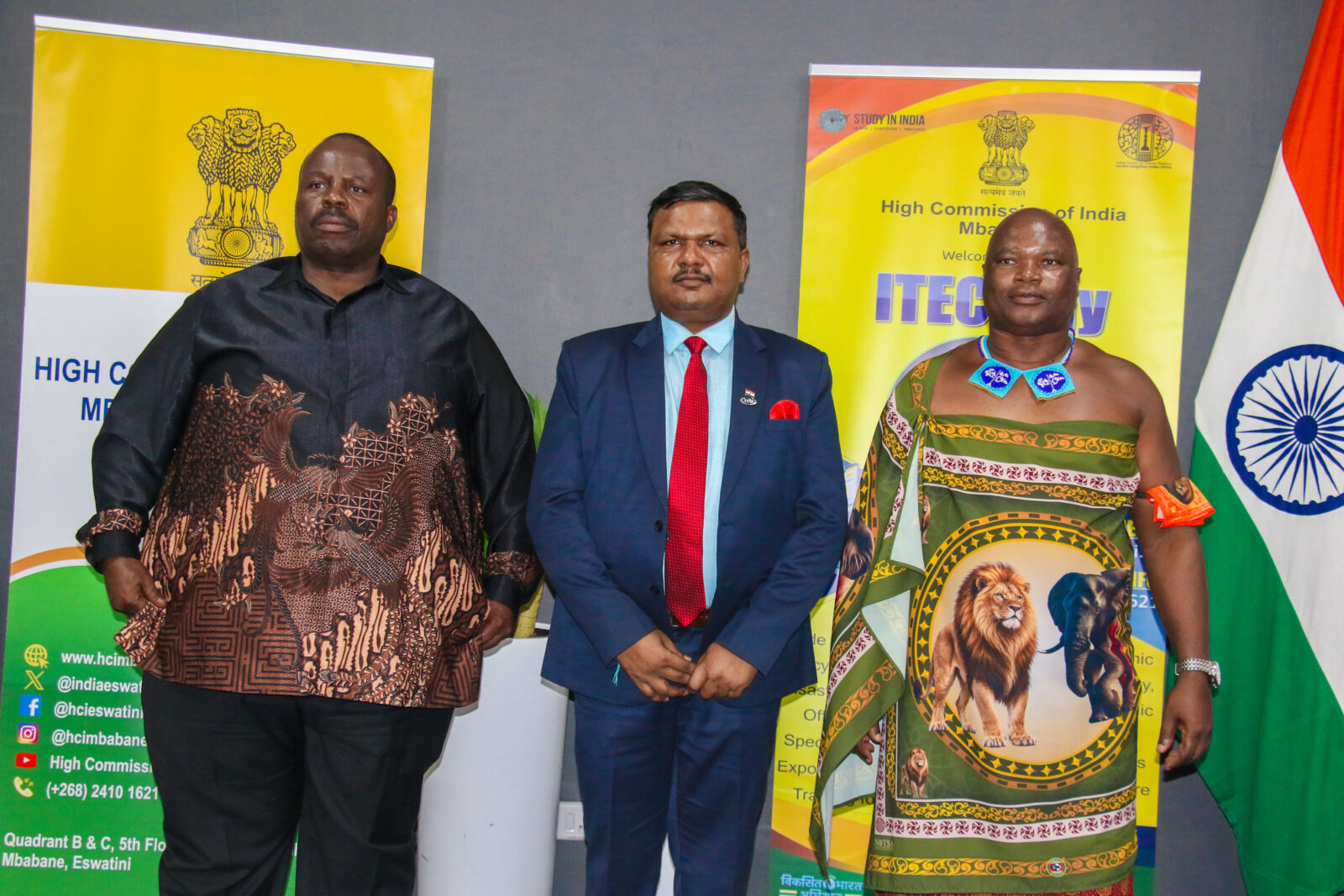
MBABANE: India has increased the number of annual training opportunities available to emaSwati under its Indian Technical and Economic Cooperation (ITEC) programme, with civilian training slots rising to 70 and defence allocations reaching 36 as the two countries deepen cooperation in skills development and institutional capacity building.
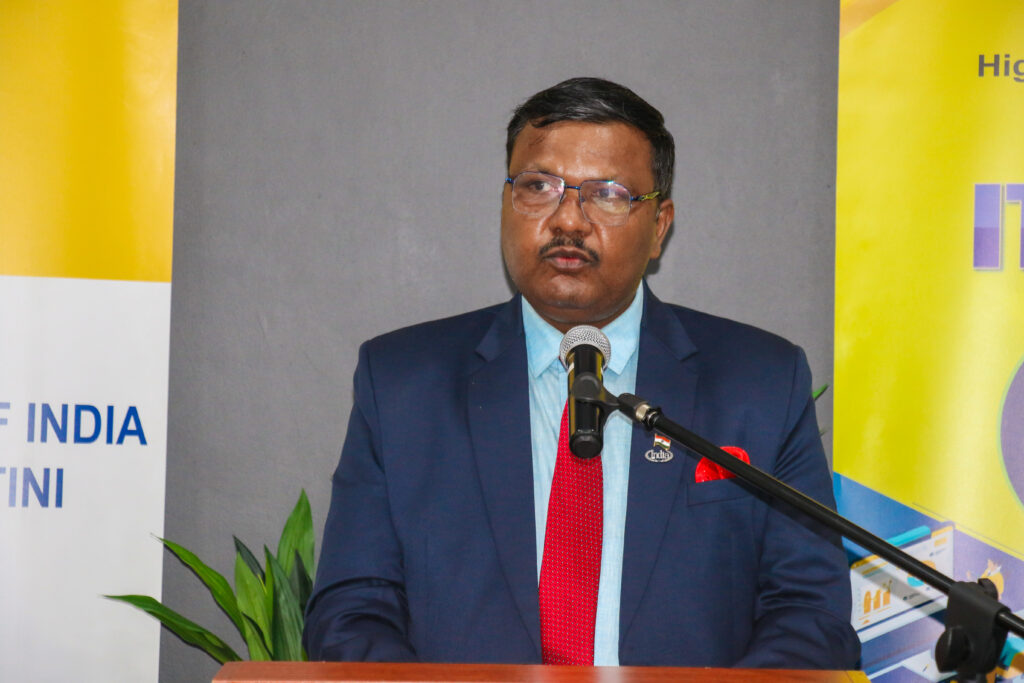
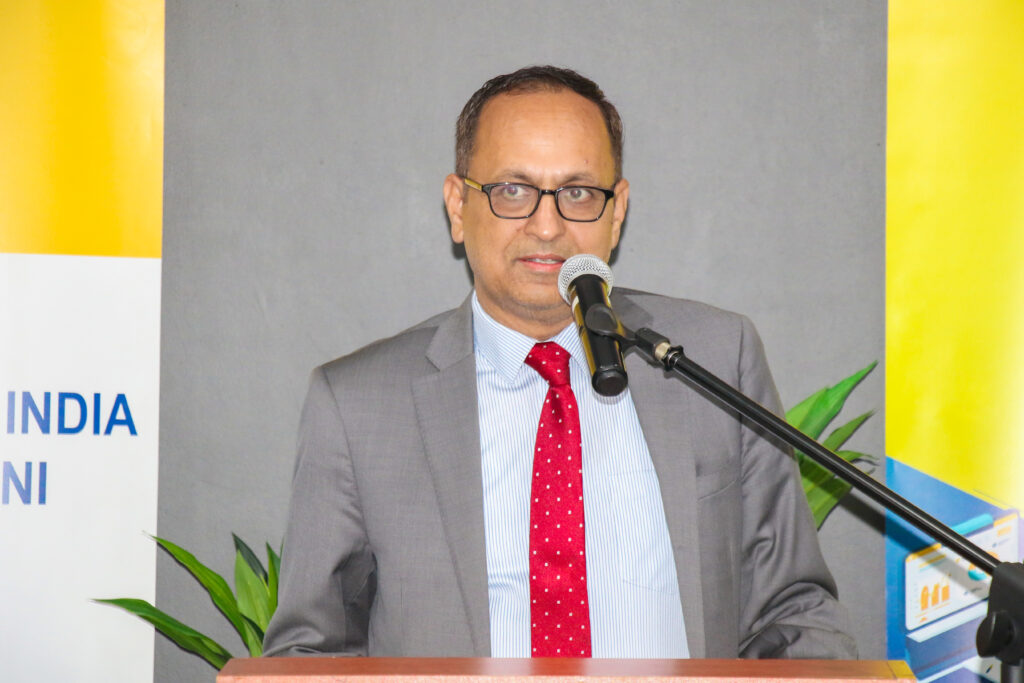
The announcement was made by India’s High Commissioner to Eswatini, H.E. Mr Anand Prakash, during the celebration of the 62nd ITEC Day, held in Mbabane on 20 November 2026. The event was attended by Public Service Minister Mabulala Maseko, Umbutfo Eswatini Defence Force (UEDF) Commander General Moses Mashikilisane Fakudze, senior representatives of the Royal Eswatini Police Service, His Majesty’s Correctional Services and various government ministries.
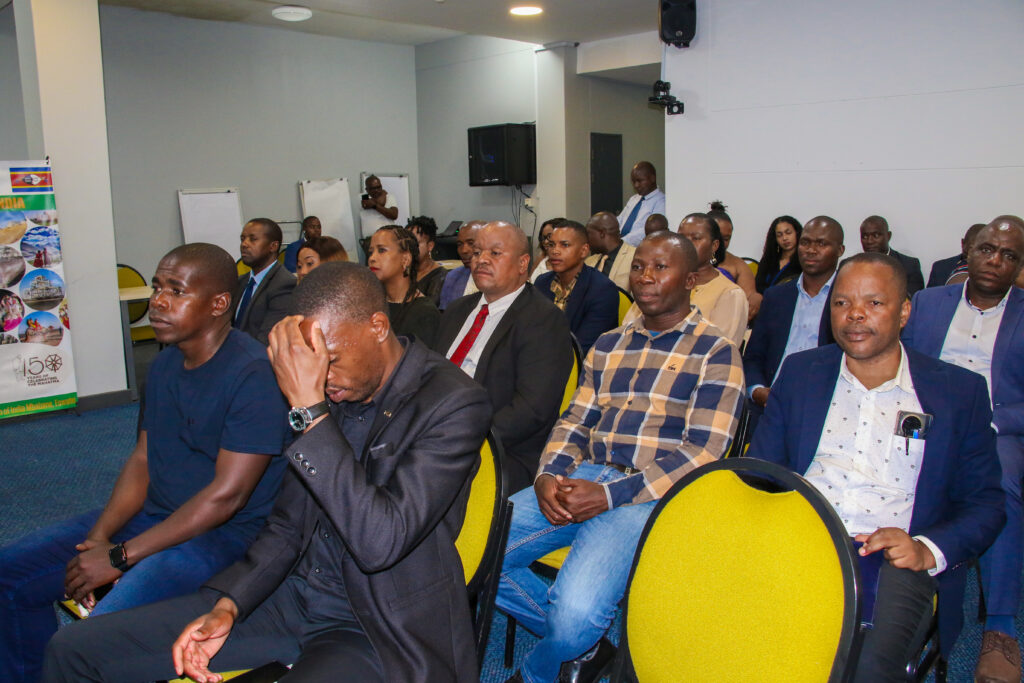
The annual celebration recognises the contribution of the ITEC programme to international development cooperation and provides an opportunity to bring together former beneficiaries and officials who have participated in India’s technical training initiatives.
Addressing guests, the Indian High Commissioner described the programme as an important part of relations between India and Eswatini, built around shared development priorities, knowledge exchange and cooperation among countries of the Global South.
“Today, we celebrate not only a program, but a living partnership between India and Eswatini, which is founded on mutual respect, shared development priorities, and the conviction that the people of the Global South can learn from, support, and empower one another,” the High Commissioner said.
The ITEC programme was launched on 15 September 1964 by the Government of India through its Ministry of External Affairs. Indian diplomatic missions around the world commemorate the occasion annually to recognise programme alumni, promote capacity-building partnerships and strengthen cooperation with participating countries.
Over the past six decades, ITEC has grown into one of India’s major international development cooperation initiatives, reaching approximately 160 partner countries.

The programme currently provides between 10,000 and 12,000 training opportunities annually, covering nearly 400 civilian and defence courses delivered through more than 100 institutions.
Between 2014/15 and 2026, a total of 3,644 courses were organised, offering approximately 132,000 training places. Around 85,000 participants completed the programmes during this period, including 33,000 from Africa and 32,000 women.
Training is delivered through leading Indian universities, professional academies and research institutions, covering disciplines such as information technology, banking and finance, engineering, entrepreneurship, management, leadership, public administration, auditing, renewable energy, environmental protection, climate change, agriculture and healthcare.
The High Commissioner outlined several features that distinguish ITEC from other international training initiatives.
The programme is demand-driven, allowing participating countries to identify their priority sectors and nominate candidates according to their national development objectives. It also operates without conditionalities attached to the training opportunities.
For successful candidates, the Government of India provides fully funded support covering international air travel, tuition fees, accommodation and living allowances. This arrangement applies to both civilian and defence training programmes.
Apart from traditional professional disciplines, ITEC has expanded its offerings to include emerging fields such as artificial intelligence, cybersecurity and other areas of technological development.
Its activities also extend beyond classroom-based training in India. At the request of partner countries, the programme can deploy Indian technical experts, conduct feasibility studies and consultancy assignments, organise study tours, provide equipment and support humanitarian and disaster relief initiatives.
India has also introduced alternative training arrangements, including e-ITEC, ITEC-Onsite and executive courses, to make professional development more accessible and responsive to the needs of participating countries.
More than 700 emaSwati trained
The High Commissioner said ITEC had become one of the most significant components of India-Eswatini relations, particularly through its contribution to professional development and people-to-people exchanges.
Since India established its resident diplomatic mission in Mbabane in 2019, more than 700 emaSwati from government, semi-government and private-sector institutions have received training under the programme.
According to the High Commissioner, the beneficiaries have returned with new professional skills, exposure to different institutional practices and networks that can contribute to the work of government ministries, public agencies and private enterprises.
The number of civilian training opportunities allocated to Eswatini has increased steadily over the years. The annual allocation rose from 30 to 50 places in 2018 before reaching 70 from 2026.
Defence training opportunities have also expanded, increasing from 15 in the 2024/25 financial year to 20 in the previous year and 36 in 2026.
The High Commissioner further disclosed that the utilisation of ITEC opportunities by emaSwati had doubled over the past two years.
Beneficiaries include officers from the Umbutfo Eswatini Defence Force, the Royal Eswatini Police Service, His Majesty’s Correctional Services and officials from almost all government ministries and departments.
Describing the growing number of trained professionals as an important achievement for both countries, the High Commissioner said the programme was helping Eswatini develop a skilled workforce capable of supporting national priorities.
“Every ITEC alumnus is a bridge between our peoples. I fondly describe them as the informal ‘ambassadors’ of India–Eswatini cooperation. They bring home an understanding of India and help keep our friendships alive in both countries,” the High Commissioner said.
The training has contributed to several areas of Eswatini’s development agenda, including public financial management, project management, telecommunications, sustainable development, information technology, banking, agriculture, entrepreneurship and public administration.
New areas for cooperation
Looking towards the future, the High Commissioner identified several opportunities for India and Eswatini to expand their cooperation through the ITEC framework, particularly as the Kingdom pursues digital transformation, youth employment, agro-processing, energy transition and public-sector modernisation.
Among the proposed areas for increased participation are artificial intelligence, data science and digital public infrastructure, which could support more efficient and citizen-centred public services.
Cybersecurity and digital forensics were also identified as important areas where specialised training could strengthen the protection of government institutions, citizens and critical national systems.
Renewable energy, particularly solar power, presents another opportunity for cooperation, given its potential contribution to Eswatini’s energy security and sustainable development objectives.
Agriculture, agro-processing, irrigation and rural entrepreneurship were also identified as priority areas where professional training and technical knowledge could support food security, agricultural productivity and rural livelihoods.
In healthcare, the two countries could expand training opportunities in pharmaceuticals, telemedicine and public health management to improve service delivery.
Other proposed areas include public finance, auditing, taxation, procurement and project management, alongside women’s empowerment, vocational education and skills development.
Tourism, cultural industries and small-business development were also identified as sectors where further cooperation could help create employment opportunities and diversify Eswatini’s economy.
The High Commissioner proposed developing specialised courses tailored to the operational requirements of specific Eswatini institutions, rather than relying exclusively on general training programmes.
India and Eswatini could also consider expanding ITEC-Onsite initiatives, which would allow larger groups of public officials and professionals to benefit from Indian expertise without having to travel to India.
With 70 civilian and 36 defence training places now available annually, the High Commissioner called for greater utilisation of the opportunities through early nominations, broader representation across institutions and regions, and improved coordination before participants depart for India.
High Commissioner calls on alumni to remain engaged
Addressing the Minister, government representatives and former programme participants, the High Commissioner said sustainable development depended on capable institutions and people equipped to lead them.
“Through ITEC, India remains committed to standing with Eswatini as a partner in capacity building, skill development, and sustainable development,” the High Commissioner said.
The High Commissioner also encouraged former beneficiaries to maintain their professional connections with India, share the knowledge gained through their training and mentor younger colleagues.
“You are the living proof of this partnership. Your knowledge, professionalism, and leadership multiply the value of every training programme,” the High Commissioner told the alumni.
The High Commissioner urged them to identify additional areas where India and Eswatini could work together, while applying their acquired skills to the country’s development.
“Your success here is India’s pride and Eswatini’s gain,” the High Commissioner said.












Leave a comment