


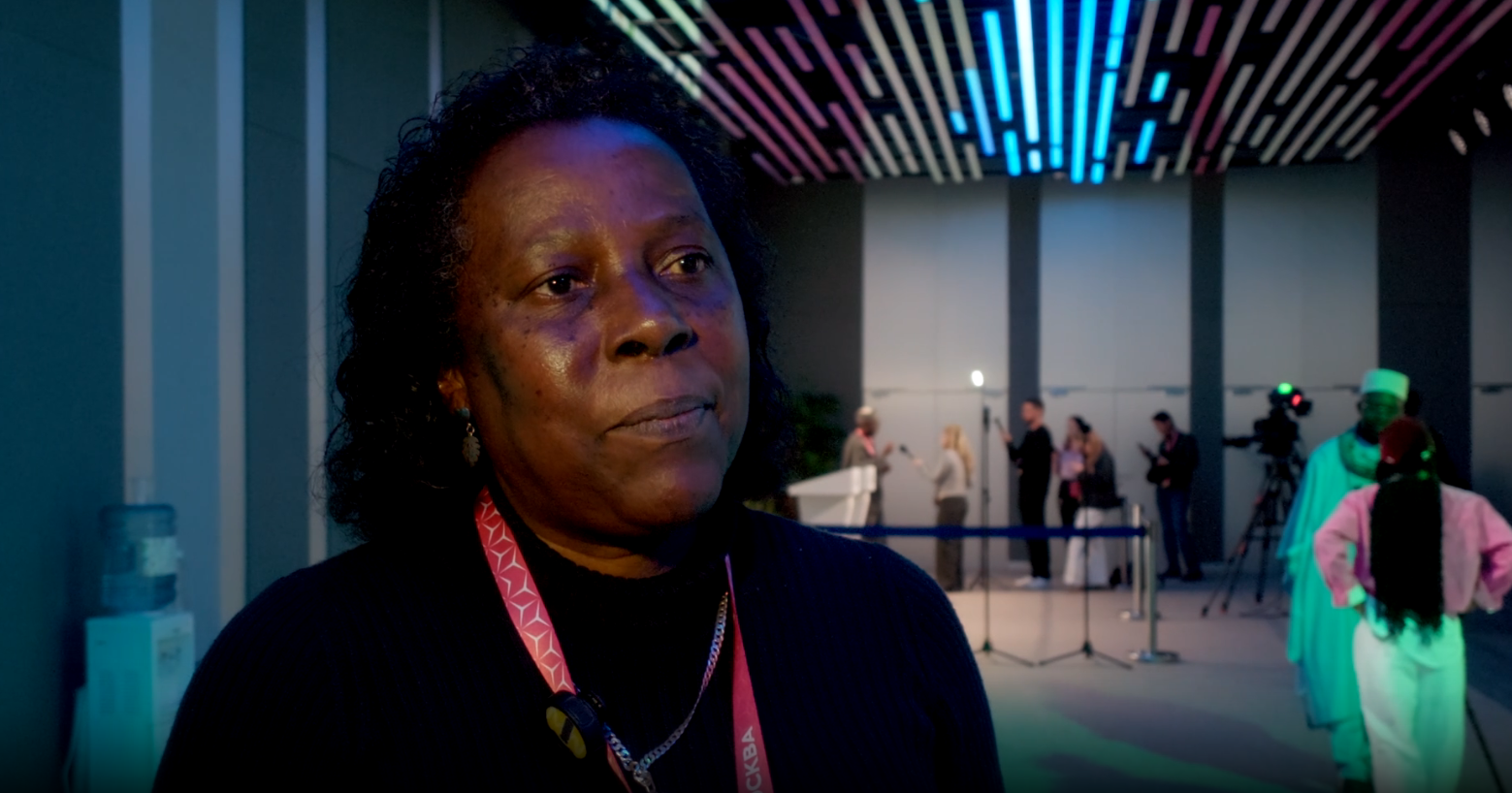
Moscow, Russia – The chief editor of the Seychelles News Agency, Betymie Bonnelame, has warned that African newsrooms are leaning too heavily on artificial intelligence, saying the habit is eroding original research and creativity in journalism.
Bonnelame spoke to The African Daily editor Adekunle Owolabi on the sidelines of the third Russia-Africa Summit in Moscow this week, shortly after presenting on the digitalisation of the newsroom.
Asked how the rise of digital platforms had affected the quality of news at a time when the media is battling misinformation, she said the biggest change was in how journalists write.
“I think the biggest influence it has had, it’s like how people write. Because before people used to be more creative in writing news. But right now they can just go to ChatGPT, they can just go to a digital platform and then rewrite. And the words are not the same,” she said.
The result, she said, was stories that lacked depth. “So the stories are not very much interesting in terms of research instead in terms of really looking into the subject. So I think this is what is affecting the news right now, especially for the young writers.”
Older journalists, she noted, were still writing their own stories and doing their own research, but the problem was spreading far beyond Africa.
“I think this is generally affecting the whole world. We becoming lazy in the newsroom. We’re relying on AI to do our work. We don’t really do any much research. I think it’s having an impact on the end product,” she said.
On the summit itself, Bonnelame described the relationship between Seychelles and Russia as an old and valuable one, going back to the 1970s. Russia, she said, was one of the very first countries the island nation cooperated with, and Seychellois students have travelled there for courses while others have learnt to speak Russian.
“So the relationship is very important. And I think Russia has a lot to offer,” she said.
But as she told the summit in her presentation, she said Africa needed to find common ground with Moscow so that both sides benefit. “It’s a win-win kind of situation instead of one gaining more and the other losing. I think this is what should be done. Having a cooperation based on our mutual interest, but then it’s a win-win that we both get something out of it.”
Turning to climate change, Bonnelame said Seychelles was among the countries feeling it most sharply. The archipelago has 1.4 million square kilometres of sea and sits in the Western Indian Ocean, where rising temperatures are hurting marine life.
“Our country rely a lot on fish. One of our staple diet is fish,” she said.
She listed erosion, shifting weather patterns and heavier rains among the effects, along with damage to coral reefs that fish depend on. That, she said, was hitting the livelihoods of ordinary Seychellois.
“As an ocean state, a lot of our people are fishermen and we have a lot of boats. So global warming with climate change, it is having a very heavy impact on fishers,” she said.
Bonnelame also called for closer ties between journalists across the continent. With only a small number of people working in journalism in Seychelles, she said the country’s media needed to stay in touch with developments on the African mainland. She added that Russia, with its strong research culture, had much to offer in terms of development.
She said many Seychellois journalists had never set foot in another African country and knew the continent only through the news, which often failed to show Africa at its best.
“So, there’s this kind of a barrier. I think we need to remove those barriers like I’ve said we’ve gone digital now. We don’t have to really go to Africa. Though it might be good to actually go and visit the place. But we can go online. We can talk online and we can sort of improve on that collaboration,” she said.
Looking ahead to her return home, she said she hoped to leave Moscow with new contacts among African journalists and stronger cooperation between news agencies, which she said was currently limited.
“Probably a lot of them they don’t really know about my country. So from today, that is why I wanted to come here and do that presentation so that from today people will know about where I’m coming from and what we have to offer and how we can collaborate,” she said.








Leave a comment