


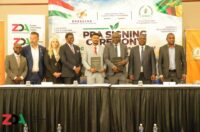
Yaoundé, Cameroon – Cameroon’s cocoa and coffee industry has taken a significant step towards ensuring compliance with stringent European Union (EU) regulations on deforestation-free products. On Wednesday, the country’s cocoa and coffee association signed agreements with six major cocoa exporters to implement a traceability platform that will provide detailed location data of cocoa plantations.
The EU, Cameroon’s primary market for cocoa beans, has introduced new rules that will prohibit the entry of chocolate ingredients produced on deforested or degraded land after December 31, 2020. This measure aligns with international commitments to combat deforestation and protect biodiversity.
The traceability platform, managed by Cameroon’s Cocoa and Coffee Interprofessional Council, will enable EU buyers to request the coordinates of cocoa plantations. By anonymously querying data holders, the platform will verify that the cocoa is sourced from sustainable and deforestation-free areas.
Jean-Marc Chataigner, EU ambassador to Cameroon, praised the initiative as a crucial step in demonstrating the country’s commitment to producing high-quality, ethically sourced cocoa. He emphasized that while the EU has not yet been directly involved in the process, it fully supports these efforts.
Narcisse Olinga, deputy director of external trade, expressed optimism that Cameroon would achieve 100% compliance with the EU traceability requirements by the time the regulations take effect. He noted that approximately 80% of the country’s cocoa output already meets these standards.
Kate Fotso, CEO of Telcar Cocoa, a joint venture with Cargill, stressed the importance of adhering to the new regulations to protect the interests of buyers, small exporters, and Cameroon itself.
The six exporters participating in the initiative include Telcar Cocoa, Ofi Cam, Neo Industry, Atlantic Cocoa Corporation, Sic-Cacaos, and FODECC, the country’s Cocoa and Coffee Subsectors Development Fund.











Leave a comment