


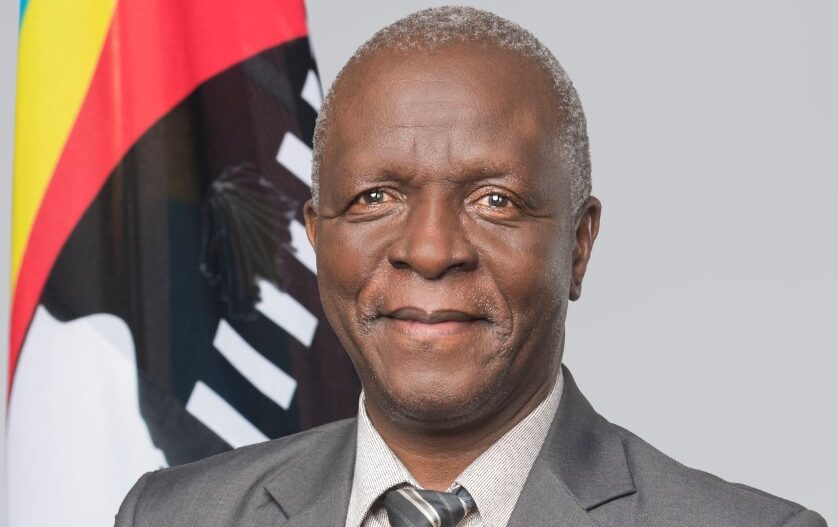
The Ministry of Justice and Constitutional Affairs has issued a statement to dispel public confusion over the involvement of Prime Minister Russell Dlamini in the recently reactivated Anti-Corruption Task Team, assuring Emaswati that government’s actions are in line with His Majesty’s directive for zero tolerance to corruption.
According to the ministry, the Prime Minister’s role in overseeing anti-corruption efforts stems from His Majesty King Mswati III’s call for the executive to treat corruption as a national disaster, demanding a coordinated and urgent response. This came after widespread concerns were voiced by citizens during the Sibaya consultations.
The Anti-Corruption Commission (ACC), Office of the Director of Public Prosecutions (DPP), and the Royal Eswatini Police Service fall under different branches but work collaboratively, reporting to both the Prime Minister and the Minister of Justice. The task team, which includes representatives from all three institutions, is a revival of a structure first introduced during the tenure of the late former Prime Minister Dr. Barnabas Sibusiso Dlamini.
The ministry clarified that the task team was created not to bypass existing institutions, but to ensure high-profile investigations are handled swiftly and effectively. Prosecutor-guided investigations, sharing of resources, and alignment of technology are among the mechanisms being used to tackle complex corruption cases.
Minister for Justice and Constitutional Affairs, Major General HRH Prince Simelane, further stated that the ministry requested the Prime Minister to approach the Commonwealth for additional forensic investigators and prosecutors to support local capacity. The ministry is currently awaiting a response.
Efforts have also been made to bolster the ACC’s operational strength, including the successful request for secondment of ten police officers.
The ministry reiterated that arrests in corruption cases cannot be made arbitrarily. The Prevention of Corruption Act, 2006, requires a prima facie case before a judge of the High Court can issue an arrest warrant, ensuring a system of checks and balances.
Prince Simelane called on all Emaswati to stand united in the fight against corruption, noting that resistance is expected from those benefiting from corrupt practices. “Our primary goal must be to win the war against corruption, rather than focusing our efforts on destabilizing the soldiers fighting that war,” he stated.
4o
















Leave a comment